Venezuela: interim regime appoints attorney general and ombudswoman amid repression, torture and signs of transition setbacks
The new officials Larry Devoe and Eglée González were sworn in this Thursday by the chavist-controlled National Assembly. Venezuelan analysts warn that both are trusted by interim leader Delcy Rodriguez and that the announcement is not a good sign for Washington's objectives.
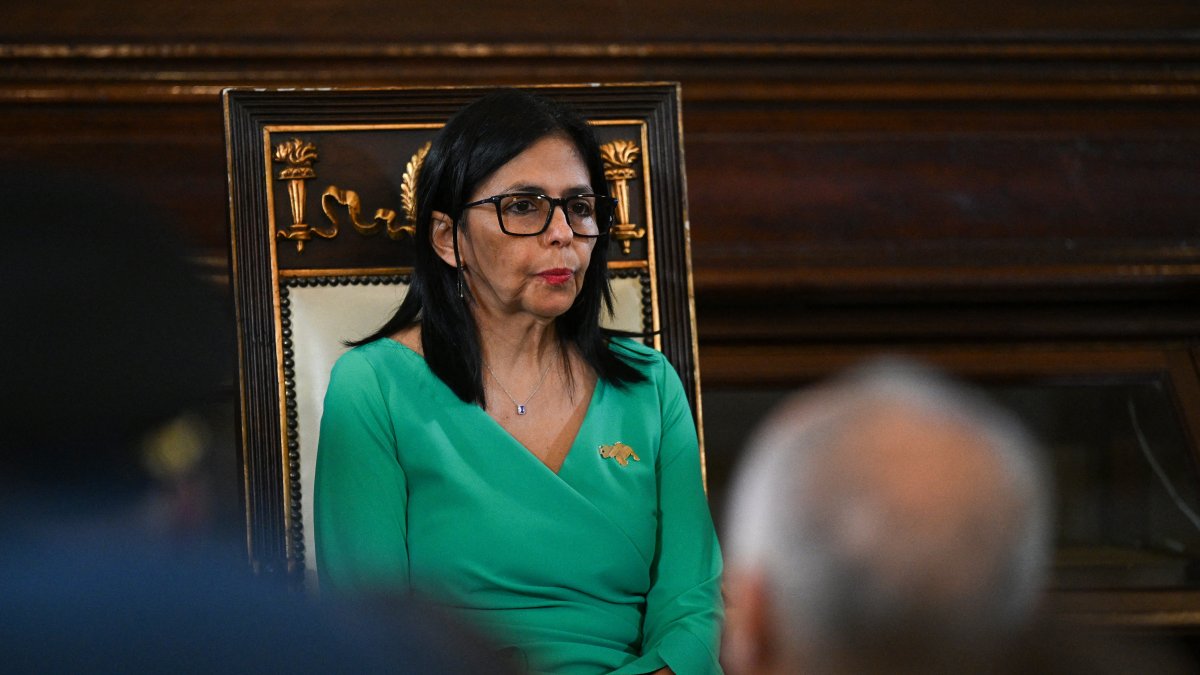
Delcy Rodriguez, chavista interim leader

Venezuela's chavista-controlled National Assembly,on Thursday appointed Larry Devoe as the new attorney general and Eglée González as the new ombudsman, replacing Tarek William Saab and Alfredo Ruiz, who resigned last February amid the implementation of the controversial Amnesty Law. The appointments, far from being well received, were an alarm signal for analysts, Venezuelan opposition and international observers.
The president of the pro-Chávez National Assembly, Jorge Rodriguez, brother of the regime's interim leader Delcy Rodriguez, swore in both officials. The few opposition legislators in the precinct questioned the appointments considering that none of the two meet the conditions of "suitability, autonomy, independence and democratic plurality".
"We know that the institutions have been enabled as ideological trenches of a political bias in Venezuela," said Henri Falcón, a Venezuelan politician who for many years was considered an opponent and is now questioned for his closeness to the Chavista regime. Despite the accusations, even his legislative bench, Libertad, criticized the controversial appointments.
World
Nicolás Maduro's regime tried to buy ballistic missiles from Iran in 2020.
Andrés Ignacio Henríquez
Delcy Rodriguez's files, not of transition
Venezuelan analysts consulted for this article said the new appointments are far from being real changes within the power structure of the Rodriguez regime, which has sent ambivalent signals about the transition to persuade Washington that it is betting on a radical change of direction after the capture of former dictator Nicolas Maduro on Jan. 3.
"Larry Devoe was an accomplice of Nicolás Maduro's system and is a token of Delcy Rodríguez's absolute trust.Appointing him as prosecutor is a victory in Delcy's plan to block a real transition and negotiate a transition from Madurismo to Rodriguismo," US-based Venezuelan political scientist Daniel Chang warned VOZ.
In tune with Chang, analyst and also political scientist Walter Molina went further, recalling that the flamboyant "ombudsman" did not condemn an attack against Venezuelan activists in Colombia: "Larry Devoe is as much or more repressive than Tarek William Saab. Egleé González Lobato is as or more chavista and vile than the former false 'ombudsman of the people.' In fact, with the attack against Luis Peche and Yendri Velásquez, not only did he not condemn that assassination attempt, but he held them responsible. These 'changes' by Gatopardeanos only confirm that the interim tyranny continues to be exactly that: a tyranny. And it is trying to rearrange itself to remain in power even when the vast majority of Venezuelans want the opposite."
Political scientist Luis Peche Arteaga, who suffered the attack in Colombia, also commented on 'X' on the appointments and asked how the White House will react to them: "I believe that these appointments of Attorney General and Ombudsman are the first great sign of setbacks in the Venezuelan transition. They occur in parallel with the first signs of repression in a march of workers in Caracas and denunciations of cruel treatment and torture in the Rodeo prison. What will be the reaction of the opposition?
Likewise, Diego Loyo Rosales, political strategist, told VOZ that the "Rodrigato" is desperately seeking oxygen to avoid further pressure from the White House: "Chavismo, or rather the Rodrigato, within the American tutelage, is trying to make changes that seem like positive signs but that also allow them to maintain control of the levers of power. Therefore, they are building their apparatus, one that serves them both to bend to the United States as long as that pressure exists and to stay in power in case the American pressure ceases to be as strong as it is today. The Rodriguez bets that the midterms will generate oxygen for them and that by then they will already control, thanks to the moves they are making under American tutelage, the whole apparatus of political power in Venezuela."
World
Trump jokes that he could win the presidency of Venezuela and learn Spanish 'quickly'
Andrés Ignacio Henríquez
Repression in the streets of Caracas
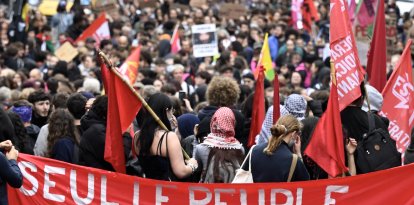
The appointments took place in a context of repression against Venezuelan workers. This Thursday, forces of the regime dispersed a march of workers in Caracas that demanded a wage increase in the face of the rampant inflation that has destroyed the purchasing power of Venezuelans. Images and videos disseminated on social networks showed uniformed troops confronting the demonstrators.
Marshall Billingslea, a former U.S. government official with extensive experience in Venezuela policy and very close to the Trump Administration, reacted on 'X,' calling what happened "a big step backwards."
"repression forces of the Cartel de los Soles attacked a peaceful worker’s protest march. On top of this ~485 political prisoners are still trapped in jails & torture centers," he said.
World
Poll: Venezuela backs Donald Trump while María Corina Machado would sweep any electoral scenario
Andrés Ignacio Henríquez
Foreign political prisoners denounce tortures in El Rodeo I
In parallel with the repression in Caracas, relatives of foreign political prisoners held in El Rodeo I prison denounced, this Thursday, new cases of torture and severe human rights violations. According to reports, a peaceful protest initiated days ago by the inmates, who demanded dignified detention conditions, was met with tear gas, pepper spray, and beatings by prison authorities.
Andreina Baduel, sister of political prisoner Josnars Baduel, reported from the outskirts of Rodeo I that there are foreigners seriously injured and that her brother collapsed after the strong repression. Baduel denounced that there is no disposition of the regime to act differently and that the human rights of the detainees are being systematically violated.
The opposition political leader Juan Pablo Guanipa was one of the voices that denounced the situation in the infamous prison: "What is happening in El Rodeo I is alarming. Two days ago several political prisoners started a peaceful protest demanding decent conditions inside that torture center. Today we received credible reports that the regime's terror forces are repressing that protest. They are firing tear gas at them and there are serious reports of injuries."
"Delcy Rodríguez, the lives of the political prisoners in Rodeo 1 are in your hands," Guanipa sentenced.
World
US lifts sanctions against Venezuela's interim leader Delcy Rodriguez
Emmanuel Alejandro Rondón
What will the Trump Administration do?
After Maduro's capture at the hands of the U.S. Army, President Donald Trump has insistently said that Venezuela has become an impeccable economic ally for Washington. Yet days ago, in late March, Secretary of State Marco Rubio opened the umbrella for a transition to democracy.
"What has been achieved in just three months is extraordinary. In the end there has to be a transition. There has to be free and fair elections in Venezuela. That point has to come (...) We have to be patient, but we cannot be complacent either."
Rubio's words come at a time when US companies and large capitals still have doubts about investing and betting on the recovery of the Venezuelan energy sector despite the efforts of Delcy Rodriguez to show a "different face" with respect to her predecessor.
However, for now, Venezuelan citizens still do not trust Rodriguez, who is one of the most unpopular politicians in the country. Opposition leader and Nobel Peace Prize winner Maria Corina Machado remains the most popular political figure in the country next to Rubio and President Trump, and the desire for a real democratic transition and free elections remains in the majority, according to the most recent polls. In this complex context, the question is what the Trump Administration will do to respond to the appointments and cases of torture and repression as they actively try to recover the weak Venezuelan economy.
LATEST