WHO warns Ebola outbreak in DR Congo is 'extremely serious and difficult'
The late detection of the first cases, the insecurity in the affected regions, the mistrust of part of the population and the fact that there is no vaccine for this strain, Bundibugyo, complicate the management of the disease.
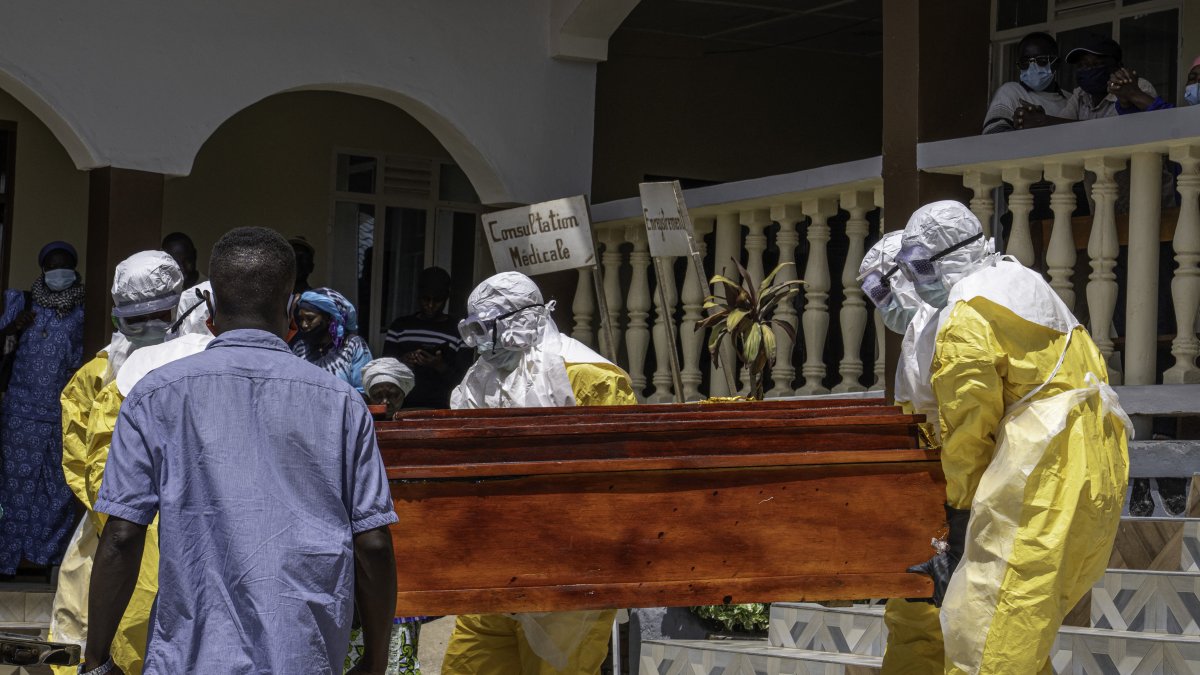
The coffin of a deceased Ebola patient is loaded onto a pickup truck in DR Congo (File).

(AFP) The Democratic Republic of the Congo is facing an Ebola epidemic "extremely serious and difficult," reported the head of the World Health Organization (WHO), Tedros Adhanom Ghebreyesus, who called on neighboring countries to act "immediately."
Late detection of the first cases, insecurity in the affected regions, mistrust on the part of the population and the fact that there is no vaccine for this strain, Bundibugyo, complicate management of the outbreak, the WHO director said during an online ministerial meeting organized by the African Centers for Disease Control and Prevention (CDC).
"We are intensifying operations as a matter of urgency, but at the moment the epidemic is moving faster than we are," the WHO chief said.
"Countries bordering DRC are at risk"
"The countries bordering the DRC are at especially high risk and should act immediately," added Tedros, who is scheduled to travel to the DRC on Tuesday.
Ten African countries are at risk from Ebola, in addition to the DRC and Uganda, the CDC - the African Union's health agency - said Saturday.
The Democratic Republic of Congo declared an Ebola outbreak on May 15 caused by the Bundibugyo strain, and last week the WHO raised the risk level of the epidemic from "high" to "very high."
Tedros noted that there are 101 confirmed cases in the DRC, with ten deaths, but that the magnitude of the epidemic is greater and pointed to 900 possible cases and 220 suspected deaths.

Insecurity and distrust
Ebola is a deadly viral disease transmitted by direct contact with body fluids. It can cause hemorrhagic fever and multi-organ failure.
This virus has killed more than 15,000 people in Africa in the last 50 years, with a mortality between 25% and 90%, according to the WHO, but is less contagious than covid or measles.
The rapid progress of the epidemic is compounded by the challenge posed by instability in the area where the outbreak was declared, the province of Ituri, in the northeast of the country, the official explained.
The eastern provinces of the DRC, where the outbreak was first detected, "are very insecure, with an increase in fighting in recent months, and a significant lack of trust in the authorities on the part of the local population."
Added to all this is the fact that there are no "approved vaccines or treatments" for the Bundibugyo strain, the cause of the current Ebola outbreak, he recalled.
"The situation will get worse before it gets better"
"They wanted to retrieve the body of a Catholic pastor who had died of Ebola," said a hospital official, who requested anonymity. The patient was "well known, a religious leader from Mongbwalu."
Soldiers intervened to disperse the crowd with warning shots, the source said.
Tedros said the WHO will mobilize funds, medical supplies and personnel to the DR Congo to support authorities and speed up clinical trials of possible treatments.
"The situation will get worse before it gets better," he said. "But we know this virus and we know how to slow it down."
LATEST