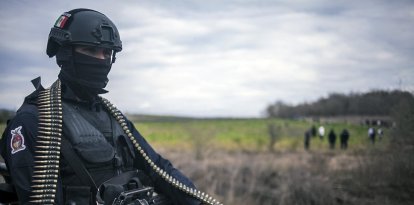
Retired Army Colonel Eric Rojo rules out a U.S. military intervention in Cuba on VOZ News but sees a strike on Iran as likely
The political-military analyst maintained that economic pressure is enough to force a change in the Cuban regime, while the Iranian front is, in his opinion, "the most urgent situation" among those kept open by the United States.
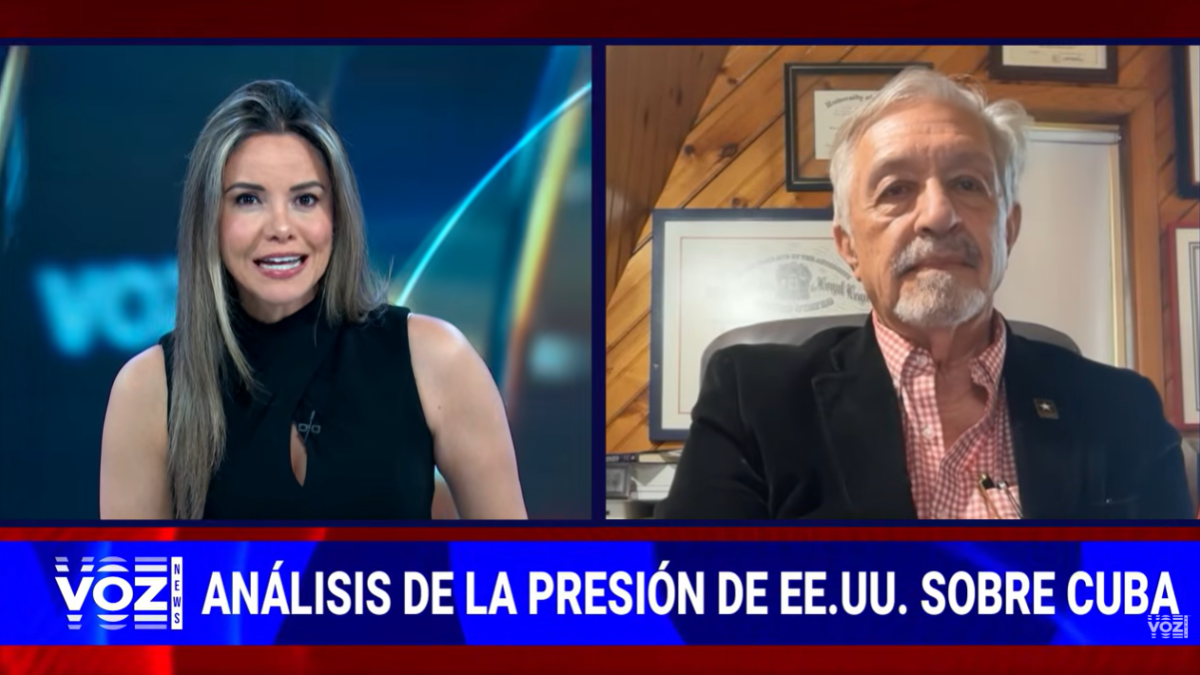
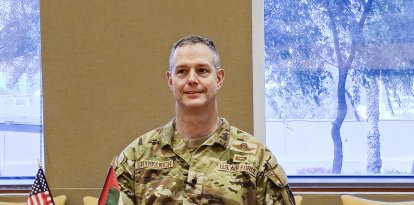
Retired Colonel Eric Rojo on Voz News, with Karina Yapor

Confirmation that President Donald Trump will not attend his eldest son's wedding this weekend fueled speculation of possible imminent military action. Consulted on the matter, retired U.S. Army Colonel Eric Rojo ruled out an armed intervention in Cuba, but pointed to Iran as the most likely front for a U.S. strike. This was stated in an interview on VOZ News conducted by executive director Karina Yapor.
On the Cuban front, the analyst framed the deployment of the aircraft carrier USS Nimitz off the island's coast as an instrument of political pressure, not a prelude to a military operation.
"There is no reason, no motive for carrying out a military operation," Rojo said. In his opinion, what Washington is seeking is to negotiate a radical change on the island, and economic pressure is sufficient for that objective, without the need for an armed incursion.
Rojo did say that the charges filed in the United States against Raul Castro"could give rise" to an operation similar to the one that ended with the capture of former dictator Nicolas Maduro in Venezuela, recalling that crimes such as murder are not subject to statute of limitations in the legislation of many countries, including the United States. Even so, he insisted that the foreseeable path is that of pressure and negotiation.
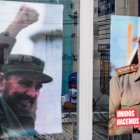
The colonel also questioned the position of the president of Mexico, Claudia Sheinbaum, who had downplayed the sense of the indictment against the former Cuban dictator 30 years after the events. For Rojo, it is not surprising that she adopts such positions.
The analyst dedicated part of the interview to the simulation that Venezuela announced for this Saturday at the request of the United States. He described it as an "evacuation exercise" and posed the underlying conundrum: "The question is who is going to be evacuated?" According to his reading, which he presented as his own speculation, the objective would be to offer an agreed and uncharged exit, a "golden exile", to the outgoing leaders, in a process that, he recalled, has not shed blood since Maduro's arrest.
When asked about which front could explain Trump's absence at his son's wedding, Rojo did not hesitate: "Iran's would be the most likely. I think it is the most urgent situation." He explained that the Iranian representatives "don't want to give their arm," which led the president to set a new ultimatum at the request of Arab partners.
Washington's demands on the Iranian nuclear program, he detailed, do not admit negotiation. "There are two options that the president is asking for that are non-negotiable, which is the total elimination of their nuclear program and the extraction of the uranium they have in Iran," he said, specifying that the rest of the points could be resolved through diplomatic channels. For the colonel, the absence of Trump at a family event of such weight is above all a message that he is willing to act.
LATEST