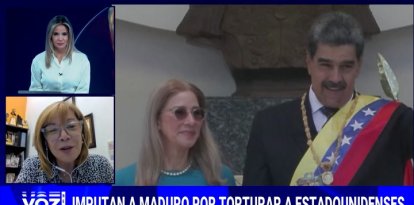
Nicolás Maduro's regime tried to buy ballistic missiles from Iran in 2020.
The information provides new evidence about the extent of military cooperation between Venezuela and Iran.
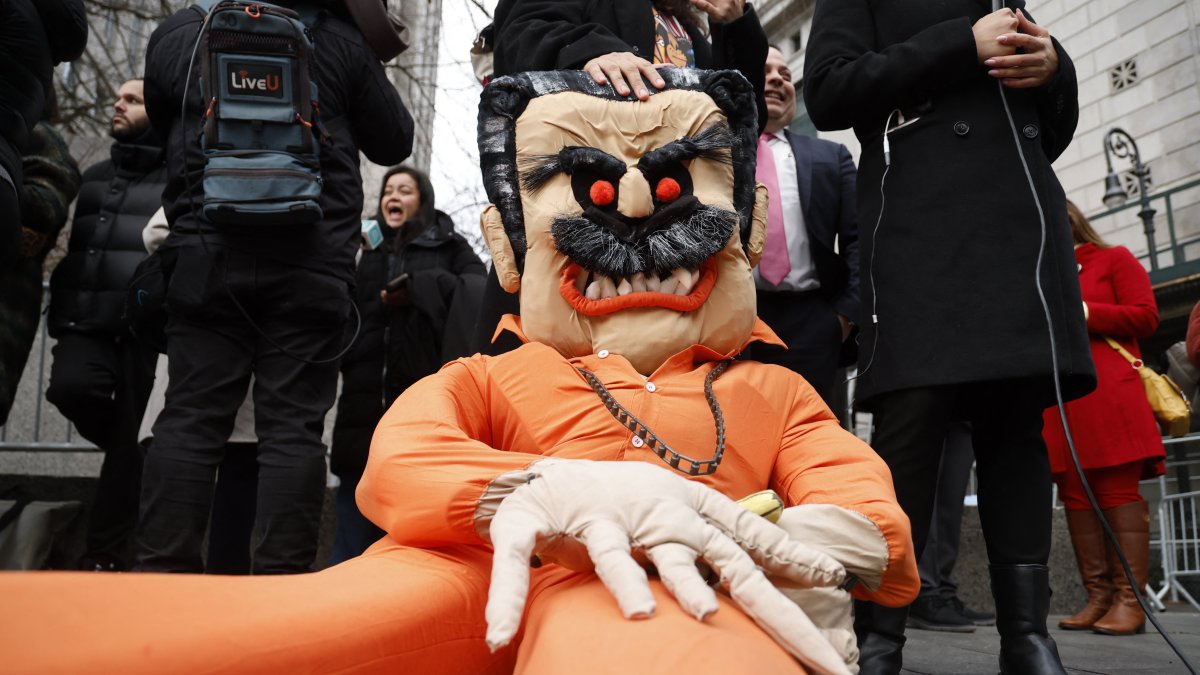
A dummy of Nicolas Maduro displayed in front of the building where his second federal court appearance took place in New York City, March 26, 2026.

An internal Venezuelan regime document revealed that, in 2020, Caracas took concrete steps to acquire an Iranian ballistic missile system valued at more than $400 million, in an operation that ultimately did not materialize after pressure from the United States.
The information, disclosed by POLITICO, provides new evidence on the extent of military cooperation between Venezuela and Iran during the most tense years of the relationship with Washington.
The Trump administration was aware of the negotiations
According to the report, the Venezuelan Defense Ministry approved in January 2020 a memorandum detailing the mechanism for purchasing the missile system. The document included the channeling of funds through state-owned companies and even contemplated its deployment from naval platforms.
Although versions circulated for years about negotiations on military aspects between Caracas and Tehran, this memorandum suggests that the talks were more advanced than what was publicly known.
World
Poll: Venezuela backs Donald Trump while María Corina Machado would sweep any electoral scenario
Andrés Ignacio Henríquez
However, the system was never delivered. According to Elliott Abrams, who served as Special Representative for Venezuela during the Donald Trump administration, the United States was aware of the contacts and made clear its opposition.
"We conveyed that this was not acceptable," Abrams said, noting that the efforts finally stopped.
The purchase would have implied a high geopolitical cost for Maduro.
The attempted acquisition took place in a context of strong sanctions and international pressure against the regime of Nicolás Maduro, during the first Trump administration. Analysts quoted by POLITICO agree that moving forward with such an agreement would have implied a high geopolitical cost for Caracas.
In addition, Venezuela's already deteriorating economy raised doubts about the financial viability of a purchase of such magnitude, in the midst of a humanitarian crisis and a sharp drop in oil revenues.
Even so, the relationship between Venezuela and Iran was not new. Since the Hugo Chávez era, both countries have strengthened their political, energy, and, to a lesser extent, military ties in opposition to U.S. influence.

World
Netanyahu orders direct negotiations with Lebanon to establish 'peaceful relations'
Carlos Dominguez
Security concerns in Washington
Venezuela's possible access to ballistic missile technology generated concern in national security circles in Washington, especially because of the potential range of this type of weaponry.
U.S. officials have pointed out, as early as 2020 itself, that cooperation between Caracas and Tehran could pose a strategic risk in the Western Hemisphere.
For now, there is no indication that the plan has been reactivated in the midst of one of the most critical moments in the relationship between Trump and the Iranian regime. The document, however, makes clear the extent to which the Venezuelan regime explored military options with enemies of the United States.

Politics
House Democrats fail in their attempt to limit Trump's war powers regarding the Iranian regime
Carlos Dominguez
Politics
Iranian regime defies Trump, refuses to impose limits on its uranium enrichment program
Carlos Dominguez
LATEST