Several Trump advisors put Maduro's future in question:"He might just leave in a body bag"
While some senior officials speculate about a potential overthrow of the Venezuelan dictator, all acknowledge that the final say rests with President Donald Trump, who has yet to decide how to act.

Dictator Nicolas Maduro in a file image.

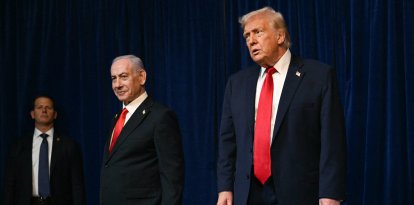
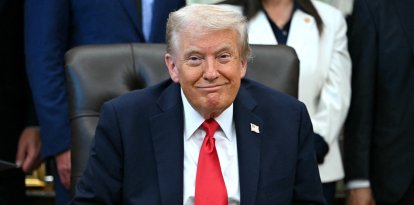
President Donald Trump has decided, as in his first term, to put pressure on Nicolás Maduro's regime. However, the strategy is slightly different, according to senior White House officials who spoke exclusively and under anonymity with Axios. If back then Washington—in Trump's own words—pledged to push for regime change and support a transition to democracy, this time the White House has declared war on narcoterrorism, specifically on the Cartel of the Soles, led by Maduro himself and high-ranking officials of the Chavista regime.
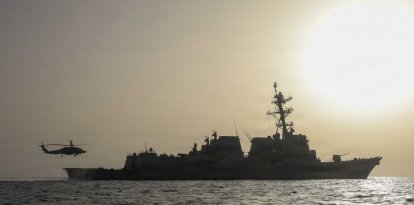
According to senior officials, the White House strategy of sending warships to the Caribbean Sea, near the Venezuelan coast, is a pressure mechanism that is completely focused on the fight against narcoterrorism. However, these officials speculate that, although Washington is not talking about a direct intervention or overthrow, Maduro's future is in question, as President Trump has authorized the Pentagon to use all tools at its disposal, including military action, to target drug cartels in the hemisphere, and Maduro is justly the head of one such organization.
"This is 105% about narco-terrorism, but if Maduro winds up no longer in power, no one will be crying," a Trump administration official told Axios.


The officials, while acknowledging that the final say is always with President Trump, find the idea of Maduro leaving power very appealing, as it could be boosted through the fight against drug trafficking, just as happened with Panamanian dictator Manuel Antonio Noriega in 1989.
Another official, in fact, said that Maduro "could be Noriega part 2," who was overthrown by the U.S. government under the leadership of George Bush. Noriega—like Maduro and his second-in-command, Diosdado Cabello—was indicted for trafficking and facilitating drug shipments to the United States.
One official also commented that Trump has asked his advisors for options for the Venezuela case, sending a direct message to Maduro.
"The president has asked for a menu of options. And ultimately, this is the president's decision about what to do next, but Maduro should be s***ting bricks," he said.


Society
Drug trafficking routes: How Latin American cartels operate, flooding the country with drugs
Virginia Martínez
A third adviser also spoke to Axios: "Leaving Maduro in power in Venezuela is like making Jeffrey Epstein the head of a daycare."
The big difference between Maduro and Noriega is the magnitude of the case. The DEA has said that 24% of the cocaine trafficked on the planet passes through Venezuela, which has become a strategically located transit country for sending narcotics to U.S. soil. Likewise, under the Maduro regime, Venezuela has become a close ally of other regimes that are enemies of Washington, including Iran.
In addition, the Trump Administration has decided to raise the bounty on Maduro's head to $50 million, the highest in the country's history.
A Trump Administration official was very clear, categorizing Maduro's future—and life—as uncertain, since the dictator is now technically a "terrorist" in the eyes of the White House. As such, a potential drone strike is not ruled out.

Politics
The DEA accused the Maduro regime of collaborating with the FARC and ELN to traffic drugs to the US
Williams Perdomo
In the White House, however, Maduro is expected to negotiate a decorous exit or be overthrown by military officials eager to collect the million-dollar bounty or normalize relations with Washington.
"While an all-out invasion seems hard to imagine, it is a given that there will be aggressive interdictions of suspected drug boats, and targeted bombings of jungle areas or military installations are not ruled out," the report reads.
According to Axios, some officials even claim that Maduro could leave Venezuela "in a body bag" if "the Cubans around him won't let him leave." For the moment, what is concrete is that seven U.S. warships with 4,500 troops—including three missile destroyers, an attack submarine, and 2,200 Marines—are near Venezuelan shores, ready to seize drugs and attack cartel members.
LATEST