Cesar Chavez, a Democratic Party figurehead, is accused of raping and abusing children for decades
Accusations against UFW founder reignite debate over a figure promoted for decades as a symbol of the Latino community
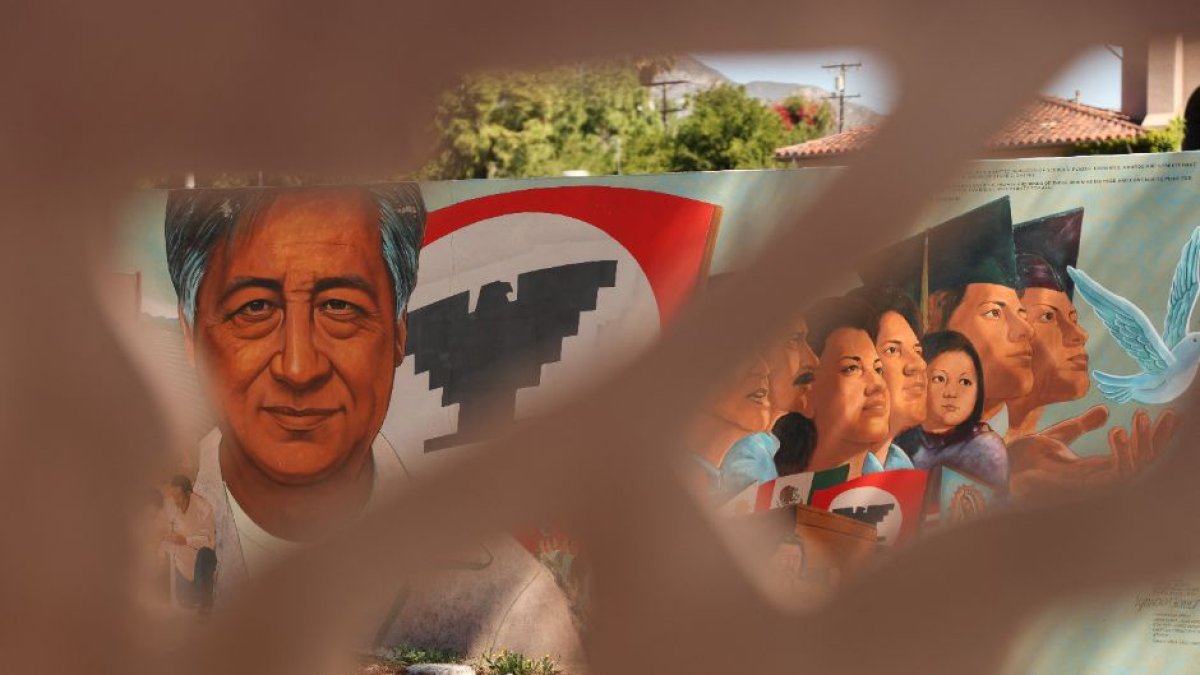
A 2004 mural by artist Ignacio Gomez featuring Cesar Chavez.

Labor and civil rights leader Dolores Huerta affirmed this Wednesday that she was a victim of sexual abuse by farmworker leader César Chávez decades ago, in what represents the most prominent accusation made publicly against a figure who for years has been elevated in political, educational and cultural circles as a symbol of Latino identity in the United States and a reference for causes linked to the left and the Democratic Party.
The statement comes amid a growing controversy surrounding the United Farm Workers (UFW) union, following recent reports pointing to alleged abuses committed by Chavez against minors, which has led to the cancellation of commemorative events such as Cesar Chavez Day.
Testimony and context
Huerta, a co-founder of the UFW along with activist Gilbert Padilla, explained that she kept her experience private for years as she prioritized the labor movement. She indicated that she decided to go public with her story after learning that others had also been affected.

Society
Washington: Special education teacher charged with raping 10-year-old student
Diane Hernández
Investigation and reactions
The UFW canceled celebrations linked to Chavez, while his foundation called the allegations "shocking" and "indefensible." " The family of the leader, who died in 1993, expressed being "devastated" and asked for privacy.
Impact on the movement
The controversy affects one of the most influential labor movements in the United States, which has played a relevant role in the organization of agricultural workers and in the mobilization of Latino voters, especially in states like California, where his legacy has been closely linked to labor movements and political sectors akin to the Democratic Party.
A broader debate
The controversy affects a key movement in farmworker organizing and voter mobilization Latinos in the United States.
In an opinion article, Dolores Huerta and Andrea Nill Sanchez linked these types of cases to broader debates about allegations of abuse in spaces of power. In that context, they referred to the confirmation process of Supreme Court Justice Brett Kavanaugh and the allegations brought by Professor Christine Blasey-Ford.
According to their analysis, that episode reflected dynamics in which—they assert—cultural factors such as machismo can influence the way these types of allegations are evaluated, even above political considerations.
The authors argue that machismo, understood as a culture that can favor the protection of men with power and generate skepticism towards victims, continues to be an element present in different spheres, something that - they point out - has been made visible in recent years by the Me Too movement.
For now, the repercussions continue to unfold while organizations linked to Chávez's legacy face pressure to respond to the accusations.
LATEST