Trump signs order authorizing military operations in Latin America against cartels, just after doubling reward for Maduro's capture
Recently, the Trump administration designated Cartel de Los Soles, led by Maduro, as a terrorist organization. Secretary of State Marco Rubio said this authorizes the Pentagon and U.S. intelligence services to use their tools to target such groups.

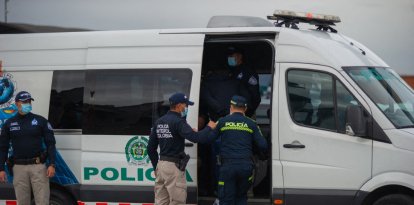
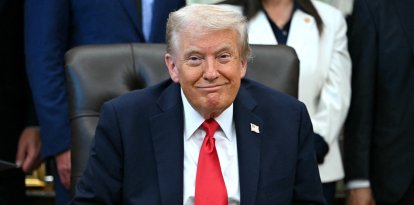
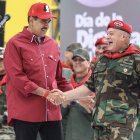
Donald Trump, Nicolás Maduro and an arrested member of Tren de Aragua
Through a silent order, President Donald Trump authorized the Department of Defense to lead surgical military operations in Latin America against foreign drug cartels, just after designating several of these criminal organizations as terrorist groups.
According to a report from The New York Times, the surprising directive, until now secret, provides an unprecedented legal basis for the U.S. military to execute direct operations against cartels, even at sea or in foreign territory, a situation that could generate criticism from the international community, especially from governments such as Mexico or Venezuela.
In addition to Mexican groups, the White House's main targets include Venezuelan group Cartel de Los Soles, led by dictator Nicolás Maduro and high-ranking officials of his regime, such as Diosdado Cabello, sanctioned and wanted for drug trafficking by American authorities.
In February, the State Department included the Venezuelan gang Tren de Aragua, Salvadoran group Mara Salvatrucha (MS-13), and several Mexican cartels in its list of foreign terrorist organizations, under the argument that they represent a threat to national security beyond traditional organized crime. The White House has not hesitated to link Tren de Aragua to the Maduro regime.

The revelation of the order signed by Trump comes just a day after Attorney General Pam Bondi reported that the reward for Maduro's capture has been doubled to $50 million, the highest figure in American history for a terrorist or drug trafficker, surpassing even that offered for Osama bin Laden.
The attorney general described Maduro as "one of the world's biggest drug traffickers" and accused him of using Cartel de los Soles, Tren de Aragua, and the Sinaloa Cartel to flood the U.S. with cocaine, often laced with the potent opioid fentanyl.
On Thursday, following the announcement of the new reward for Maduro's capture, Secretary of State Marco Rubio said the designation of the cartels as terrorist organizations authorizes the Pentagon and U.S. intelligence services to use all available tools to target such groups.
"Here’s the thing: We cannot continue to just treat these guys as local street gangs," Rubio said. "They have weaponry that looks like what terrorists, in some cases armies, have. They control territory in many cases. Those cartels extend from the Maduro regime in Venezuela—which is not a legitimate government; we don’t recognize the Maduro regime as legitimate... to the various different cartels that operate in Mexico."
"So what it changes is it gives us legal authorities to target them in ways you can’t do if they’re just a bunch of criminals. It’s no longer a law enforcement issue. It becomes a national security issue," the secretary of state added.
While the White House has not yet officially confirmed the order, President Trump himself publicly defended the measure before the press, stating, “Latin America's got a lot of cartels and they've got a lot of drugs flowing.”
“So, you know, we want to protect our country. We have to protect our country. We haven't been doing it for four years. And we love this country like they love their countries. We have to protect our country,” Trump continued. “So, you know, we're playing a tough game, but we'll have more to say about that soon.”
Reporter: You were talking about something military forces to fight against the drug cartels in Latin America. Do you think it is worth sending our forces?
— Acyn (@Acyn) August 8, 2025
Trump: Cartels where?
Reporter: Latin America
Trump: Latin America has a lot of cartels. We have to protect our country. pic.twitter.com/q8iebEycV5
Likewise, State Department spokeswoman Amanda Roberson was asked whether the U.S. is ready to lead military operations against drug cartels in the coming hours.
Relying on Rubio's words, the spokeswoman said that nothing is ruled out when it comes to law enforcement.
"We are always evaluating all possibilities. We treat these groups as terrorists now. I can't anticipate what might happen, but we are considering all options."
🔴 #AHORA | Amanda Roberson, portavoz del Departamento de Estado de #EEUU, sobre posibles acciones militares contra Maduro.
— VPItv (@VPITV) August 8, 2025
🗣️“Siempre estamos evaluando todas las posibilidades. Ahora tratamos a estos grupos como terroristas. No puedo anticipar lo que podría ocurrir, pero sí… pic.twitter.com/cGGIQDc4d5
President Trump's directive also opens a debate over the extent to which the military could move on the margins of the law to combat cartels. Some analysts have even discussed the possibility of U.S. forces surgically intervening to capture Maduro, as happened with former Panamanian dictator Manuel Noriega, arrested by the U.S. on Panamanian soil for his ties to the Medellín Cartel. For now, there is not much clarity on the matter.
In fact, the content and scope of President Trump's new directive have not yet been publicly clarified. Moreover, it is unknown whether lawyers from the White House, the Pentagon and the State Department have issued opinions on the matter or whether the Justice Department's Office of Legal Counsel has produced a formal opinion addressing the legal implications of the order.
Brian Finucane, a former State Department lawyer and specialist in the laws of war, said that any operation aimed at killing people based solely on their alleged membership in a sanctioned cartel and outside the context of an armed conflict would raise legal issues under anti-murder statutes and a long-standing executive order prohibiting assassinations.
"Under traditional executive branch lawyering, it would be hard to see some random drug trafficker meeting the threshold for the self-defense exception to the assassination ban," he added.
Washington claims Maduro's network is responsible for tons of drug seizures and billions in profits for criminal groups in Venezuela and Mexico. According to the Justice Department, more than $700 million in assets linked to the dictator, including planes and luxury vehicles, have been seized.
LATEST