VOZ analyst Franklin Camargo testifies in Congress: ‘The capture of Maduro was necessary for the security of the American people’
The session aimed to examine the legality of measures such as the arrest of Nicolás Maduro and operations against vessels dedicated to drug trafficking.
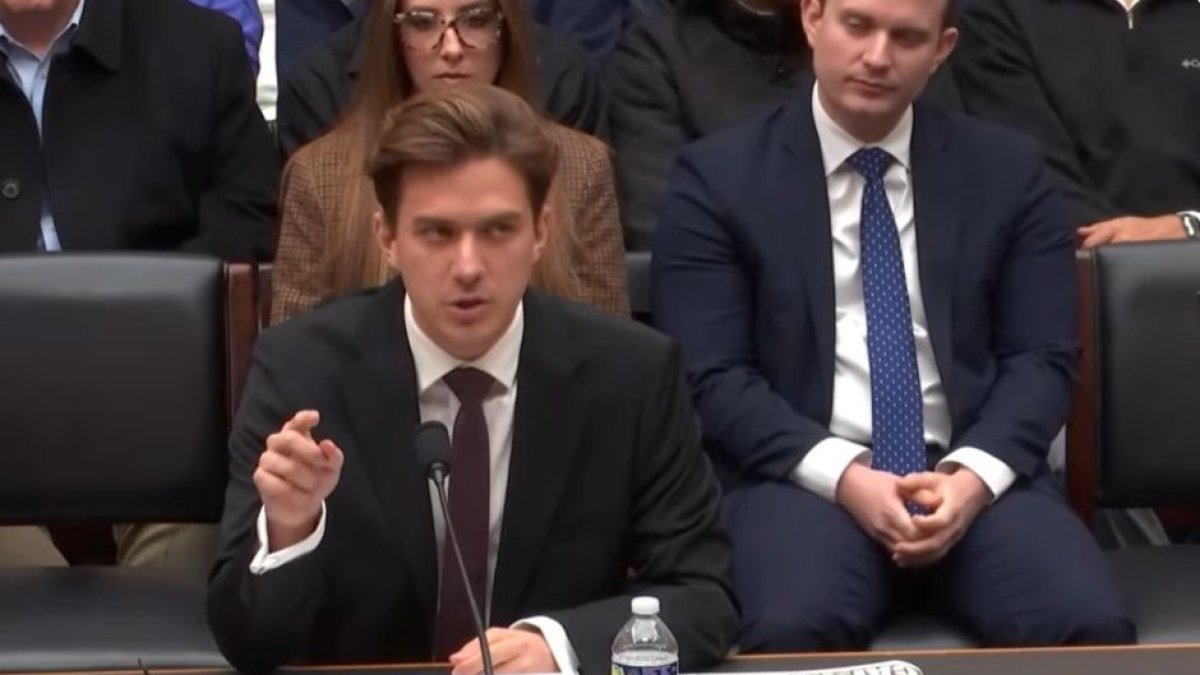
VOZ's Venezuelan political analyst Franklin Camargo.

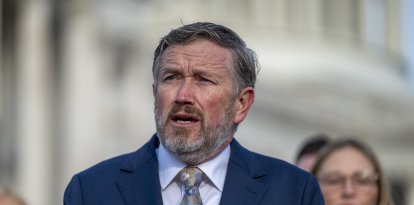
VOZ's Venezuelan political analyst Franklin Camargo appeared this Wednesday before the Oversight Subcommittee of the U.S. House Judiciary Committee to defend Washington's recent actions against criminal structures linked to Venezuela, in a hearing focused on its legal basis.
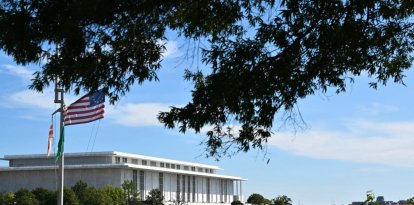
The session, entitled "The Legal Basis for Actions Against Venezuelan Drug Traffickers," was held at the Rayburn Building and aimed to examine the legality of measures such as the arrest of Nicolás Maduro and operations against drug trafficking vessels. The discussion also included a review of historical precedents and the national and international legal framework that supports these types of actions.
Testimony focused on security and the need for action
During his remarks, Camargo made it clear that his focus was not on arguing legality - a topic addressed by other presenters - but on underscoring the need to act in the face of what he described as a direct threat to the United States.
"Nicolás Maduro was not simply a bad president. He is an evil narcoterrorist who committed crimes against Americans. There are others here today who can testify to the legality of United States action in Venezuela. I want to testify to its necessity," he said.
The analyst maintained that Maduro's regime cannot be understood only in political terms, but as a structure linked to drug trafficking. In this sense, he affirmed that Venezuela has become a key point for the transit of cocaine, with annual volumes that, according to him, reach hundreds of tons under the protection of networks connected to power.
"Between 200 and 250 metric tons of cocaine move through Venezuela each year under the protection of a criminal network—intimately linked to high-ranking Maduro officials—known as the Cartel of the Suns. 30,000 Americans die from cocaine overdoses every single year. When a narco-regime floods the hemisphere with dangerous drugs, American families pay the price," he explained.
From Personal Experience to Political Argument
Camargo also recounted his experience as an opponent of Chavismo. He explained that, after criticizing the regime, he was charged with terrorism under the so-called Anti-Hate Law, which exposed him to a possible prison sentence of up to two decades. He managed to leave the country, but - he said - members of his family faced reprisals, including torture and imprisonment.
He subsequently immigrated legally to the United States, where he received asylum during the Donald Trump administration. He currently works in the communications field promoting American values.
Drug trafficking and criminal networks
In his presentation, Camargo pointed out that drug trafficking is not an isolated phenomenon, but part of a broader structure involving state actors. "The Maduro regime turned Venezuela into a drug cartel," he said.
Likewise, he indicated that organizations such as the Aragua Train have participated in serious crimes, including homicides and assaults, some of which have had an impact in the United States. According to him, these facts would not be isolated incidents, but part of a broader dynamic.
"The regime established an official government conspiracy of sending violent criminals to the United States (...) This was not an accident. It was part of a deliberate regime strate," he asserted.
Camargo also made reference to statements made by former military intelligence chief Hugo Carvajal, who has indicated that Venezuelan state structures would have facilitated drug trafficking operations and cooperation with other actors.

Politics
Former Venezuelan general warns in letter to Trump that Delcy and Jorge Rodriguez are the "real brains" behind the Cártel de los Soles
Emmanuel Alejandro Rondón
Debate on sovereignty and legitimacy
Another point raised was the discussion on sovereignty. Camargo stated that there is a difference between the sovereignty of a country and that of a regime, and argued that the two concepts should not be confused.
"A mafia that hijacked the Venezuelan State has no right to sovereignty," he said. "It is the Venezuelan people who are sovereign."
In that line, he argued that Nicolás Maduro cannot be considered a legitimate president, recalling that different U.S. administrations have not recognized him as an elected president.
"Some argue that capturing Nicolás Maduro would be equivalent to another country 'invading' the United States and 'kidnapping' our president. But that assumes Maduro was a legitimate president - he wasn’t (...) Maduro was not 'kidnapped.' He was a fugitive indicted by the Department of Justice," he added.
An issue of strategic interest to the United States
The presenter also highlighted the geographic proximity between Venezuela and the United States as a key factor.
"Venezuela is closer to Miami than Miami is to Los Angeles," he noted, stressing that this proximity makes the situation a matter of direct interest to national security.
In addition, he mentioned the South American country's energy relevance and its geopolitical impact.
"Venezuela has the largest proven oil reserves in the world. Before Maduro was captured, close to 90% of Venezuela’s oil exports were going to China," he said.
Society
Trump Administration Rejects Maduro's Request to Dismiss His Drug Trafficking Case in Court
Emmanuel Alejandro Rondón
Conclusion of the testimony
"The capture of Nicolás Maduro was not only justified. It was necessary for the security of the American people," he said.
The hearing is part of a broader process in Congress to evaluate the scope of legal tools available in the face of transnational threats, in a context where security and foreign policy increasingly converge.
LATEST