US designates Brazil's two most powerful and violent criminal groups, Comando Vermelho and the PCC, as terrorist organizations
The decision comes a day after Brazilian Senator and presidential candidate Flávio Bolsonaro, son of former conservative President Jair Bolsonaro, publicly confirmed he had requested the designation during a meeting at the White House with President Donald Trump.
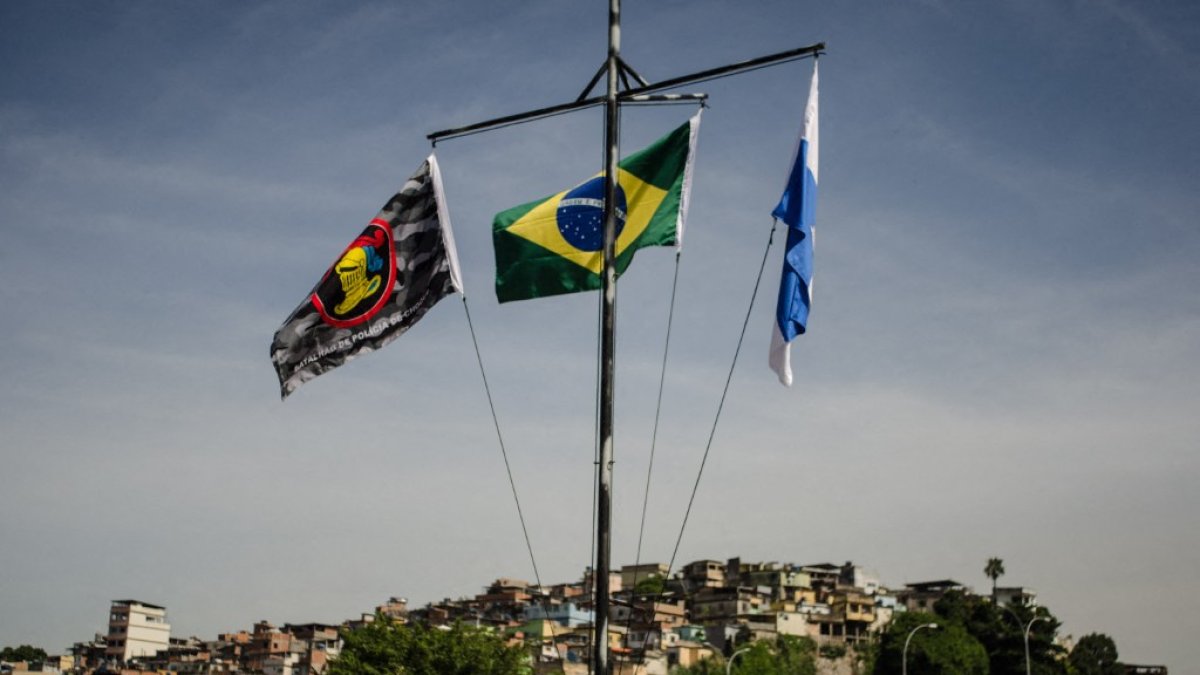
A file image of the favelas in Maré, north of Rio de Janeiro

The Department of State announced Thursday the designation of the Primeiro Comando da Capital (PCC) and the Comando Vermelho (CV), the two most powerful and violent criminal organizations in Brazil, as a "Specially Designated Global Terrorists" (SDGT) group. The United States intends to classify these groups as Foreign Terrorist Organizations as of June 5.
Secretary of State Marco Rubio described both groups as two of the most dangerous criminal organizations in the South American giant. According to Rubio, together they command thousands of members and have orchestrated brutal attacks against Brazilian police, public officials and civilians, with networks extending beyond the country's borders and into U.S. territory.
Designation as SDGT freezes assets under U.S. jurisdiction and restricts persons in the United States from doing business with the groups. Classification as an FTO, more broadly, can carry criminal penalties for those who provide material support to the organizations.

Opposition leader Flávio Bolsonaro's request
The decision comes a day after Brazilian senator and presidential candidate Flávio Bolsonaro, son of former conservative president Jair Bolsonaro, publicly confirmed having requested such a designation during a meeting at the White House with President Donald Trump. "I went specifically to ask him to designate the VC and the CCP as terrorist organizations, because that's what they are," the senator told reporters in Washington.
Bolsonaro went further and contrasted his visit with that of leftist president Lula da Silva, whom the opponent denounced as going "to the White House to lobby on behalf of drug traffickers."
"I went to do exactly the opposite: to emphatically ask President Trump to designate the PCC and the Red Command as foreign terrorist organizations as soon as possible," Flávio Bolsonaro said.

World
Red Command: Origin, territories and allies of one of the world's most dangerous narco-gangs
Williams Perdomo

Brazil's official position
President Luiz Inácio Lula da Silva has repeated that he will interpret the designation as interference in the October presidential elections, in which he faces Flávio Bolsonaro. The Lula administration, which has grown notably closer to the Trump administration in recent months, has sought to avoid these nominations, among other reasons, because it could open a path for U.S. military action in Brazil or impose sanctions against banks that unwittingly do business with gang members, according to a G1 report citing Brazilian security experts and a chronology of events.
Lula's special foreign policy advisor and former foreign minister, Celso Amorim, was the first to publicly react to Rubio's announcement: "Public security is a key issue for socioeconomic development. Organized crime is an evil that must be fought. International cooperation is welcome, especially on money laundering and arms trafficking. But the pretext for intervention is unacceptable."
What are the PCC and the Comando Vermelho, Brazil's most feared criminal groups?
The PCC is the largest and most organized criminal network in Brazil. Emerging from São Paulo prisons in the 1990s - following the 1992 Carandiru massacre - it grew into an organization with a presence in every state in the country and operations in several countries in Latin America, Europe and Asia. It controls large-scale drug trafficking routes, maintains links with Italy's 'Ndrangheta mafia and has diversified its activities into money laundering with cryptocurrencies and cybercrime.
Comando Vermelho, meanwhile, is Brazil's oldest criminal group, formed in Rio de Janeiro prisons in the 1970s. Historically, it dominated the favelas of that city and built a parallel system of government in poor neighborhoods where the state was less present. The two organizations maintained a truce for two decades, which broke down in 2016, unleashing a wave of violence that persists to this day.
Washington tightens the screws on criminal groups in the region
The move against the CV and PCC is part of a broader policy by the Trump administration to pressure other criminal organizations in Mexico, Venezuela and Ecuador. Rubio had already applied the same scheme in Ecuador, where he designated Los Lobos and Los Choneros as foreign terrorist organizations, noting that such a designation not only enables sanctions but also expands the possibilities for intelligence sharing with local governments "for potentially lethal operations." Previously, the same treatment was applied to Venezuela's Tren de Aragua, the Jalisco Cartel-New Generation and the Sinaloa Cartel.
LATEST