Uganda temporarily closes its border with DR Congo due to Ebola outbreak
Congolese authorities have attributed more than 220 deaths to the outbreak, with some 900 suspected cases. The World Health Organization has declared an international emergency.
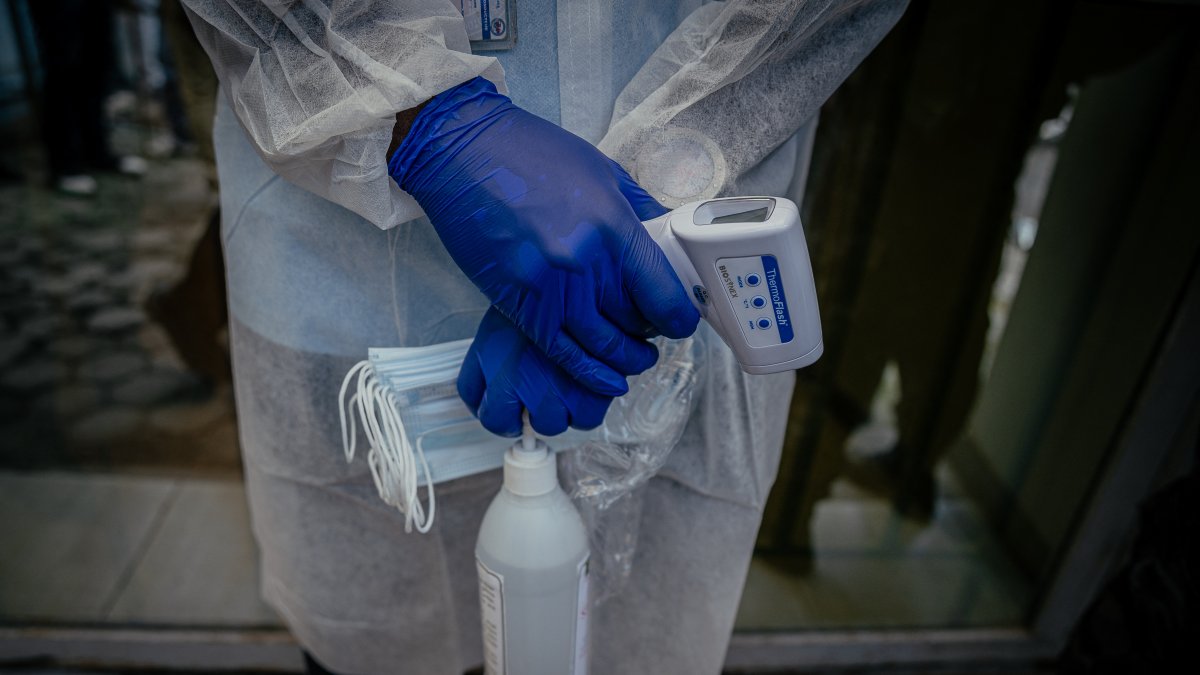
A health worker takes a temperature.

Uganda closed its border with the Democratic Republic of Congo (DRC) on Wednesday in a bid to contain the spread of the Ebola epidemic sweeping its neighbor, the country's Health Ministry announced.
The small East African country has recorded seven cases of the Bundibugyo variant of the Ebola virus since an outbreak was identified in DRC on May 14.
"Uganda is temporarily closing the border with the DRC with immediate effect," Health Ministry Permanent Secretary Diana Atwine told reporters.
Health
More than 1,000 cases in 11 days: Ebola outbreak in Congo prompts US to treat its exposed citizens in Kenya
Emmanuel Alejandro Rondón
"The only exceptions are for authorized Ebola response teams, humanitarian operations, food and cargo transportation, and security under strict health screening and monitoring protocols," she said.
Atwine also announced that arrivals from DRC will be required to serve a 21-day quarantine, under the supervision of the Ministry of Health and surveillance teams.
In addition, regular health checks will be carried out for students in schools near the border.
Congolese authorities have attributed more than 220 deaths to the outbreak, with some 900 suspected cases. The World Health Organization has declared an international emergency.
"Extremely serious and difficult"
The late detection of the first cases, insecurity in the affected regions, mistrust on the part of the population and the fact that there is no vaccine for this strain, Bundibugyo, complicate the management of the outbreak, the WHO director said during an online ministerial meeting organized by the African Centers for Disease Control and Prevention.
"We are intensifying operations as a matter of urgency, but at the moment the epidemic is moving faster than we are," the WHO chief said.
LATEST