Washington strikes military targets in Iran as truce hangs in the Strait of Hormuz
The administration has called these actions a necessary response to preserve the ceasefire and ensure free navigation in international waters.
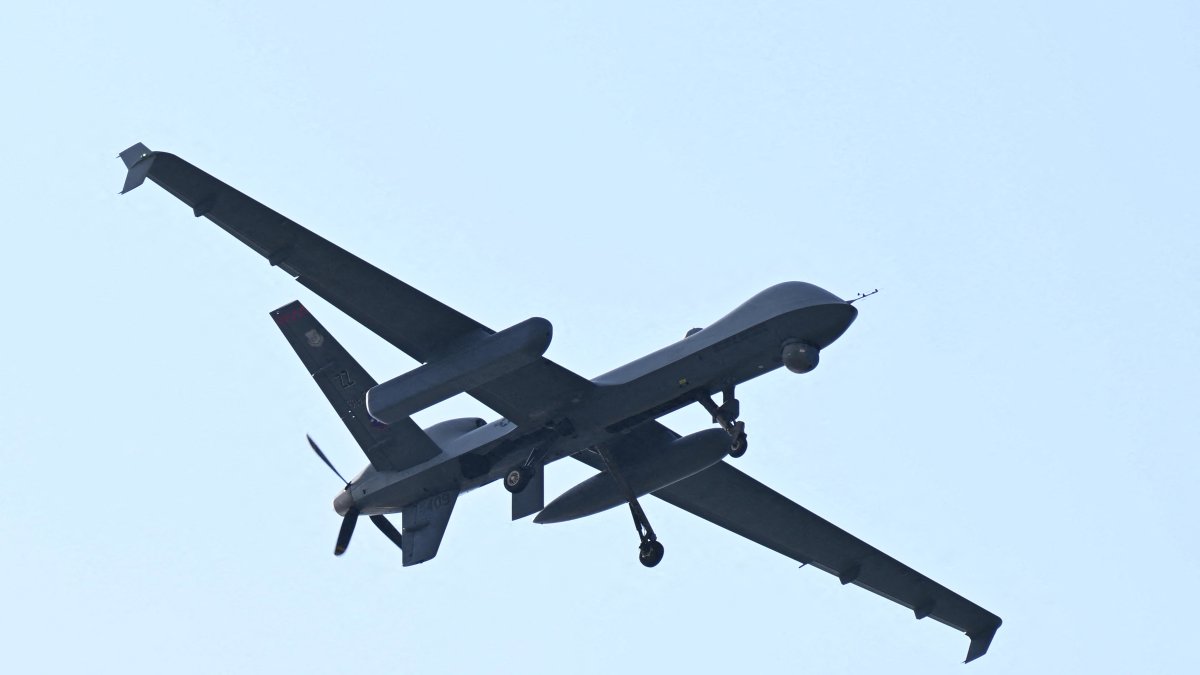
Reference image: A U.S. MQ-9 drone.

In a military operation executed during the early hours of Wednesday morning, U.S. forces carried out a series of tactical strikes inside Iranian territorywith the aim of neutralizing direct threats against regional security.
As revealed by a senior defense official to Reuters, the intervention was centered on a ground control station located in Bandar Abbasand on the interception of attack dronesthat were in operational phase near the Strait of Hormuz.
This strategic move comes at a critical moment in international diplomacy, while negotiations to end a conflict that has dragged on for three months and has destabilized global energy markets since its outbreak last February 28.
The administration has described these actions as a necessary response to preserve the cease-fire and ensure free navigation in international waters.
Drone neutralization and control of Bandar Abbas
The U.S. air raid succeeded in shooting down four Iranian "single-use" (suicide) attack drones that posed an imminent danger to vessels in the vicinity of the strait.
The operation also prevented the deployment of a fifth air unit by destroying the ground control station from which the launches were coordinated in the coastal area of Bandar Abbas.
"These actions were measured, purely defensive and intended to maintain the cease-fire," the official source told Reuters, stressing that the maneuver does not seek an expansion of hostilities, but the elimination of attack vectors that violate the terms of the truce.
This incident follows a series of defensive strikes carried out last Monday, where the U.S. Central Command (CENTCOM) destroyed missile launching positions and vessels attempting to lay mines on trade routes.
Tehran's Response
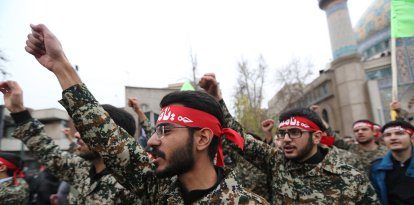
Iran's retaliation was not long in coming. The Islamic Revolutionary Guard Corps (IRGC) stated in a communiqué that it had responded to the U.S. strike on a military position near Bandar Abbas airport by carrying out an offensive against a U.S. air base located in Kuwait. "This response is a serious warning so that the enemy knows that aggression will not go unanswered, and if it is repeated, our response will be more decisive," the IRGC said.
The report coincides with the announcement by Kuwait's military, which almost simultaneously reported that its air defenses were intercepting "hostile" drones and missiles, without immediately specifying the origin of the projectiles.
Presidential firmness against the control of trade routes
The increased military activity coincides with an uncompromising policy stance by the White House.
President Donald Trump recently dismissed versions spread by Iranian state media suggesting possible shared control of the Strait of Hormuz between Tehran and the Sultanate of Oman as part of a future peace agreement.
The president was emphatic in declaring that this waterway, vital for the transit of one-fifth of the world's oil, will remain open and under international surveillance.
The fragility of the current truce is evident. While Washington maintains that its interventions are strictly preventive in nature to protect its forces and merchant ships, the regime in Tehran has denounced these attacks as a transgression of national sovereignty and a violation of the peace commitments established in April.

Politics
Trump rejects Strait of Hormuz tariffs, demands Oman align with Western powers
Andrés Ignacio Henríquez


LATEST