Nearly half of Americans say journalists are losing influence, study finds
In addition, more than half of those surveyed (58%) believe journalists are biased, and 56% believe they fail to separate their personal opinions from their reporting.
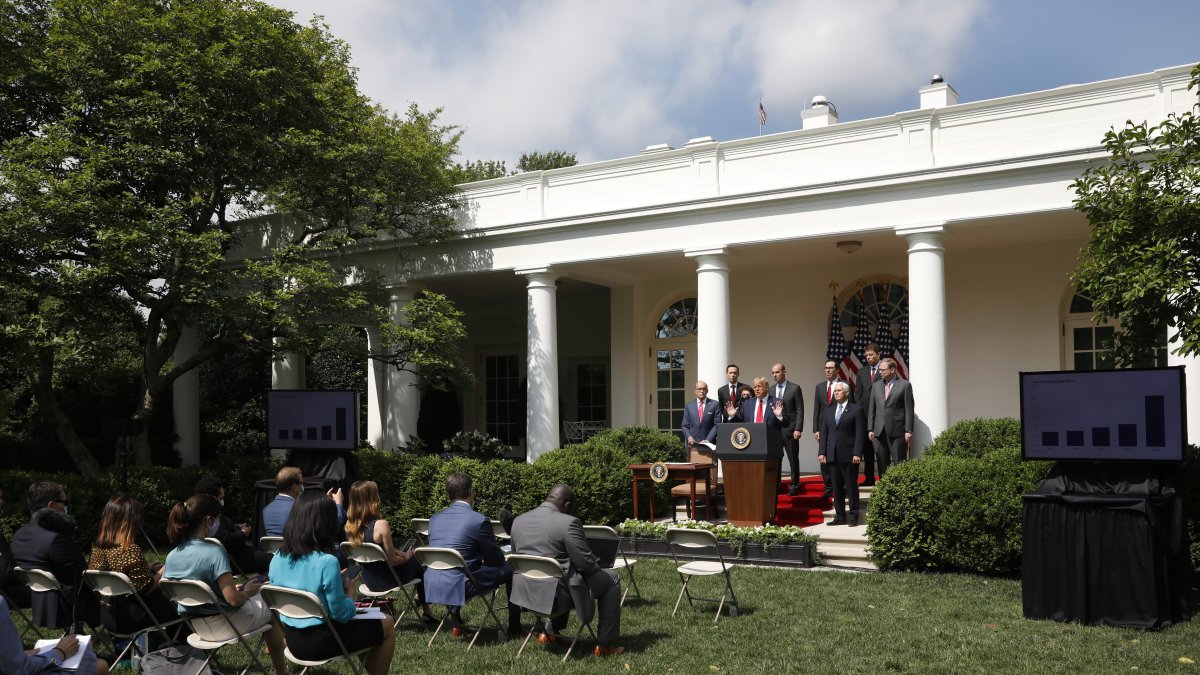
A press conference at the White House (File).

A new study from the Pew Research Center reveals that Americans value the role of journalists in society, but perceive their influence is in decline and fail to agree on who qualifies as a journalist in the digital age.
The survey, conducted among more than 9,000 adults and supplemented by focus groups of 45 people, explores how the public defines journalists, what it expects of them, and how it evaluates their performance in a media environment transformed by technology and digital platforms.
Perception of journalists: Between tradition and uncertainty
The notion of what constitutes a journalist is deeply influenced by the traditional image of journalism. Many Americans associate the word "journalist" with iconic figures such as Walter Cronkite or Tom Brokaw, modern anchors such as Lester Holt and Anderson Cooper, and even fictional characters such as Clark Kent.
According to the study, 79% of respondents consider someone who writes for a newspaper or news website to be a journalist, a higher percentage than those who see whistleblowers on television (65%) or radio (59%) as journalists.
However, the definition becomes fuzzy in new media. Fewer than half of Americans classify individuals who host news podcasts (46%), write newsletters (40%), or publish news on social networks (26%) as journalists. About a quarter of respondents expressed uncertainty about whether these figures are journalists.
Young adults, in particular, are more likely to regard new media content creators as journalists, although they also show less concern about whether the news comes from traditional journalists. As one focus group participant in his early twenties noted, “I feel like anyone can do it, in a way. There’s a lot of people out there just starting their own channels taking a little bit of the importance of somebody who maybe went to school to do that.”
Expectations: Honesty, accuracy, and knowledge
Americans have clear expectations of those who report to them, whether they are journalists or not. The survey highlights that 84% value that news providers report accurately, while 64% expect them to correct false information from public figures.
Honesty, intelligence, and authenticity top the list of desired characteristics, although the term "authenticity" generates varied interpretations among respondents. In addition, Americans prioritize in-depth knowledge of the topics covered over affiliation with a news organization or possession of a degree in journalism.
Declining influence and divided trust
Despite the fact that 59% of Americans consider journalists "extremely" or "very important" to the well-being of society, 49% believe they are losing influence, compared with only 15% who think they are gaining it.
Moreover, only 45% express confidence that journalists are acting in the best interest of the public.
This perception is colored by partisan divisions: Republicans and independents with Republican leanings are significantly more skeptical than Democrats, describing journalists with negative terms such as "elitist" and "dishonest."
More than half of the respondents (58%) consider journalists to be biased, and 56% believe they fail to separate their personal opinions from their reporting.
Along these lines, one focus group participant in his 30s summed up this distrust: “There are a handful of journalists, the ones that we say we trust, that I think are doing the right thing, following what the code of journalism should be. But the others in today’s world are all about clicks, eyeballs, money, things like that, and they don’t necessarily mind tweaking the truth to suit their audience or their advertisers.”
Journalists as advocates?
LATEST