More than 90% of exiled journalists in Latin America come from Venezuela, Nicaragua and Cuba
Most of the displacements are due to direct threats linked to the practice of journalism, as well as repressive measures by the regimes.

Nicolás Maduro

A regional report on the exile of journalists in Latin America identifies Venezuela, Nicaragua and Cuba as the countries that concentrate the highest number of cases of forced displacement for professional reasons. The study, titled "Displaced voices: radiography of Latin American journalistic exile 2018-2024," was prepared by the University of Costa Rica, Fundamedios, the UNESCO Chair UDP of Chile and the Association of Venezuelan Journalists Abroad.
According to the document, 92.3 % of the total number of exiled journalists in the region come from these three countries. Most of the displacements are due to direct threats linked to the practice of journalism, as well as repressive measures by the State.
Venezuela: The country with the most journalists in exile
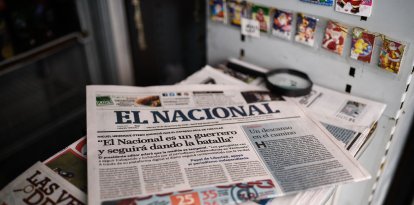
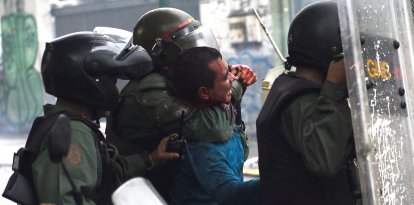
Venezuela tops the list with at least 477 cases recorded in the period analyzed. The report documents the existence of a hostile environment for the practice of journalism, characterized by arbitrary arrests, blockades of digital media, institutional pressures and sustained censorship.
These factors have led to the closure of numerous independent media outlets and the migration of press professionals, resulting in areas without news coverage. The report states that many journalists leave the country in two stages: first to neighboring countries such as Colombia and then to more stable destinations such as the United States, Spain, Argentina or Chile. The Association of Venezuelan Journalists Abroad estimates that more than a thousand journalists have left Venezuela in the last decade.
Nicaragua: Media closures and loss of nationality
In Nicaragua, at least 268 cases of exiled journalists have been registered. The report associates this increase with the intensification of repression following the social protests of 2018. In this period, Daniel Ortega's regime has closed media outlets, confiscated assets, judicially prosecuted journalists and even revoked the nationality of several of them.
The case of the newspaper La Prensa, whose editorial office was raided and whose directors were arrested, is cited as an example of the deterioration of conditions for practicing journalism in the country. In addition, the report points out that leaving the country for many journalists has implied immigration restrictions, confiscation of documents or surveillance at border points.
Cuba: Surveillance, restrictions and harassment
In Cuba, 98 journalists are reported to have been exiled during the period 2018-2024. The report indicates that independent journalism on the island faces a context of prolonged repression, which has intensified with the emergence of alternative digital media such as 14ymedio, El Estornudo and ADN Cuba.
The repressive methods include permanent surveillance, police summonses, mobility restrictions, house arrests and prohibitions on leaving the country. These actions have led dozens of journalists to emigrate.

Persecution is government-led
Exile with barriers and consequences
The document also points out that the process of leaving these countries is not always safe or legally viable. In several cases, journalists have reported passport confiscation, document retention and detentions at immigration controls. Faced with these restrictions, some are forced to resort to irregular routes.
Once outside, many face difficulties to continue practicing their profession due to legal obstacles, lack of recognition of their credentials or adverse economic conditions.
LATEST