Federal judge blocks RFK Jr. vaccination reform
The decision represents a major setback for the Trump Administration's health policy.
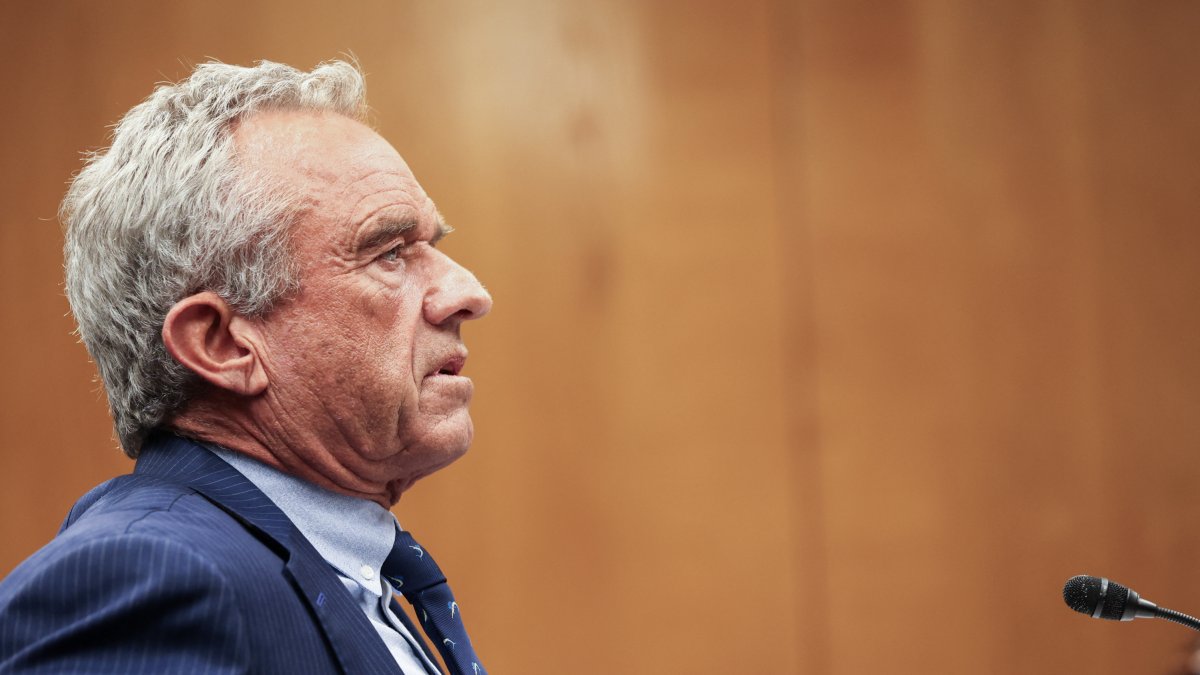
RFK Jr. on the Senate floor in a file image

A federal court in Massachusetts has ordered suspending the implementation of a series of vaccination policy changes pushed over the past year by the Department of Health and Human Services, led by Secretary Robert F. Kennedy Jr.
"The Court concludes that, in addition to being contrary to law, the issuance of the January 2026 Memo was arbitrary and capricious because it abandoned the agency’s longstanding practice of getting recommendations from ACIP before changing the immunization schedules without sufficient explanation," said Justice Brian E. Murphy, an appointee of former President Joe Biden, referring to the CDC announcement earlier this year where it announced the alteration of the child and adolescent immunization schedule.
The decision represents a major setback for the Trump Administration's health policy and also opens a new chapter on the scientific evidence surrounding the action taken by the country's top health agency.
The ruling comes in response to a lawsuit filed by several medical organizations, which questioned the scientific basis for changes made to the childhood immunization schedule and access to COVID-19 vaccines. According to the judge, the changes did not follow the usual technical and scientific review procedures that have guided these types of recommendations.


Among the measures suspended were reducing the number of diseases covered by routine vaccination and limiting access to certain doses against COVID-19 in some population groups. The renewal process of the advisory committee in charge of evaluating these policies was also questioned, whose new members, according to the plaintiffs, did not have sufficient experience in the field of vaccines.
From the Trump Administration, however, it has been defended that the decisions are part of a legitimate health policy approach where standards have been respected. Also, officials argue that there is room for reasonable disagreement on public health issues and that recommendations can be adjusted based on different criteria, such as societal perception of risk or public confidence in vaccination programs.
In January, when the CDC announced the new recommendations, then-Deputy Assistant Secretary for Health and Human Services (HHS) Jim O'Neill, serving as the agency's acting director, signed a memo endorsing the results of a scientific assessment ordered by the president Donald Trump in December. The analysis compared childhood immunization practices in 20 developed countries and concluded that the United States is a "global outlier," both in terms of the number of diseases included in its schedule and the number of doses recommended. In addition, he noted that the country does not achieve higher vaccination rates than other nations that recommend fewer vaccines.
In the legal case, lawyers for the federal government argued that the final authority on whether vaccines are mandatory rests with the states, so federal recommendations are not binding in all cases. In this regard, the Trump Administration has defended that its measures seek to offer greater flexibility and respond to a context in which part of the population shows reluctance towards vaccination.
During the judicial process, it was also raised that those responsible for these decisions have broad powers to define health policy, even in scenarios where there is scientific controversy. This argument was rejected by the court, which stressed the importance of maintaining evidence-based standards.
The ruling is not final and could be appealed in higher instances. In the meantime, the ruling keeps the previous recommendations in force and reopens the debate on how to balance scientific criteria, political decisions and public confidence in health matters.
LATEST