Trump Administration Rejects Maduro's Request to Dismiss His Drug Trafficking Case in Court
According to prosecutors, the defendants can still use their own personal resources—including funds shared between the two—to finance their defense.
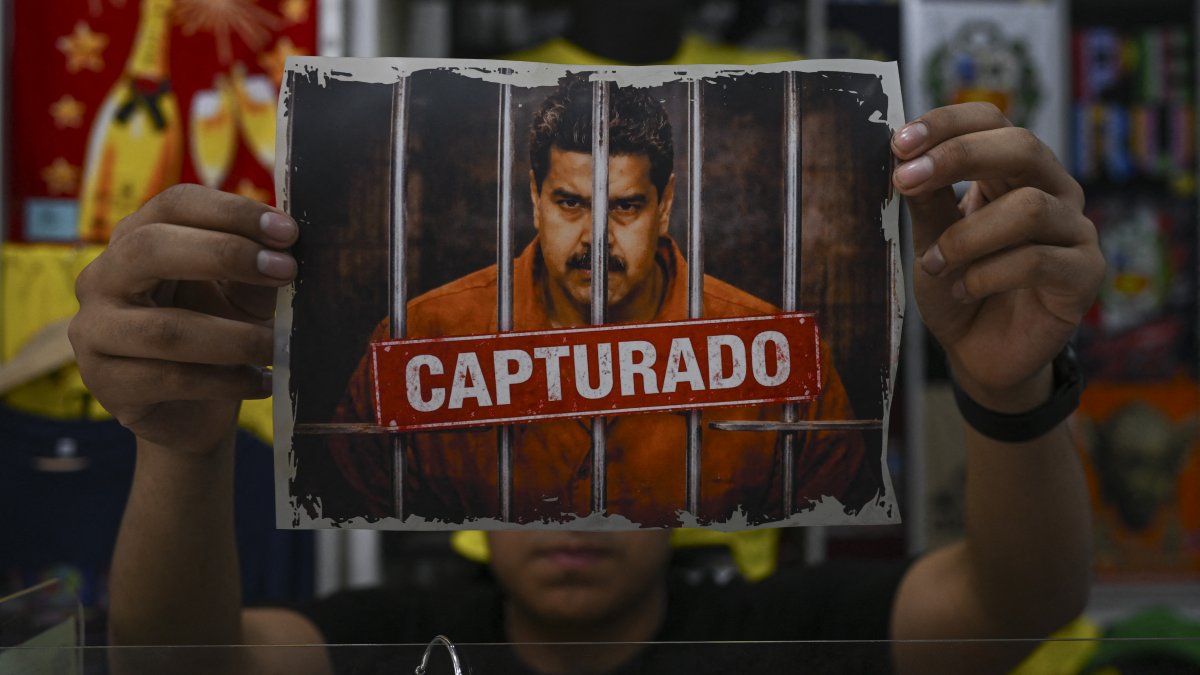
A man holds an image of Nicolas Maduro in Lima, Peru

The administration of President Donald Trump asked a federal court in the United States to reject the request of former Venezuelan dictator Nicolás Maduro to dismiss criminal proceedings against him on charges of drug trafficking and narcoterrorism.
Maduro and his wife, Cilia Flores, had asked the court last month to dismiss the case, arguing that the U.S. government had interfered with their right to an adequate defense by preventing them from using Venezuelan state sanctioned funds to pay their lawyers.
However, in a court brief filed Friday, federal prosecutors backed by the Trump Administration argued that the argument by the ex-dictator and his wife is without merit.
According to prosecutors, the defendants can still use their own personal resources—including funds shared between the two—to finance their defense, but not money controlled by Venezuelan regime entities under U.S. sanctions.
The Treasury Department, through the Office of Foreign Assets Control (OFAC), explained that it already granted a limited exception to the sanctions that allows Maduro and Flores to use their personal funds to pay legal fees. However, it refused to authorize the use of resources linked to the Venezuelan state, which Washington keeps under a broad sanctions regime.

Society
Pam Bondi moved to military housing after cartel threats following Maduro's capture
Emmanuel Alejandro Rondón

Prosecutors also claimed that a broader authorization previously granted to use those funds was the result of a clerical error and was later corrected.
Maduro, who came to power in Venezuela in 2013, was captured along with his wife on Jan. 3 in a U.S. military operation in Caracas and transferred to New York to face federal charges. Both pleaded not guilty during their first appearance in federal court.
The indictment alleges that the former Chavista dictator participated for years in a criminal network that collaborated with drug traffickers to ship large quantities of cocaine to the United States. Prosecutors allege that Maduro and his allies allegedly used Venezuelan state structures to facilitate these operations.
Following his capture, Maduro remains detained at the Metropolitan Detention Center in Brooklyn while the judicial process progresses.
The ongoing dispute over the financing of his defense has become one of the first major legal clashes in the case. Maduro's lawyers argue that preventing access to funds needed to pay his legal team violates his constitutional right to adequate legal representation.
Prosecutors, meanwhile, insist that sanctions against the Venezuelan regime cannot be used to funnel state money into the defense of a defendant in criminal proceedings in the United States.
LATEST