'They want fraud to be easy': Republicans target Democrats at the start of the SAVE Act debate
Ted Cruz (R-TX), Marsha Blackburn (R-TN), and other GOP senators attacked Democrats for opposing the bill.
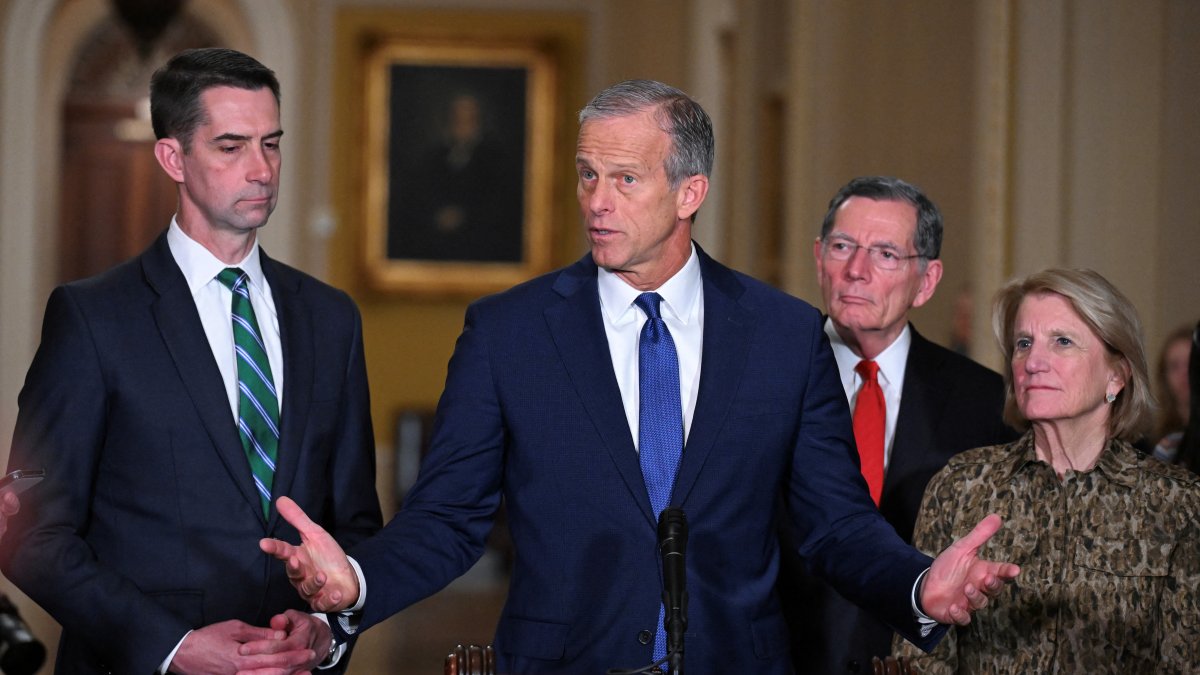
John Thune on Capitol Hill/ Roberto Schmidt.

The Senate began debate on the SAVE Act, the Republican election reform proposal. Ted Cruz (R-TX), Marsha Blackburn (R-TN) and other GOP senators attacked Democrats for their opposition to the bill, arguing that its policies encourage voter fraud across the country. Debate on the legislation is expected to last into the wee hours of the morning, though it will remain on the floor until next week.
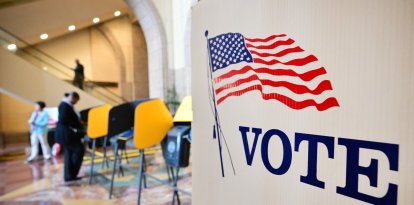
The SAVE Act, which has already passed the House, would require people registering to vote in federal elections to present proof of citizenship and a photo ID. Republicans have defended the legislation as a step toward "common sense."
On Tuesday afternoon, the Senate voted 51-48 to begin debate. Lisa Murkowski (R-AK) voted against and Thom Tillis (R-NC) abstained. Republicans are expected to seek to amend the bill with issues they call "80-20 issues" to boost their approval rating among Americans. The amendments would relate to banning transgender athletes from participating in women's sports and gender-affirming surgeries for minors nationwide.

"Democrats want voter fraud to be widespread and easy"
Moments after the vote, Republican senators defended the bill and sharply criticized Democrats.
"The simplest solution is usually the right one. The simplest solution is very clear. The Democrats in this body want illegals to vote for them. They want power enough that they are more than happy to undermine democracy, to try to seize power. I get that from their personal self-interest, but it is not in the interest of the men and women they represent. It is not in the interest of the people of America," Senator Cruz said from the floor of the Senate.
"They want voter fraud to be rampant and to be easy. Ask yourself, do the American people have a difficult time buying a beer? Do they have a difficult time getting into an R-rated movie? Do they have a difficult time getting on an airplane?" he added.
"Now it is common sense that you are going to show a photo ID many times a day to prove that you are who you are. And it is common sense that everyone should show a photo ID when they go to the ballot box to cast that vote," Sen. Blackburn, who is a candidate for governor of Tennessee, said.

Politics
Senate passes bipartisan housing bill to expand access and improve affordability
Carlos Dominguez

Politics
Marco Rubio or JD Vance? The question every Republican is asking, including Trump
Emmanuel Alejandro Rondón
"The SAVE Act is very simple: you need an ID to vote and proof of citizenship"
They were joined by Senator Rick Scott (R-FL), who remarked on the bill's popularity among Americans: "The SAVE Act is very simple. First, you need an ID to vote. Second, you need proof of citizenship to register in our elections. These aren't controversial IDs."
Another Republican to speak was James Lankford (R-OK), who chose to make a more historical argument: "Elections have been routinely done through the history of our country since our constitution was ratified in seventeen eighty nine. It has been a distinguishing mark of the United States. We're the oldest functioning constitutional democracy in the world."
"What we as Republicans have brought and brought out of the house and brought to the floor of the senate is not a trust bill, it's a trust and verify bill. It takes the next step from the Voting Rights Act of nineteen sixty five, which mandated that it would only be citizens that would vote. (...) So we wanna just be able to bring in most basic thing that all Americans all can agree on, we would hope. That only citizens of the United States would be able to vote and that before you register to vote, we would have some way to be able to show you actually are a citizen," the Oklahoma Republican added.
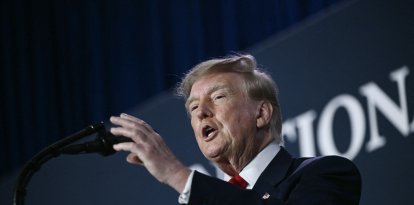
Donald Trump has called the bill a "number one priority," while John Thune, the Republican majority leader in the Senate, has reiterated that he cannot guarantee its passage.
The main roadblock to the bill's passage is that the votes are not there to eliminate the filibuster rule in the Senate. This rule requires at least 60 votes (the GOP has 53) to end debate on a bill and bring it to a vote. President Trump has publicly lobbied to eliminate this historic rule, a move most Senate Republicans oppose.
LATEST