






Assault on live journalist reopens debate on insecurity in Mexico weeks ahead of World Cup
Mexican authorities insist that security is "guaranteed". However, the governments of the United States and Canada maintain active travel alerts for the host cities, with specific crime warnings and, in the case of Canada, maps indicating areas at risk from organized crime and kidnapping.

The TV broadcast was live as sports journalist Fernando Vargas analyzed the Mexico from his car, parked at a gas station in Cuernavaca, the capital of Morelos state, when a gunman burst onto the scene, opened the driver's door, cut the car's engine, and pointed a gun at him. "The keys, quick, give me phones and wallets. The car too, get down. Stop recording," said the criminal, captured by a video that, in a matter of hours, circulated throughout Mexico and soon spread beyond its borders.
The assault took place on the night of Tuesday, May 19, 2026, and fortunately, no one was injured. Vargas, who also serves as communications director of the National Professional Basketball League, and his companion were unharmed, though the attacker escaped with their belongings and a gray pickup truck. As of this article’s publication, no arrests had been reported, and the case remained under investigation by the Attorney General’s Office of the State of Morelos, according to several local media outlets covering the incident.
The episode, which occurred in real time in front of the audience of the Activo Deportes program, in statistical terms, is just one more robbery in a country accustomed to this type of event. However, the fact that the victim was a journalist, that everything was recorded, and that it happened just a few weeks before Mexico receives hundreds of thousands of tourists for the 2026 FIFA World Cup reopens the debate on insecurity in the neighboring country.
A dangerous country for those who report
Although Vargas' case ended without physical consequences, the violent robbery is part of a delicate context that international organizations have been documenting for years. According to the UN Office for Human Rights, between January 2016 and December 2025 at least 89 journalists were murdered in Mexico, along with eight media workers and 181 human rights defenders, in possible relation to their work. In the same period, the UN counted 25 missing journalists.
Reporters Without Borders has insistently denounced that Mexico is the most dangerous country in the region to practice journalism. Most attacks do not occur during high-risk coverage but in the daily routine of the profession, which makes it especially difficult to prevent them.

Sports
Global surprise: Ancelotti calls up Neymar for 2026 World Cup after injury, controversy and near-miraculous recovery
Emmanuel Alejandro Rondón
Although the assault against Vargas does not necessarily fit into the category of aggression directed against the press -everything indicates that it was a robbery of opportunity and that the offender did not know who he was assaulting—its massive diffusion somehow rekindled the underlying problem of the vulnerability of those who work on public roads in a country where violence is structural.
Morelos, among the states with the highest cost
The place of the assault is not a surprise either. Morelos is among the states where violence hits the local economy hardest. According to the Mexico 2026 Peace Index, prepared by the Institute for Economics & Peace (IEP), Morelos-along with Guerrero, Colima and Sinaloa—registered a cost of violence equivalent to around 20% of its state GDP, well above the national average.
The same report offers a nuanced picture of the country in security matters. The good data: Mexico improved 5.1% in the peace index and closed 2023 with nearly 7,000 fewer homicides than the previous year, a reduction of 22.7%. However, there is a lot of bad data: the reduction in homicides in percentage terms coexists with the reality that the country ended the year with more than 24,000 murders, added some 35,000 disappearances and, for the first time in seven years, the perception of insecurity rose from 73.6% to 75.6% among the population. Fear, the study concludes, grew in 24 of the 32 states.
The 2026 World Cup in sight
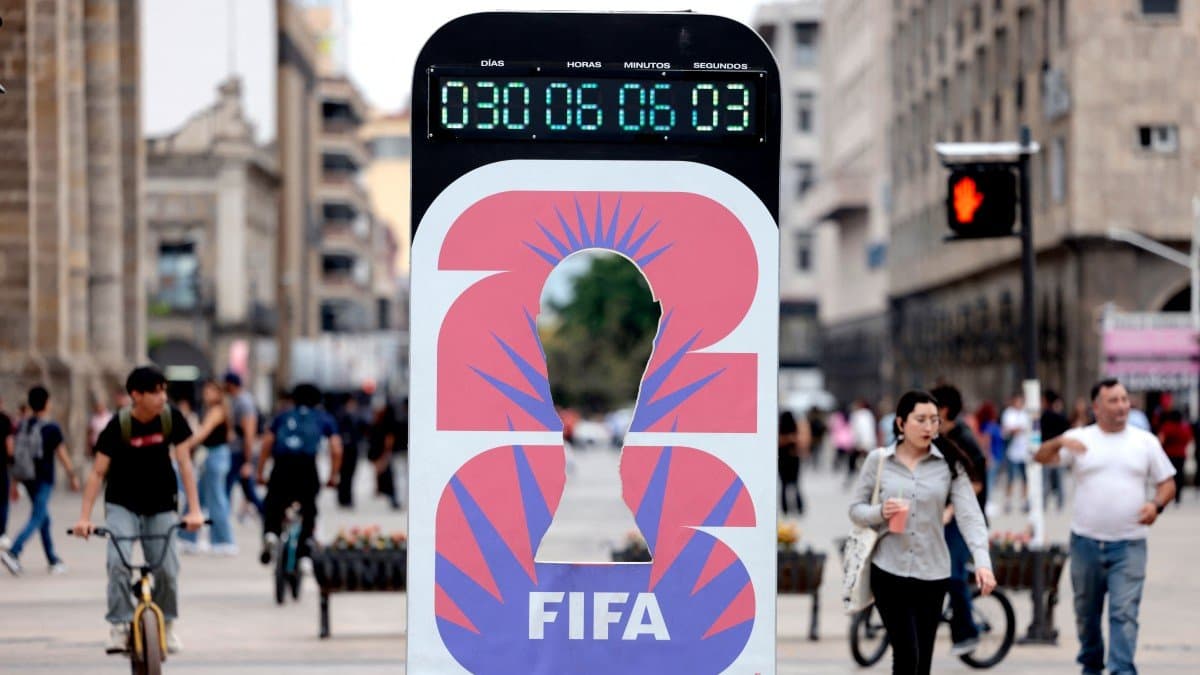
Insecurity in Mexico is now a particularly sensitive topic of conversation. On June 11, Mexico will inaugurate the World Cup at the Azteca Stadium in Mexico City, in a tournament it shares as host with the United States and Canada. The three Mexican venues -Mexico City, Guadalajara, and Monterrey—expect the arrival of approximately three million tourists.
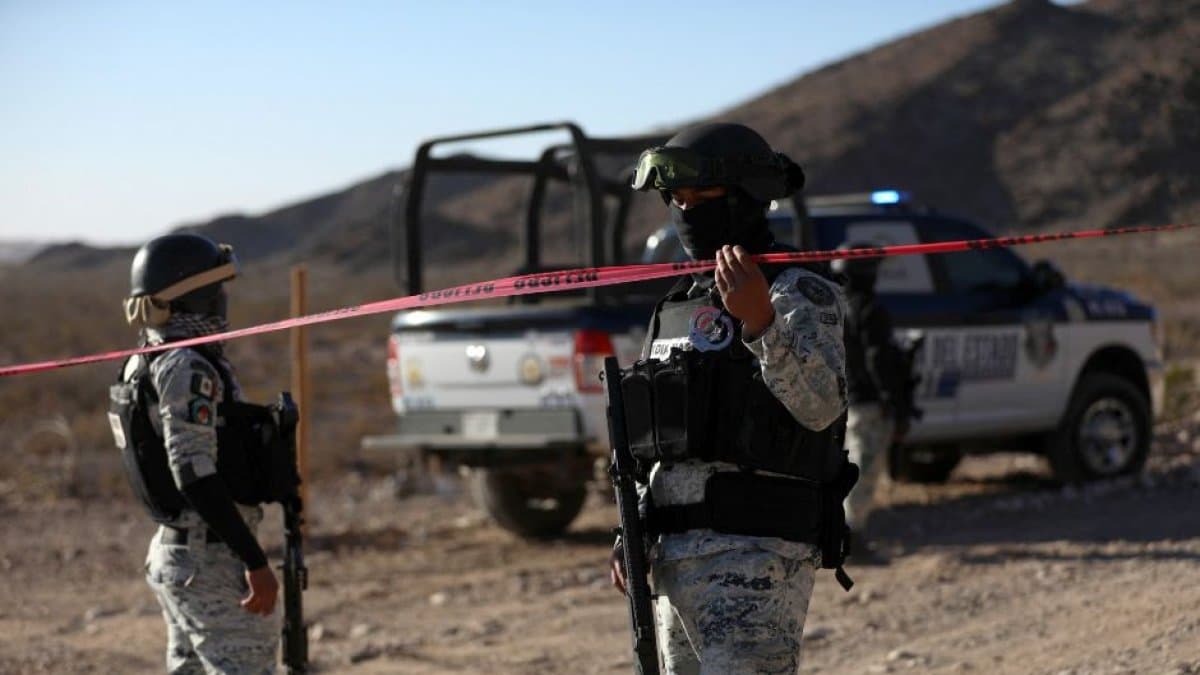
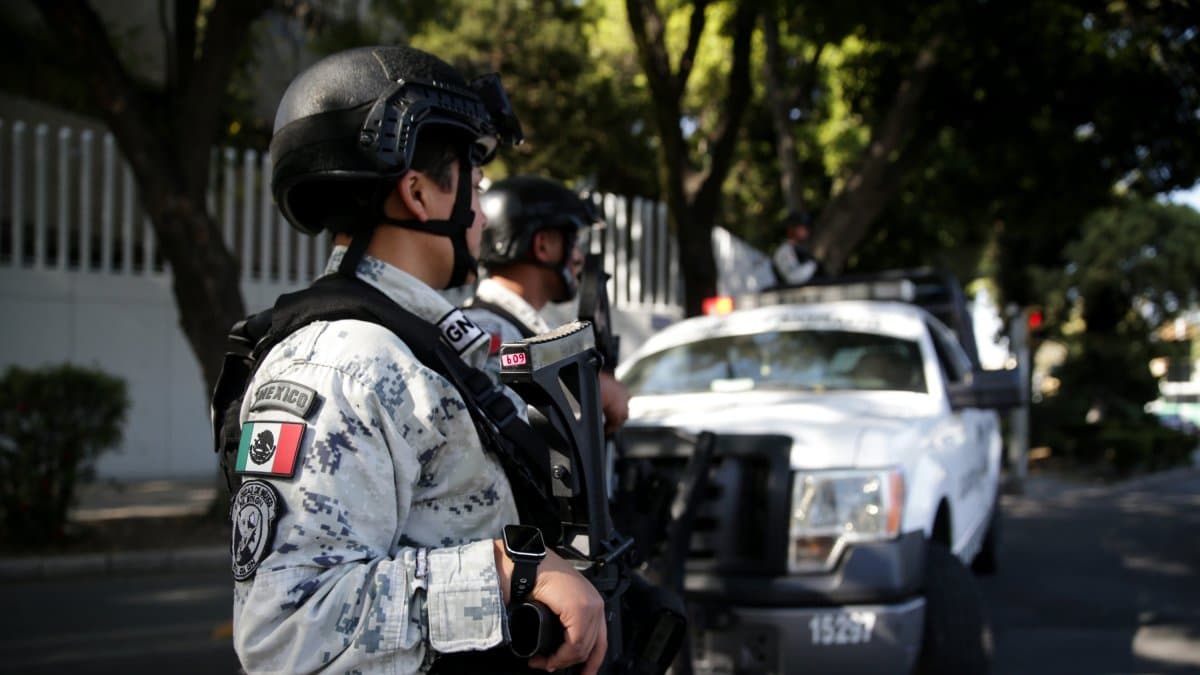
Insecurity has become a big issue in the run-up to the event. Following the death of the leader of the Jalisco Cartel New Generation, Nemesio Oseguera "El Mencho," and the wave of violence he unleashed in some twenty states -which in February left tourists stranded, flights cancelled in Jalisco and a security alert from the U.S. Embassy asking its citizens to take refuge in its hotels-, the Government of the President Claudia Sheinbaum launched the "Plan Kukulcán," an operation of some 99,000 troops including military, federal forces and private security to arm headquarters and tourist areas. The Secretary of Security, Omar García Harfuch, has emphasized the coordination with the United States and Canada to protect the routes between cities.
Mexican authorities insist that security is "guaranteed." However, the U.S. and Canadian governments maintain active travel alerts on host cities, with specific crime warnings and, in the Canadian case, maps indicating areas at risk for organized crime and kidnapping.
Nor is the assault on Vargas the only episode that has strained the pre-tournament calendar. On April 21, a gunman opened fire on tourists at the top of one of Teotihuacan's pyramids - a World Heritage Site and one of the country's most visited destinations - killing one Canadian tourist and wounding a dozen others. President Sheinbaum described it as an "isolated incident," acknowledged that the site lacked security filters and attributed motivations inspired by the 1999 Columbine massacre to the attacker. Mass shootings in public spaces are indeed rare in Mexico compared to the United States according to available data; even so, the attack forced the government to order the immediate reinforcement of surveillance in archeological and tourist zones throughout the country.
Security analyst David Saucedo pointed out, in declarations to The Associated Press, that concentrating forces in the main tourist destinations could leave other areas more affected by crime unprotected, and that episodes such as the one in Teotihuacan show that public security agencies "are overwhelmed". For the visitor, the greatest risk, according to experts, is not attacks or cartel violence -although precautions must be taken—but common crime: assaults and robberies of opportunity such as the one experienced by Vargas.
🛠 Do you think there is an error in this article?
Recommendations
LATEST