ANALYSIS
'Coup in progress': Washington's phrase that shook Bolivia
The streets of the Andean country are overrun by sectors linked to organized crime, according to the latest statements from U.S. Deputy Secretary of State Christopher Landau. But behind the headline lies a much more complex crisis, a political battle over narrative and questions that remain unanswered.
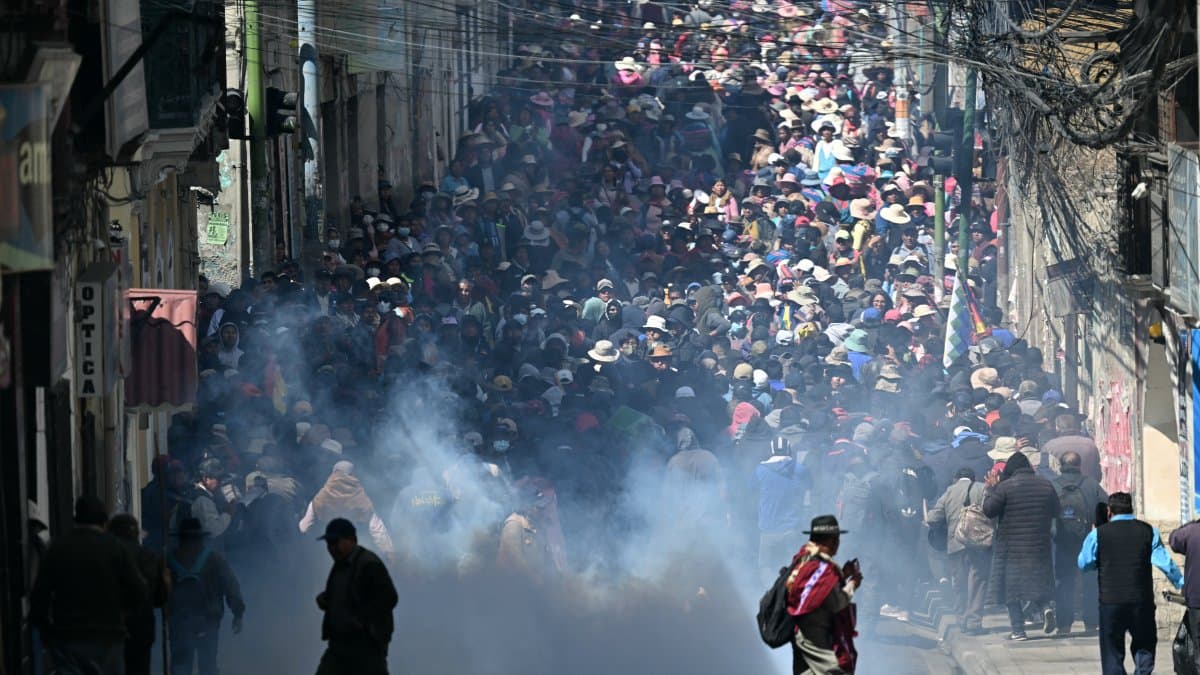

Latin American politics has once again entered a zone of high tension. This time the epicenter is Bolivia, where mass protests, blockades, clashes and a growing institutional crisis led the United States to launch one of the strongest diplomatic accusations in recent years: publicly denouncing that there is a "coup d'état in progress."
The statement did not come from an analyst or a local political actor. It came from the U.S. Deputy Secretary of State Christopher Landau, who stated that behind the violenceand the mobilizations there is a network of interests linked to organized crime that would be trying to destabilize the Bolivian government.
The phrase shook the regional political chessboard because it turns a crisis that until now had been contained internally, or at least tried to be managed internally, into something much bigger: a dispute over democracy, transnational crime, geopolitical influenceand regional stability.
But a question immediately appears: is Bolivia really facing a coup attempt or are we facing a movement driven by internal interests that escalated into a political war?
Let there be no mistake: those who lost overwhelmingly at the ballot box in Bolivia last year are trying to overthrow President @Rodrigo_PazP by organizing RIOTS and BLOCKADES with the support of organized crime and drug traffickers. I spoke with my friend President Paz this…
The phrase that completely changed the conversation
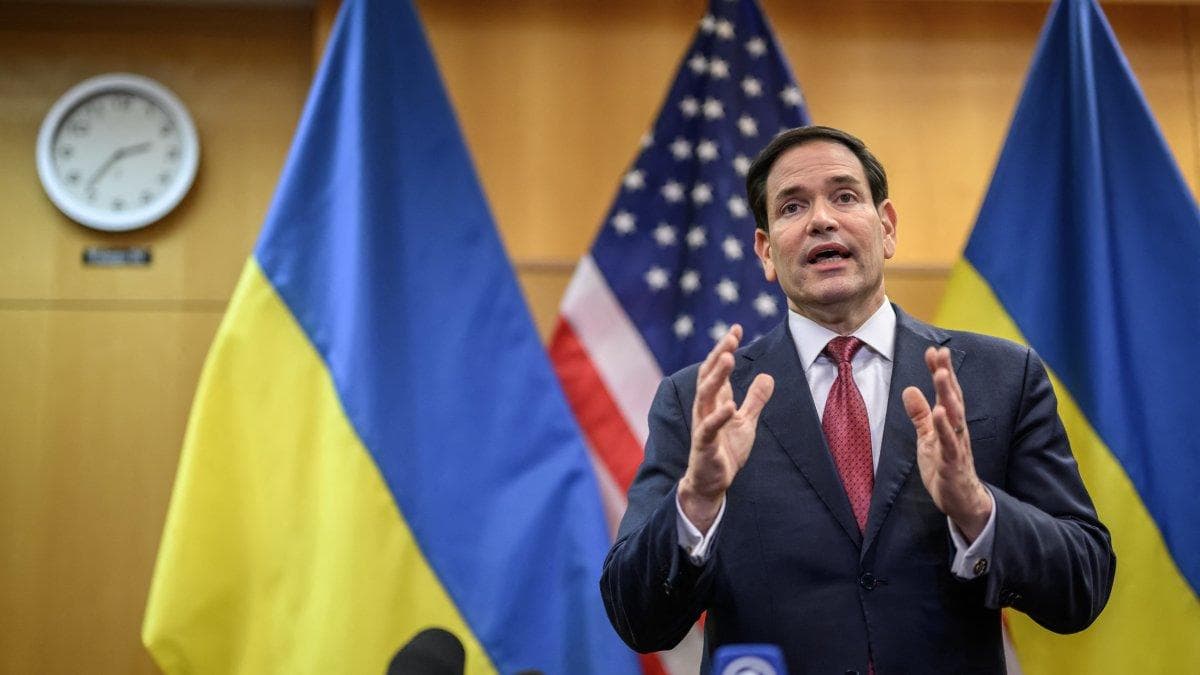
During a public presentation in Washington, Landau stated that the Bolivian situation should not be interpreted simply as a social protest. According to his vision, the mobilizations respond to a much broader operation.
"This is a coup d'état that is underway," the U.S. official declared, adding that there is a "perverse alliance between politics and organized crime" operating in different countries of the region.
He also revealed that he had spoken directly with Bolivian President Rodrigo Paz and expressed concern about the accelerating deterioration of the situation.
The U.S. statement not only implied diplomatic support for the Bolivian president. It also sent a political message to all of Latin America: Washington considers that what is happening in Bolivia could become a regional precedent.
And that automatically raised the temperature of the conflict.
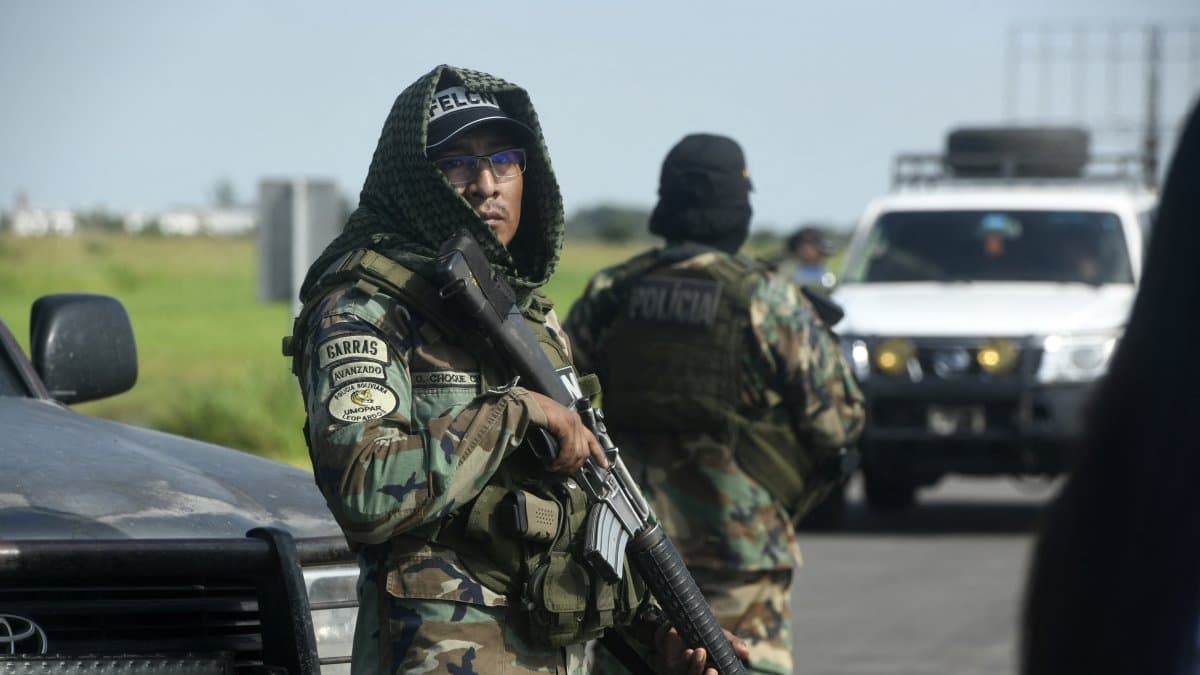
What we do know: Bolivia is going through a real crisis
Beyond the political interpretations, there is something that nobody disputes: Bolivia is going through an extremely delicate situation.
During the last few days, several regions of the country registered protests, confrontations and road blockades to demand the departure of Paz from power, began to affect essential activities.
La Paz, the country's main political center at an altitude of 3,600 meters, became the most visible scene of the crisis.
The situation, the most critical economically speaking according to analysts in four decades, caused interruptions in supply chains, difficulties in transporting fuel, problems in the distribution of food and reports of shortages of medical supplies in some areas.
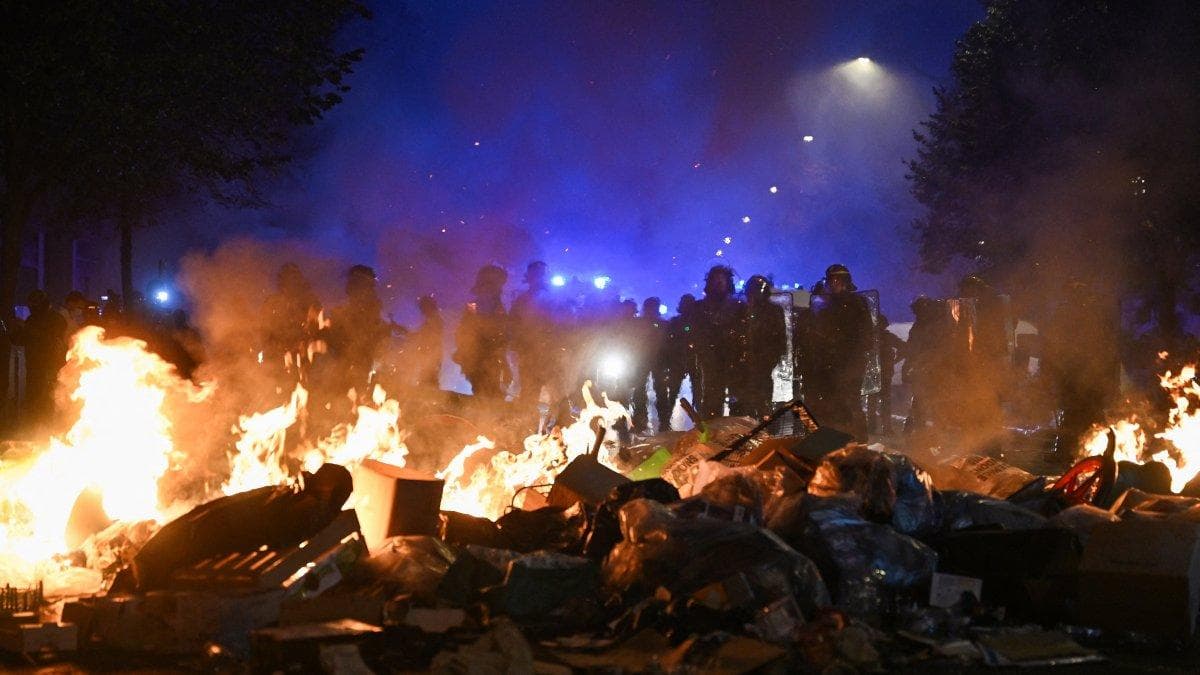
There were also attacks on public buildings, looting and clashes with security forces.
The tension left images reminiscent of other critical episodes that Latin America has experienced in recent years: Streets taken over, institutions under pressure and an increasingly polarized society.
The crisis exists. What is under discussion is how to interpret it and who is taking it to the limit.
The origin of the conflict: The story began long before the chaos
One of the most common mistakes in the midst of a political crisis is to think that everything started when the riots appeared. It didn't.
The mobilizations initially arose for economic and social reasons. Different sectors expressed discomfort due to rising costs, structural problems, economic situation and rejection of some reforms promoted by the government. Bolivia is a country of protests.
As the days passed, the protest ceased to be solely economic. The conflict began to become politicized.
Some organizations began to demand substantive changes and later sectors appeared that directly called for the presidential resignation. It is a pattern that the region has seen on other occasions: an economic crisis transforms into a political crisis and then into an institutional crisis.
And once that transition occurs, the situation becomes much more difficult to control.

The most sensitive point: The evidence behind the accusation
Although there are no known judicial investigations, official reports or disseminated documentation exposing structures, financing or specific mechanisms behind the alleged operation denounced by Washington, this does not automatically mean that the accusation is not real.
Let us remember that in crisis scenarios, narratives are also tools of power. Calling a protest a "coup d'état" completely changes international perception, political legitimacy and diplomatic reactions. Words, at times like this, carry weight.
The shadow of Evo Morales reappears, the architect behind the chaos?
As the tension increased, another name returned to the center of the Bolivian political scene, someone who never fully left: Evo Morales.
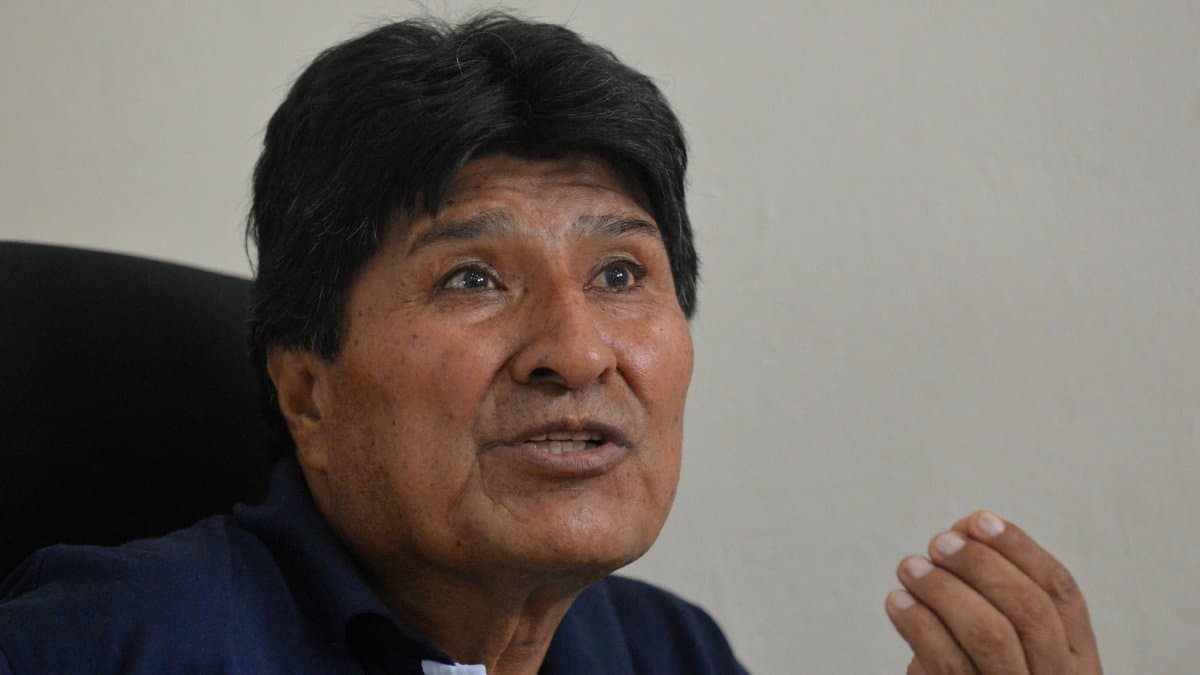
The former coca grower president backed the mobilizations and described them as a "people's uprising," harshly questioning the policies promoted by the current government. Morales' statements coincidentally coincided with the renewal of an arrest warrant against him, after he failed to appear in a trial for alleged trafficking of a minor.
The prosecution accuses him of having a relationship with a 15-year-old girl with whom he had a daughter when he was president. The parents of the alleged victim, according to the file, would have consented to the facts in exchange for benefits.
Evo Morales, wanted by justice since October 2024 for this case, is in the coca growing area of the Chapare, his political stronghold, under the protection of thousands of peasants who set up guards to prevent a police raid.
For many analysts and sectors close to the government, Morales' political influence has contributed to the radicalization of the situation. The Aymara has also been linked for many years with drug trafficking businesses in the region.
The discussion goes far beyond a political figure, as complex as he may be. In Bolivia there are still wounds and divisions derived from years of polarization, disputes for power and conflicts over the economic and political model of the country.
The battle that is also being waged outside Bolivia
The crisis is no longer solely Bolivian.
U.S. statements included a call to other Latin American governmentsto institutionally support Rodrigo Paz.
Landau even questioned the silence of some countries and called for a more active stance from regional actors such as Brazil and Colombia.
That detail reveals something important. The debate is no longer just about who controls the streets or who wins the internal political dispute. The debate is also about who manages to impose the international narrative. Because if the situation is seen as an aggression against democracy, the diplomatic response changes.
If it is interpreted as a social outburst, the regional reading is completely different. And that difference can define support, international pressure and future alliances.
The question no one can answer yet
Today Bolivia seems to be caught between two completely different narratives.
On the one hand, a government and an international power speak of an anti-institutional operation driven by criminal sectors. On the other, opposition groups and social movements claim that the country is experiencing a popular rebellion born of economic discontent.
And in the middle of both versions appears a reality difficult to deny: a country with blocked streets, institutions under pressure and a crisis that continues to grow.
Perhaps the central question is not yet who is right. The real question is another:
Is Bolivia seeing an organized attempt at political rupture or the collapse of tensions that had been building for years?
The answer could define not only the future of the country, but also the political balance of the entire region.
🛠 Do you think there is an error in this article?
Recommendations

LATEST