Elon Musk's ultimate business? SpaceX reveals its financial secrets for the first time and prepares for Wall Street
Musk's heavy bet on artificial intelligence development caused capital expenditures to nearly double to $20.7 billion.
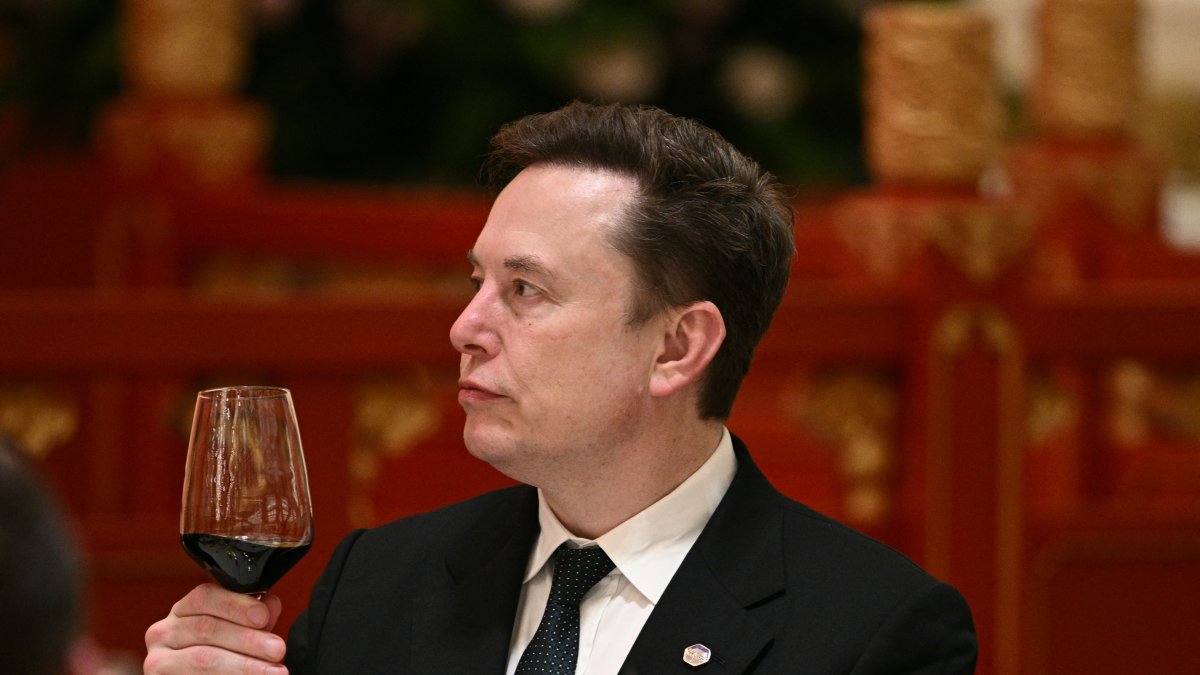
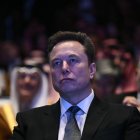
Elon Musk in China during the trip on which he accompanied President Donald Trump in mid-May.

SpaceX has put an end to decades of financial hermeticism. In a key strategic move for its upcoming transition to public markets, the privately held company officially disclosed the balance sheet of its business operations.
The data confirm the extraordinary growth of its rocket launch and satellite internet divisions, but also highlight the high capital costs demanded by its founder's new technological vision.
According to the New York Times, which cites the legal documentation required for companies aspiring to go public, SpaceX's revenues amounted to $18.7 billion during 2024, an increase of 33% compared to the previous fiscal year.
Society
Elon Musk loses lawsuit against OpenAI: Jury rules he waited too long to bring it
Carlos Dominguez
However, Musk's strong commitment to the development of artificial intelligence caused capital expenditures to nearly double, reaching $20.7 billion.
As a direct consequence of these long-term investments, the company posted a net loss of more than $4.9 billion last year. The trend worsened in the first quarter of this year, where it reported losses of $4.3 billion on revenues of $4.7 billion.
Musk's absolute control and the jump to the public market.
The opening of the accounting books obeys preparations for what could cement itself as one of the largest initial public offerings (IPOs) in financial history.
With a self-valuation of $1.25 billion, SpaceX plans to land on the Nasdaq index under the symbol SPCX as soon as next month, aiming to raise between $50 billion and $75 billion from institutional investors.
Goldman Sachs bank has been selected to lead the transaction as lead underwriter. The IPO prospectus also clarifies the absolute and undisputed control that Elon Musk exercises over the organization.
The entrepreneur owns approximately 50% of the outstanding common stock but retains more than 85% of shareholder voting power thanks to a preferred voting stock structure.
Under this corporate scheme, the influence of outside investors will be limited vis-à-vis the founder's executive decisions, mitigating the traditional quarterly market pressure that Musk himself has been critical of in the past.
Based on the company's current valuation, Musk's direct stake stands at over $635 billion, cementing his position as the richest man on the planet.
Starlink and Artificial Intelligence: The drivers of a historic market.
The most profitable division with the most predictable cash flow for SpaceX continues to be Starlink. The satellite internet service closed the first quarter of this year with 10.3 million subscribers globally, doubling the previous year's customer base.
In 2025, Starlink generated some $4.4 billion in revenue from commercial operations, cementing the firm's leadership in global connectivity infrastructure. The company is currently responsible for five out of every six space launches that take place in the United States.
The document submitted to regulators further details the strategic shift the corporation underwent after the merger executed in February between SpaceX and xAI, Musk's artificial intelligence firm behind the Grok assistant.
Far from limiting itself to space exploration or trips to Mars, the new corporate vision envisions building data centers in Earth orbit and specialized plants for manufacturing complex microchips.
As an indication of the commercial viability of these developments, the report highlights a major commercial agreement with emerging firm Anthropic. Following the construction of two macro data processing centers in Tennessee called Colossus 1 and 2, SpaceX will lease its computing capacity to Anthropic for $1.25 billion per month for the next three years.
The company estimates that the total potential addressable market for its technologies amounts to a historic $28.5 billion, driven primarily by artificial intelligence applications for the enterprise sector.

Economy
Google and Blackstone Bet $5 Billion to Break Nvidia's AI Stranglehold
Emmanuel Alejandro Rondón

LATEST