ANALYSIS
Cuba is next? The keys to understanding Marco Rubio's five-minute message
The secretary of state addressed the Cuban people for the first time in a Spanish-language video for Independence Day. He announced $100 million in humanitarian aid, accused GAESA of controlling the island and proposed a "new relationship" between Washington and Cubans.
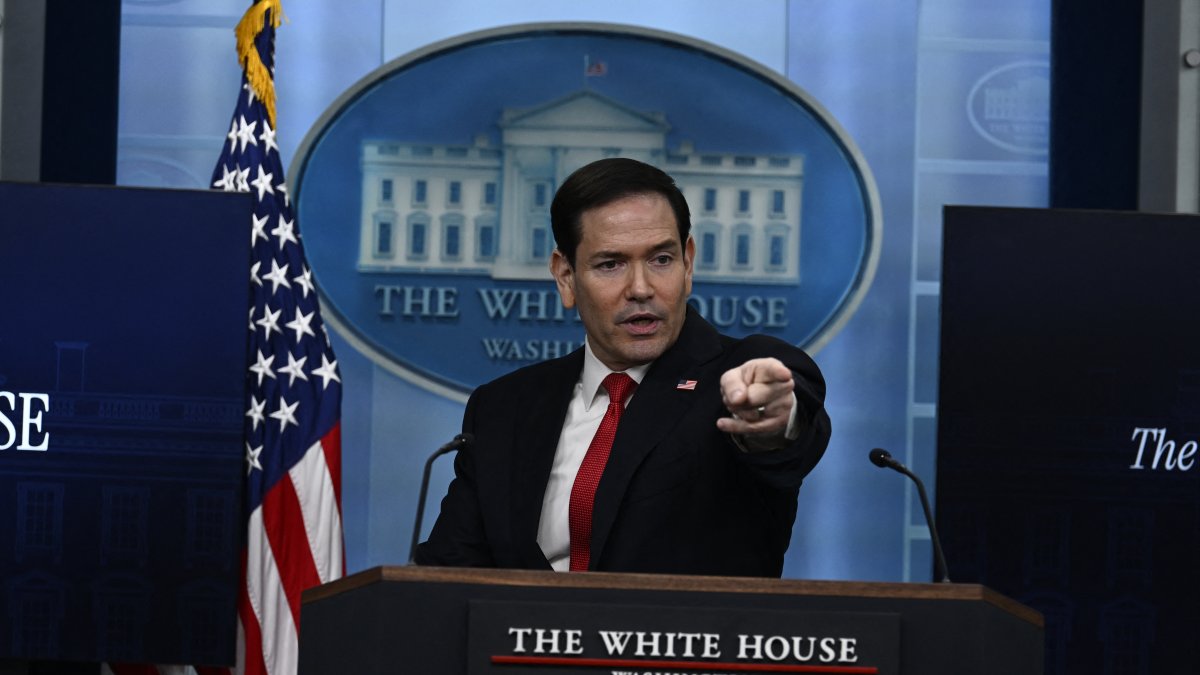
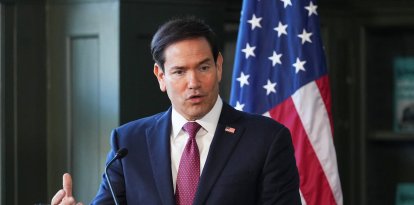
Marco Rubio at press conference/ Kent Nishimura.

On a date loaded with historical symbolism for Cuba, Secretary of State Marco Rubio released a video in Spanish addressed directly to the Cuban people on Wednesday, marking his first such public address since taking office.
The message, issued by the State Department through official platforms, is part of a new phase in U.S. policy toward Havana, characterized by greater diplomatic pressure, economic sanctions and a head-on approach against the power structure on the island.
But beyond the format, the content of the message is what elevates its political impact: Rubio not only criticized the regime, but redefined the island's political system as a model controlled by military and economic interests.
"Cuba is not controlled by a revolution"
One of the central themes of Marco Rubio's speech was a direct statement about power on the island.
According to the secretary of state, the real center of control in Cuba is not the formal government, but the military conglomerate GAESA, linked to the Castro family and the state security apparatus.
Rubio maintains that this group manages a significant part of the Cuban economy, including tourism, banking, construction and remittances, and concentrates assets estimated in billions of dollars.
In his message, he put forward a blunt idea:
"Cuba is not controlled by a 'revolution.' Cuba is controlled by GAESA."
The statement not only targets the Cuban political model, but seeks to dismantle the historical narrative of the revolution as the legitimacy structure of the system, which each time, asks for more sacrifices from its people.
"The crisis is not a coincidence: It is a system collapsing on its people"
Rubio also connected the everyday crisis of Cubans with the country's power structure.
Intermittent electricity, fuel shortages, lack of food and deterioration of basic services are, according to his speech, the direct result of an economic system captured by elites who do not redistribute wealth.
The secretary of state contrasted the life of the population with that of the power structures, stating that while common citizens face extreme shortages, the elites linked to GAESA concentrate wealth and strategic resources.
The message seeks to reinforce a key political idea: that the Cuban crisis is not only the result of external sanctions, but of an internal structure of economic control.
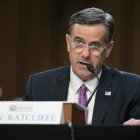
The offer: $100 million in humanitarian aid
One of the most relevant announcements in the message is the proposal of direct assistance to the Cuban people.
The U.S. administration will offer $100 million in food and medicine, with a central condition: the distribution will not be managed by the Cuban regime.
According to Rubio's approach, the resources should be administered by the Catholic Church or by independent humanitarian organizations, in order to avoid diversion or state control of the aid.
The key phrase on this point is clear:
"Not stolen by GAESA to sell in one of its stores."
This approach reinforces Washington's narrative of total distrust of official Cuban institutions.
"A new relationship with Cuba ... but not with its government"
Rubio's message also introduces an underlying policy idea: redefining the bilateral relationship between Washington and Havana.
Without proposing a traditional diplomatic rapprochement with the Castroist leadership, the secretary of state proposed a direct link with the Cuban population.
According to his speech, the U.S. administration is seeking to build a relationship based on the citizens and not on the current state structures.
In this framework, the idea of a "possible Cuba" compared to other Caribbean countries and southern Florida, where, according to Rubio, there are conditions for entrepreneurship, voting and economic development that contrast with the reality of the island, is presented.
Politics
Maximum pressure against Cuba: the United States extends sanctions against the regime's leadership and intelligence apparatus
Andrés Ignacio Henríquez
A message on a date loaded with history
The date marks the proclamation of the Republic of Cuba in 1902, after the Spanish-American War, and was for decades a national symbol. However, it ceased to be officially celebrated after the 1959 revolution, which adds an additional political charge to the message from the U.S.
The context turns Rubio's intervention into more than a speech: it is also a symbolic dispute over Cuban history and political identity.
Beyond the speech: Political pressure and regional strategy
The message is part of a broader strategy from Washington towards Havana, which in recent weeks has included new sanctions and legal actions against structures linked to Cuban power.
On the same day, the Justice Department is expected to announce a federal indictment against Raúl Castro for ordering two planes belonging to the organization Brothers to the Rescue to be shot down on Feb. 24, 1996, in which four Cuban-Americans were killed.
In parallel, the speech reinforces the hard line within the U.S. government: economic pressure, isolation of the state apparatus and direct contact with Cuban citizens.
Politics
Senator Rick Scott on VOZ News: 'Cuba is the root of instability in Latin America'
Emmanuel Alejandro Rondón
The direct and clear message: "We are ready"
Marco Rubio's five-minute video is not just a diplomatic statement. It is a political message with three clear objectives: to question the power structure in Cuba, to offer a direct alternative to the population and to reinforce the U.S. pressure strategy on Havana.
In the end, the debate it opens is not only about Cuba, but about who should speak on behalf of the country: its dictators, its economy or its population.
And in that dispute, languag again becomes the main battlefield. "We are ready," said Rubio, who is of Cuban descent.
LATEST