Victory for US pressure: Longest-serving Chavista prisoners released and freedom announced for 300 others
One of the most emblematic cases of political and judicial persecution of the Chavista era has reached a historic turning point.
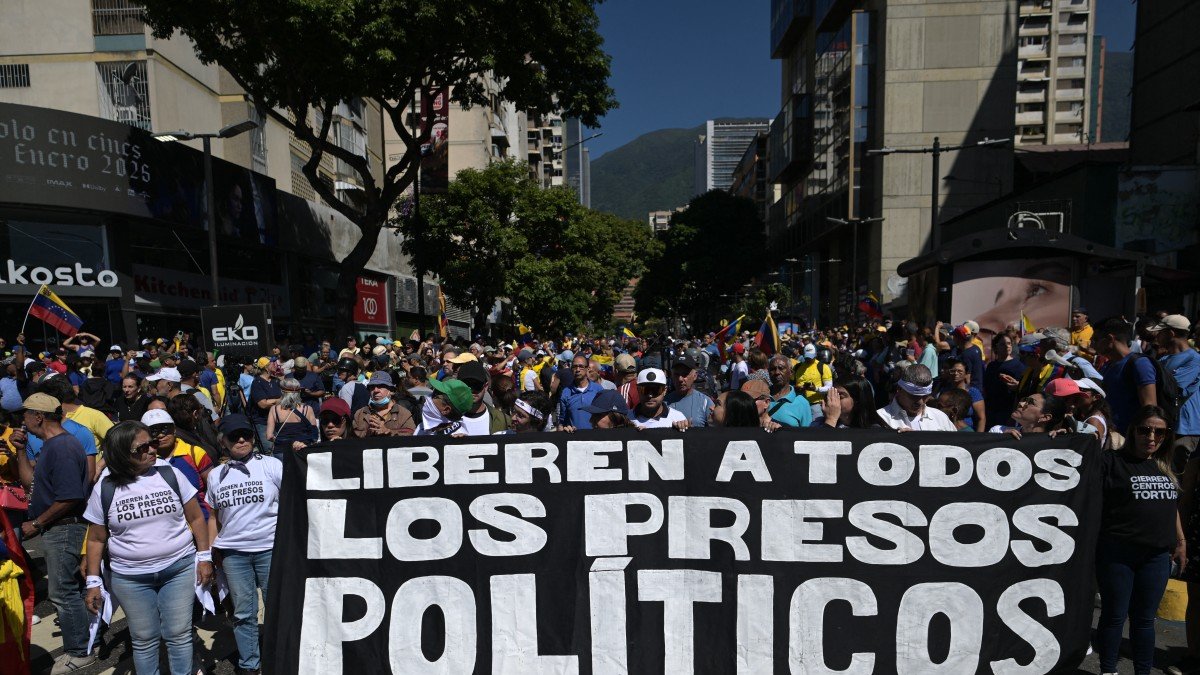
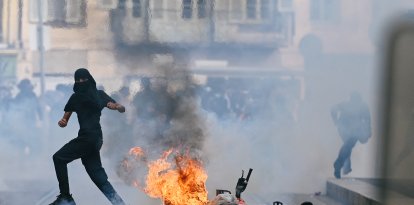
Protest for the freedom of political prisoners in Caracas.

One of the most emblematic cases of political and judicial persecution of the Chavista era has reached a historic breaking point. After being deprived of their freedom for 23 years, former officers of the Caracas Metropolitan Police, Héctor Rovaín, Erasmo Bolívar and Luis Molina, were released from prison on Tuesday night, May 19, 2026.
The three uniformed men, who for decades have become the oldest political prisoners in Venezuela, were serving a severe sentence at the Fénix Penitentiary Center, located in Barquisimeto, Lara state.
Their release comes in a scenario of extreme institutional weakness for the pro-government apparatus and just eight days after U.S. President Donald Trump issued a forceful international warning promising to empty the dictatorship's prisons: "We're going to get them all out."
The end of an exemplary punishment of the Chavista era
The judicial history of Rovaín, Bolívar and Molina reflects the systematic use of the courts as tools of ideological propaganda.
The three metropolitan police officers had voluntarily placed themselves at the disposal of the authorities on April 19, 2003, in the belief that institutional guarantees would protect them. However, in April 2009, after a controversial and lengthy trial, a court sentenced them to the maximum sentence of 30 years in prison on the charge of frustrated aggravated homicide in the degree of complicity.
That ruling was directly linked to the violent events of April 11, 2002, in the vicinity of Puente Llaguno, in downtown Caracas, where snipers and supporters of the regime shot at a massive opposition demonstration.
Hugo Chavez used these officials as scapegoats to exculpate the pro-government gunmen and build the narrative of radicalization of his revolution. His release from prison closes a cycle of more than two decades of forced confinement.
Alfredo Romero, director of the NGO Foro Penal, noted that the police officers' releases are part of the first measures effectively verified in the last hours in favor of the more than 500 political prisoners still remaining in Venezuela.
However, the human rights defenders specified that those released continue to be subject to restrictive measures imposed by the judicial system, for which they will have to appear before courts in the capital within 72 hours and maintain a regime of obligatory monthly presentations while the definitive proceedings advance.
Waiting for the release of more than 300 prisoners
The release of the historic metropolitan police officers was the spearhead of a much larger announcement.
At the end of an intervention in the National Assembly, the president of the legislative body, Jorge Rodriguez, announced that this week, the massive release of approximately 300 persons awaiting their freedom under alleged humanitarian criteria will be carried out.
Rodriguez detailed that the benefit will reach elderly adults, pregnant women, nursing mothers, and citizens with severe health complications who remain in the country's detention centers.
"Between yesterday and this Friday, 300 people will be released," Rodriguez said. "In total, 300 people: older adults, pregnant women, infants, with health problems. We are not asking anything from anyone, just that they know how to appreciate the gesture," he declared before the chamber.
Although the official rhetoric presents these measures as an autonomous act of clemency, the international political context shows that they are a strategy of withdrawal and containment in the face of Washington.

Politics
The Department of Justice activates a new criminal case against Maduro to prevent him from being released from prison
Andrés Ignacio Henríquez
World
Carmen Navas, the Venezuelan mother who spent months searching for a son the Chavista regime had already killed in custody, dies
Emmanuel Alejandro Rondón
LATEST