Paraguay's 'boom': the myths and truths about this South American country attracting the attention of investors and digital nomads
Asunción is growing upwards, with huge towers being built in record time and sold at impressive speeds on site. The economy is growing, the dollar is falling, inflation remains under control, and investors are betting. However, Paraguayans still hope that wealth does not remain stagnant.
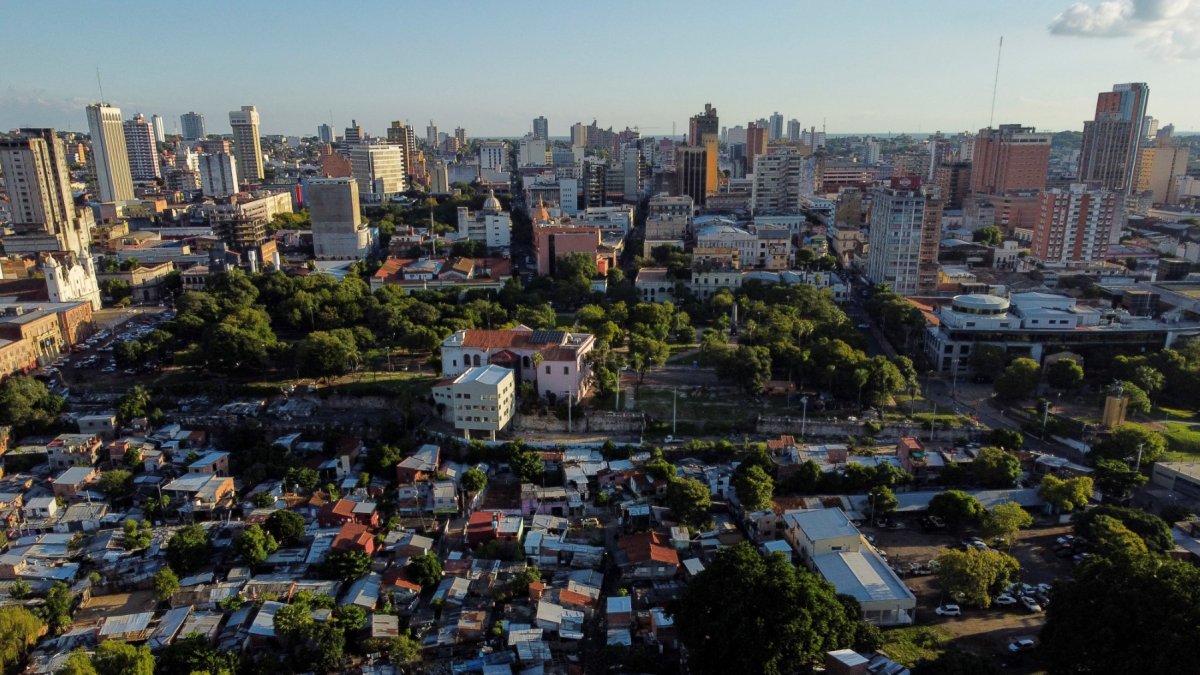
View of the Ricardo Brugada neighborhood, known as La Chacarita. Behind, several buildings and more affluent areas

In Europe, citizens and businessmen flee from an inefficient system that destroys customs and traditions, kills the economy, and stifles freedom. In the United States, the economy is still flowing, but political polarization and the high cost of living are causing many investors to look elsewhere. In China, economic buoyancy is not translating into financial or political freedom. Africa continues to struggle with violence. The Middle East remains a powder keg. And Asia has its own economic challenges. On the other hand, in Latin America, where the classic problems are already well known—corruption, insecurity, inflation—there are countries that manage to capture the attention of groups of investors, companies, and digital nomads. One of them is in the heart of South America: Paraguay.
A thriving country, but one of contrasts
With a 10-10-10 tax system (ten percent VAT, ten percent personal income tax, and ten percent corporate income tax), Paraguay has established itself as an attractive destination for capital from the United States, Europe, Asia, and neighboring Bolivia, Argentina, and Brazil. Unlike most Latin American countries, opening a company in Paraguay is increasingly simple through simplified regimes such as the EAS (Simplified Joint Stock Company), which allows, with a local partner or a foreigner based in Paraguay, opening in just one week a company that, in practice, operates almost the same as a corporation and is much more pragmatic than an LLC (Limited Liability Company).
The creation of the EAS, a regime designed to formalize entrepreneurs, was an initiative of the Paraguayan government embodied in Law No. 6480/2020. In the early years, as a new legal figure, the EAS was not so well regarded by financial and banking institutions, but today it is the fastest way to invest and have a company in order, with an active bank account and all mandatory communications to the Paraguayan state automated. According to the Ministry of Industry and Commerce (MIC), there are already 20,496 EAS in Paraguay, of which 70% were registered during the current government of President Santiago Peña.
"Regarding investments, the total accumulated since the creation of the EAS reaches USD 1 billion, of which 78% corresponds to national capital, some USD 830 million, while 22% comes from foreign capital, approximately USD 200 million of foreign origin," detailed the MIC.

In addition to this flow of capital, there is the flow of digital nomads: programmers, designers, consultants, and content creators who work for foreign clients and choose Asunción as their base of operations. According to an analysis published by Infonegocios and reproduced by RDN, with a conservative projection of 3,000 digital nomads simultaneously present in the country, the estimated annual income reaches $63,000,000, a figure that enters the economy without going through public tenders, state indebtedness, or subsidized programs. The average expenditure of each one ranges between $1,500 and $2,000 per month on lodging, gastronomy, transportation, entertainment, and professional services. The underlying reason is the principle of fiscal territoriality: if a nomad invoices clients outside Paraguay, that income is considered foreign and is taxed at 0%.

View of the binational Itaipu hydroelectric dam, near Hernandarias, 350 km east of Asuncion
Mario Gastaldi, an international tax and financial planning consultant who advises European clients interested in Paraguay, distinguishes two profiles within that flow of investors.
"There are two groups of people coming to Paraguay to invest. One group is made up of those who, in effect, create startups, based in the territory. The other are the digital nomads who seek to acquire tax residency in Paraguay and manage to pay little tax," Gastaldi told VOZ. "They are a radically different category, also in terms of contribution to the local economic system.".
Gastaldi also describes the European scenario from which his clients come. "Our clients are concerned about the future in Europe. Taxes are extremely high, and they have no confidence in the state's ability to manage the economy. It taxes the most productive categories, which have less weight in voting, and then people with entrepreneurial spirit and entrepreneurial capacity are penalized," he says, and highlights the perception of the European investor who goes to Paraguay: "They associate the low level of taxes with a perception of freedom and political orientation aimed at favoring the economic development of companies."
Anthony Zambrano, a Venezuelan-Spanish citizen based in Paraguay since 2025, opted to open an EAS to formalize his economic activity in the country. "We chose Paraguay because it is a country that is very open to investment. It is easy to obtain residency, and many advantages and business niches have not been exploited yet, including the quality of life, the cost of living compared to other countries in the region, the security, and the warmth of its people," he told VOZ.
Together with his partner Daniel Sánchez González, also Spanish, he is developing two projects simultaneously: a consulting firm that connects highly qualified Paraguayan talent with Spanish companies for remote work, Iberolink, and an employment marketplace application aimed at the local market, LaburoYa. The installation process, he assures, was agile. "The process of setting up was easy and within the timeframe foreseen by the authorities, and the process to open the company was very simple and was done 100% online. Within a week, we had all the paperwork to be able to go to the bank to request a bank account and be able to operate."
Not everything, however, flows with the same speed. When asked about what needs to be improved to attract more investors, Zambrano pointed directly to the financial system: "One of the obstacles, more than governmental, has been the financial system, since the opening of accounts and the entry and movement of capital to be able to invest in Paraguay are quite cumbersome, slow, and very bureaucratic." What Zambrano commented on was also warned about by other analysts consulted by VOZ, who assured that the procedures to open bank accounts are out of the normal standards in other countries, including European nations or the US. VOZ approached a commercial manager of a national bank to explain this phenomenon, and although he requested anonymity so as not to affect his entity, he pointed out that a large part of the current obstacles are beyond the banks' control and come, in most cases, from the regulations of the Ministry of Finance. Secretariat for the Prevention of Money or Asset Laundering (SEPRELAD), the entity in charge of controlling suspicious operations that, at some point in recent history, earned Paraguay the reputation of being a country where dark money transited with ease.
Macroeconomic numbers back up the interest in Paraguay. The Guaraní nation closed 2025 with GDP growth of 6%, the highest in the Western Hemisphere, with the sole exception of Guyana, and cumulative inflation of 3.1%, within the target range of the Central Bank of Paraguay. By February 2026, year-on-year inflation fell to 2.3%, its lowest level since 2020. The dollar accompanied that reality: it closed 2025 at Gs. 6,670, its lowest price in almost five years (at the time of publishing this article, the dollar is even lower, standing at Gs. 6.218). Added to this is a comparative fact that is hard to ignore: according to Statista, Paraguay has the cheapest basic food basket in Latin America ($446), below Argentina, Colombia, Brazil, and Venezuela.
However, the most salient piece of information was the credit rating. In July 2024, Moody's upgraded Paraguay to investment grade (Baa3) for the first time in its history, and in December 2025, Standard & Poor's confirmed the trend with an upgrade to BB+ with a positive outlook. As a result, investment grew 17% in 2025 and, according to S&P projections, will reach 27% of GDP during the 2026-2028 period, driven by construction, maquila, energy, forestry, and services. The IDB, from its perspective, analyzed the last three decades of Paraguayan reforms as a regional case study, precisely because of this convergence between fiscal discipline, monetary stability, and clear rules. The latest move of the Paraguayan government to attract investment is key: the investor pass, launched in April 2026, which grants direct permanent residence in exchange for an investment of USD 150,000 in tourism or USD 200,000 in the stock market or real estate, without the prior requirement of generating jobs. The measure comes at a time when applications for residency increased from 28,000 in 2024 to 47,000 in 2025, with a projection of 80,000 for this year.
However, alongside the macroeconomic picture, there are microeconomic tensions that do not appear in the rankings. Public debt closed 2025 at $20,409 million, equivalent to 41.2% of GDP, according to the Ministry of Economy and Finance. Although it is still manageable and far from the levels of Argentina, Brazil, Bolivia, or Uruguay—several of which exceed 70%—it already exceeds the 40% that the World Bank recommends as a prudent threshold for emerging economies. In 2025 alone, the debt grew 12.9% year-on-year, the largest increase of the fiscal year, and since President Peña took office in September 2023, it accumulated an additional $3.8 billion
And, although general inflation seems to be under control, the basic food basket shows another reality. Food almost doubled the general index in 2025: the food and non-alcoholic beverages category had a year-on-year variation close to 10% in November, compared to 4.1% of the general CPI, with meats, fruits and vegetables as main pressures. A basic food basket for an average Paraguayan family of four cost in March 2025 about Gs. 2,051,758, equivalent to 71% of the current minimum wage. A minimum worker has less than one-third of the salary left for housing, transportation, health and education. According to data from the National Statistics Institute (INE), by 2024 total monetary poverty reached 20.1% of the population (a reduction of two points), and extreme poverty reached 4.1% (244,000 people). In other words, one out of every five people in Paraguay lives below the poverty line.
Just as the cost of living in the rankings contrasts with the cost for local citizens, the capital, Asunción, is also a city of contrasts. In the corporate hub, the elegant buildings already form a landscape that did not exist ten years ago; the shopping malls and luxury stores are better equipped than many first-world cities; the vehicle fleet is extensive, vibrant, and full of top-of-the-line cars. However, in a few kilometers around the city converge low-income neighborhoods, such as the emblematic Chacarita, and residential areas of great cachet such as Las Mercedes, Ycuá Satí, or Mburucuyá. The center of Asunción, where the powers of the state are located, the historic squares, and almost all the government agencies, is extremely deteriorated compared to the corporate axis, which is much more well-kept.
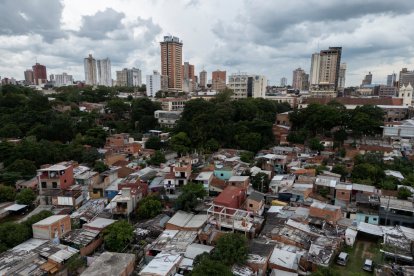
View of the Ricardo Brugada neighborhood, known as La Chacarita. Behind, several buildings and more affluent areas
The contrast is also in the rents. Eight years ago, real estate agents explained to voz.us, renting a used house in the Fernando de la Mora north zone, in an area very close to the emblematic Villamorra or the municipality of Asunción, could cost between Gs. 1,500,000 and 2,000,000, that is, between US$260 and US$350 at the exchange rate of the time. Now, prices can be between Gs. 4,000,000 and up to Gs. 6,000,000, or between US$600 and US$1,000. In other cities of Greater Asunción, such as Luque, San Lorenzo, Ñemby, or Capiatá, rents have also increased. In the interior of the country, the story is very different, with Paraguay being much cheaper and more accessible to its citizens.
Gastaldi himself warns about a structural risk of the current real estate model. "Much of the growth is aimed at foreign clients, with prices and characteristics that are not suitable for Paraguayan buyers and investors," he says. For the advisor, therein lies the danger: "If the flow of foreign capital is reduced, a real estate bubble may occur. An excess of misdirected supply, designed for foreign investors, while the real demand comes from Paraguayan buyers who cannot pay those prices." For that reason, as he explained to VOZ, he recommends his clients not concentrate investment exclusively in real estate and diversify with complementary financial instruments.
In contrast, Milagros López, a Paraguayan real estate advisor, explains that the real estate market "is going through a moment of real estate growth that had not been seen before."
"The demand for rentals is incredible; it really exceeds the supply currently available, and that is generating a real housing need within the country," he said. "That's why we see that the market is responding with a significant amount of new developments and that the government launched the Che Róga Porã ('My beautiful house' in Spanish) program, which is the bridge that allows many families to take the step from renting to owning their own home."
López also added that this is an ideal moment to invest in land, before prices start to rise significantly: "In the Central department —which surrounds Asunción and concentrates most of the country's economic activity and population— you can still find land for under 50 dollars per square meter. Compared to other markets in the region, that price makes Paraguay very attractive."
What is Paraguay's history and what is developing in the country?
Noted for its hospitality, typical gastronomy, tereré, and the Guaraní language—official alongside Spanish, spoken by the majority of the population—Paraguay has a tragic and resilient history. In the 19th century, when it was aiming to be a hemispheric power, it suffered genocide at the hands of its neighbors, Brazil, Argentina, and Uruguay in the infamous War of the Triple Alliance. More than half the population died, including most of the men; some historians even place the number of casualties at around 70% of the population. It took decades to even recover the population and move towards development and stability, with the Chaco War against Bolivia in between.
Political stability, in fact, only arrived with the dictatorship of Alfredo Stroessner, a general who, like other dictators in the region during the Condor Plan, ruled with an iron fist and remained in power for thirty-five years, consolidating a political and cultural hegemony of the Colorado Party very similar to what happened with the PRI in Mexico. While Stroessner is credited with achievements such as the construction of the Itaipu dam—one of the largest and most powerful on the planet and, along with Yacyretá, a key source of the country's electricity exports—his legacy was largely marked and tainted by repression, corruption, and underinvestment in education, health, and other sensitive areas.
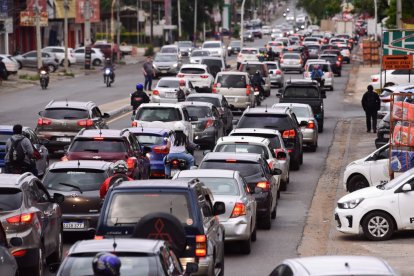
Asunción in rush hour after a two-day strike by public transport drivers
In the post-Stroessner era came democracy, with the Colorado Party again handling the hardcore of power except for a brief period between 2008 and 2012, when the opposition ruled with leftist Fernando Lugo at the head. It was the only time that the Colorado Party did not hold the presidency, but, even so, as opposition, the Colorados managed to lead a controversial impeachment trial of Lugo, who had a mandate marked by few tangible successes, many social initiatives, and too many controversies that sentenced his political career. The vice president who replaced him, Federico Franco, was indicted for corruption, and, from then on, the Colorados systematically won back the presidency and the majority in Congress. Franco, who inherited a surplus from Lugo, in a little more than a year of government took it upon himself to leave what would be the largest fiscal deficit in the country's history, of more than $1 billion.
The current president, Santiago Peña, has made efforts to position himself as a common-sense center-right leader, reaching out to the Trump administration, his Argentine counterpart Javier Milei, and conservatives in Europe, even hosting conservative conventions and events such as CPAC or the IV Regional Meeting of the Madrid Forum, but he has also been careful and pragmatic in his relations with leftist leaders, such as Lula da Silva in Brazil. One of the main criticisms of Peña is, precisely, his presidential seal: his constant trips abroad. This political brand, in fact, is related to the current state of Paraguay, a country that seeks to make itself known to the world by attracting capital, companies, and nomads with an attractive proposal: political freedom, low taxes, and ease of opening businesses. However, Peña's term in office has not been the most popular either, with critics questioning his few tangible results in microeconomics and his pending promises in health, education, and transportation.

One of the programs that has worked under his government is closely related to the construction industry: Che Róga Porã, a housing program that offers housing loans at rates of 6.5%. The proposal aims to enable Paraguayan families to abandon renting and access their first home with affordable monthly installments, similar to those of a traditional rental. Private construction companies and banks embraced the proposal, mainly with the implementation of the 2.0 program, with a notable boom in this type of housing. Therefore, in cities such as Luque, Ñemby, San Lorenzo, or Capiatá, First-home developments are booming: demand is explosive, and supply is still not enough to satisfy the large number of families looking for their first home.
In economic terms, Paraguay is still a primary country in transition. Soybeans, beef, corn, wheat, and rice are the main pillars of its economy, being one of the world's largest exporters of soybeans and beef. Agribusiness accounts for much of the growth of the last twenty years. In addition, hydroelectric power is the second major export—Itaipú and Yacyretá are binational with Brazil and Argentina, respectively—and, more recently, the maquila regime, which, thanks to a unique 1% tax on value added in national territory, has attracted industrial investment from Brazil, Argentina, South Korea, and the United States to the areas of Ciudad del Este, Hernandarias, and Villeta.
However, that productive structure still leaves the country very exposed: a drought like the one in 2022 can cut several GDP points in a single year.
And then there is soccer, which in Paraguay is practically a state affair. La Albirroja is a national identity, market talk, and holiday theme. In September 2025, after fifteen years of waiting, Paraguay broke the drought: after a 0-0 draw against Ecuador, it qualified for the 2026 World Cup hosted by the United States, Mexico, and Canada. It is the country's ninth World Cup and its first since South Africa 2010, when it reached the quarterfinals, its best performance ever. The credit goes to Argentine coach Gustavo Alfaro, hired in August 2024 after the failure in the Copa América. In Group D, Paraguay will share a zone with the United States, Australia, and a European from the playoffs. And there's more: Paraguay is also qualified for the 2030 World Cup, the centennial, when Asunción will host one of the three inaugural games in South America along with Montevideo and Buenos Aires—before the tournament moves to Spain, Portugal, and Morocco. For a country that for decades sold soybeans and energy as its only business card, hosting—even if only one match—in the centennial of the World Cup is a global showcase, and the real estate and hotel sector is already starting to move chips thinking about that horizon, especially considering that the sector was saturated in the last two editions of the final of the Copa Sudamericana, held in Asuncion, in Cerro's stadium, the Nueva Olla.

Gustavo Alfaro (right), gives the thumbs up next to his wife Daniela Pignolo (right)
Paraguay, however, remains a land of contrasts and great internal debts. The education system drags years of low budget, poor infrastructure, and poor results in regional tests. The public health system also has major problems, with overcrowded hospitals in the capital and serious deficiencies in the interior. Public transportation is chronically inefficient—old buses, erratic frequencies, and unannounced stops—an experience that digital nomads 'wander' from by taking Uber or Bolt on every outing, and that local workers suffer every day unless they have a car or motorbike. The streets of the microcenter flood during any downpour because the drainage system was left far behind the growth of the city. The beautification of the historic center, a promise of the current (and previous) governments, is also progressing slowly. The paradox facing Paraguay is clear: how can a country be so attractive to investors, nomads, and the upper middle class and above but still fail to achieve the most basic things for its own inhabitants, who, at the end of the day, are the ones who guarantee a desirable country.
That is, in the end, the doubt about Paraguay's boom. While the macroeconomy looks orderly, rating agencies applaud, skyscrapers rise, nomads arrive, and soccer returns to the World Cup, the daily problems of its citizens are the same—or worse—than decades ago. The experience of other nations shows that, even if there is growth and economic stability, it is of little use if wealth remains concentrated in a few hands, captured by monopolies or liquefied by endemic corruption. For Paraguay to exploit its great potential, the next objective of this increasingly visible and attractive country is the consolidation of a stable and thriving middle and working class. Happy? It already is. Because despite the shortcomings that become evident on a daily basis, Paraguay is still one of the happiest and most interesting countries in the world.
LATEST