Trump declares hostilities with Iran 'terminated' as Congress's legal deadline passes
"The hostilities that began on February 28, 2026, have ended," Trump stated in the official document.
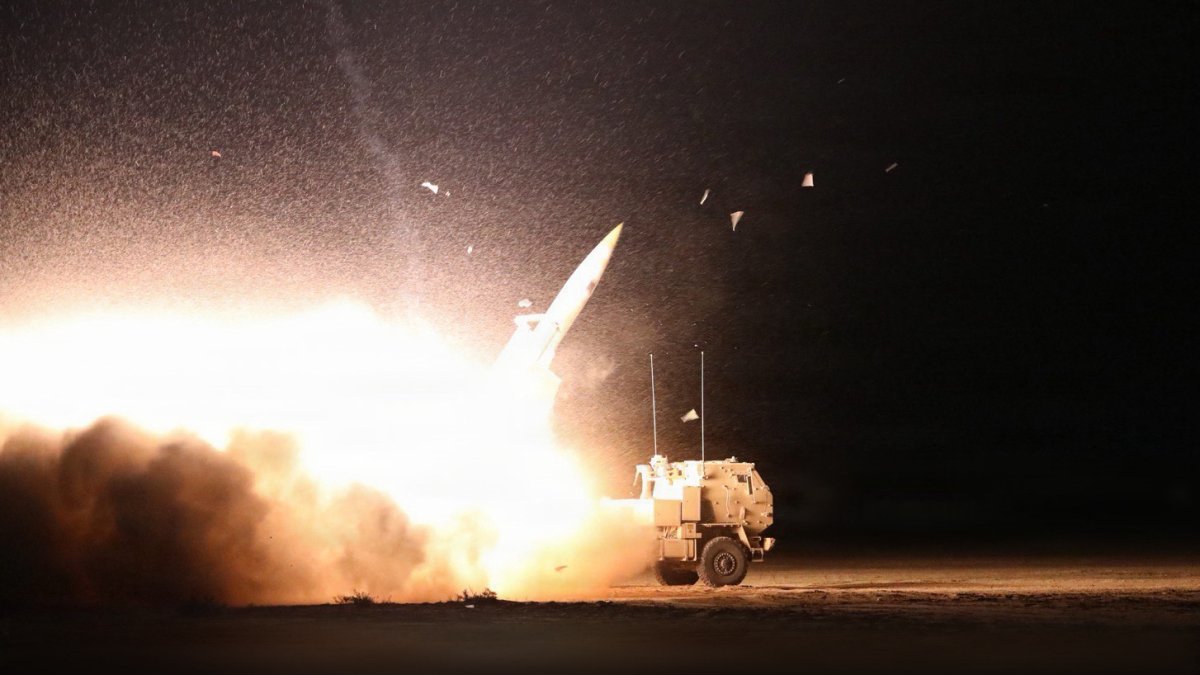
An M142 High Mobility Artillery Rocket Artillery Rocket System (HIMARS) conducting live-fire exercises during Operation Epic Fury at an undisclosed location.

President Donald Trump formally notified Congress on Friday that hostilities with Iran have come to an end. The announcement comes precisely on the deadline set by the War Powers Act of 1973, which limits presidential military action without legislative authorization.
In a letter sent to lawmakers, the president said that the cease-fire in effect and the absence of recent exchanges of fire mark the end of this stage of the conflict.
"The hostilities that began on February 28, 2026 have ended," Trump stated in the official document.
The challenge to the War Powers Act.
The White House maneuver seek to defuse the "60-day clock" that forced the president to seek congressional approval or withdraw troops by this May 1.
By declaring an end to active hostilities, the administration argues that the legal deadline no longer applies, giving it additional leeway should the situation in the Persian Gulf require further interventions.

Trump has been consistent in his stance that such a law is unconstitutional, a view shared by various predecessors of both parties who consider the statute to infringe on presidential powers to direct the armed forces.
"We had a cease-fire, so that gives you additional time," the president explained to the media before leaving today for Florida.
The president acknowledged in his letter that Iran continues to represent a "significant" threat to the national security of the United States and its troops deployed in the region.
Democratic obstructionism and the electoral landscape.
From the other political camp, Democrats have sharply criticized the measure, claiming that the naval blockade on Iranian oil exports constitutes in itself an act of hostility.
Sen. Jeanne Shaheen, Democratic leader on the Senate Foreign Relations Committee, lambasted the lack of an "exit strategy" for what she called a poorly planned war.
"After sixty days of conflict, President Trump still does not have an exit strategy or exit path for this poorly planned war," Shaheen said in a statement.
However, Republicans in Congress have maintained a united front, almost unanimously blocking any resolution intended to force an end to military operations.

This legislative backing is crucial six months before the November elections, in a context where the conflict has impacted global energy markets and raised prices for U.S. consumers.
Meanwhile, Tehran attempted to send a negotiating proposal through Pakistani mediators on Friday, but Trump immediately rejected it.
Administration sources indicated that the president has already received reports about possible new military strikes if Iran does not agree to a real negotiation on Washington's terms.

Politics
Trump considers withdrawing troops from Italy, Spain amid tensions with NATO
Luis Francisco Orozco

World
Trump threatens to pull troops from Germany after blasting Merz: 'He doesn't know what he's talking about'
Emmanuel Alejandro Rondón
LATEST