LIVE | Iran warns against military escalation in the Middle East while acknowledging progress in negotiations
The ceasefire in the Middle East is again strained following President Trump's activation of "Project Freedom," a move that a senior Iranian official says makes any U.S. interference in the area a breach of the agreement.

F/A-18E Super Hornet aircraft.
The ceasefire between the United States, Israel and the Iranian regime remains fragile amid heightened tensions over the Strait of Hormuz. This Sunday, Trump activated "Project Freedom" to escort neutral ships starting May 4-5 with destroyers and aircraft, a move Iran considers a violation of the cessation of hostilities.
The president noted on Truth Social that the decision is in response to requests from countries whose ships have been caught up in the regional conflict despite being "neutral and innocent bystanders."
"For the good of Iran, the Middle East, and the United States, we have told these Countries that we will guide their Ships safely out of these restricted Waterways, so that they can freely and ably get on with their business," Trump added.
For his part, a senior Iranian official warned on Monday that Tehran will regard any U.S. attempt to intervene in Hormuz as a violation of the ceasefire agreement.
"Any American interference in the new maritime regime of the Strait of Hormuz will be considered a violation of the ceasefire," Ebrahim Azizi, chairman of the Iranian parliament's National Security Committee, posted on X.
Timestamps are Eastern Standard Time (EST).
Iran warns against military escalation in the Middle East while acknowledging progress in negotiations
Iranian Foreign Minister Abbas Araghchi warned both the United States and the United Arab Emirates against further military escalation, arguing that diplomacy remains the only viable path as negotiations to ease tensions in the Middle East continue. “Events in Hormuz make clear that there’s no military solution to a political crisis,” Araghchi said, referring to recent U.S. naval efforts to escort ships through the Strait of Hormuz.
He added that ongoing talks, facilitated in part by Pakistani Prime Minister Shehbaz Sharif, are moving forward and urged the administration of President Donald Trump to avoid deeper involvement. “As talks are making progress with Pakistan’s gracious effort, the U.S. should be wary of being dragged back into quagmire by ill-wishers,” he said. “So should the UAE.”
Iran denies that U.S. destroyed six of its ships
According to the Iranian regime's state-sponsored media, none of its ships were shot down by American forces.
“The U.S. claim that it sank several Iranian warships is false,” Iranian authorities said in statements compiled by AFP.
CENTCOM: U.S. destroys six Iranian vessels that were “threatening commercial shipping”
Admiral Brad Cooper, commander of U.S. Central Command (CENTCOM), reported that U.S. forces deployed in the Middle East destroyed six Iranian vessels that were “threatening commercial shipping.”
Speaking to the media, Admiral Cooper added that they “effectively engaged” all missiles and drones that were launched against both American forces and commercial ships.
UAE claims it was attacked by Iran
The United Arab Emirates (UAE) Ministry of Defense stated on Monday that its territory was the target of airstrikes carried out by Iran’s Islamist regime.
“Four cruise missiles launched from Iran and targeting various areas of the country were detected. Three were successfully shot down over the country’s territorial waters, while one fell into the sea,” the ministry reported, in statements carried by AFP.
Iran fires missiles after U.S. ships enter the Strait of Hormuz
The Iranian military fired missiles as a “warning” after U.S. ships entered the Strait of Hormuz to escort other vessels.
Seoul reports "explosion and fire" on one of its ships in the Strait of Hormuz
Seoul reported Monday that an "explosion and fire" hit a South Korean vessel in the Strait of Hormuz.
The Foreign Ministry said that at around 8:40 p.m. Seoul time, "an explosion and fire occurred on a vessel operated by a South Korean shipping company ... anchored in waters near the United Arab Emirates in the Strait of Hormuz."
In a statement, the ministry said that so far "no casualties" have been reported among the 24 crew members on board, including six South Koreans and 18 foreign nationals.
It also added that "the cause of the explosion and fire, as well as the exact extent of the damage, are currently under investigation."
The affected vessel, the HMM Namu, is a cargo ship nearly 600 feet long sailing under the Panamanian flag, according to data from tracking site MarineTraffic.
U.S. destroyers enter Gulf as part of ship escort mission
The U.S. military reported Monday that missile-equipped destroyers have entered the Gulf as part of an operation aimed at escorting commercial ships through the Strait of Hormuz.
"[Two] U.S.-flagged merchant vessels have successfully transited through the Strait of Hormuz and are safely headed on their journey," U.S. Central Command (CENTCOM) stated onX.
The military ships "are currently operating in the Arabian Gulf after transiting the Strait of Hormuz in support of Project Freedom," it added, in reference to the escort operation announced by President Trump on Sunday.
U.S. military denies that one of its ships was hit in the Strait of Hormuz
The U.S. military denied Monday that any of its Navy ships had been hit in the Strait of Hormuz, after Iranian state media reported that a U.S. frigate had been hit with two missiles.
"No U.S. Navy ships have been struck. U.S. forces are supporting Project Freedom and enforcing the naval blockade on Iranian ports," U.S. Central Command, which oversees American forces in the Middle East, noted in a message posted on X.
Missiles fired at U.S. ship in the Strait of Hormuz, Iranian media report
Fars News Agency, which is affiliated with the Iranian regime's Revolutionary Guard Corps (IRGC), reported that two missiles hit a U.S. warship east of the strait.
So far there is no official confirmation from the U.S. Central Command (CENTCOM) or the Pentagon that any ship was hit or damaged.
On Sunday, the United States activated "Project Freedom" to escort neutral ships through the sea lane through which about 20% of the world's oil flows, something Iran considers a ceasefire violation.
Iranian Army claims U.S. forces will be attacked if they enter the Strait of Hormuz
The Iranian regime's military claimed Monday that U.S. forces would be attacked if they entered the Strait of Hormuz, after President Trump announced that Washington would begin escorting ships through the blocked sea lane.
"Any foreign armed force, especially the aggressor U.S. Army, if it tries to approach or enter the Strait of Hormuz, it will be targeted," Major General Ali Abdollahi, of the Iranian military's central command, said in a statement broadcast by state broadcaster IRIB.
"We have reiterated that the security of the Strait of Hormuz is under the control of the armed forces of the Islamic Republic of Iran and that, under any circumstances, any safe passage must be coordinated with these forces," he added.
Trump says U.S. holding "very positive talks" with Iran
President Trump said Sunday that U.S. officials are holding "very positive talks" with Iran about possible steps toward ending the war in the Middle East.
"I am fully aware that my Representatives are having very positive discussions with the Country of Iran, and that these discussions could lead to something very positive for all," Trump posted on Truth Social.
Oil crisis has "huge impact" on Asia Pacific, says Japanese Prime Minister Sanae Takaichi
The oil supply crisis over the blockade in the Strait of Hormuz has a "huge impact" on the Asia-Pacific region, Japan's Prime Minister Sanae Takaichi said Monday in Australia.
After meeting in Canberra with her Australian counterpart, Anthony Albanese, Takaichi said the two countries would respond with "a sense of urgency" to stabilize energy supplies.
"The effective closure of the Strait of Hormuz has hada huge impact" on the Asia-Pacific region, the Japanese ruler said in remarks reported by AFP.
German foreign minister calls for reopening of Strait of Hormuz
German Foreign Minister Johann Wadephul demanded Sunday that Iran reopen the Strait of Hormuz. Strait of Hormuz and abandon its nuclear weapons program during a telephone call with his Iranian counterpart, Abbas Araghchi.
"I stressed that Germany supports a negotiated solution," Wadephul said in a publication on X about the conversation.
"As a close ally of the United States, we share the same goal: Iran must completely and verifiably renounce nuclear weapons and immediately open the Strait of Hormuz, as also demanded by U.S. Secretary of State, Marco Rubio," Wadephul added.
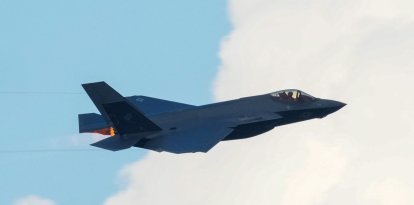
Israel approves deal to buy fighter jets from U.S.
Israel on Sunday approved a multibillion-dollar deal to buy two squadrons of fighter jets from the United States, and Prime Minister Benjamin Netanyahu said this will "strengthen" its air superiority.
The purchase includes a squadron of F-35 multirole stealth fightersfrom Lockheed Martin and another of F-15IA aircraft from Boeing, the Israeli Defense Ministry said.
The plan seeks to "guarantee Israel's air superiority for decades to come," Defense Minister, Israel Katz said in a statement.
Iran claims U.S. options are "impossible" military operation or "bad deal"
Iran's Revolutionary Guards (IRGC) claimed Sunday that the United States faces a choice between an "impossible" military operation or a "bad deal" with the Islamic republic.
On Sunday, Trump said in a post on Truth Social that he would review Iran's latest proposal, but added that he "cannot imagine it being acceptable."
Iranian media, including the Tasnim and Fars news agencies, reported the contents of the proposal on Saturday.
According to Tasnim, Iran has indicated that outstanding issues between the two sides "must be resolved within 30 days" and that they should focus "on ending the war rather than prolonging the ceasefire."
The issues, Tasnim said, included "the withdrawal of U.S. military forces from Iran's periphery, the lifting of the naval blockade, the release of frozen Iranian assets and the lifting of sanctions."
The report also mentioned "ending the war on all fronts, including Lebanon, and agreeing on a new mechanism for the Strait of Hormuz."
Hezbollah says it can "frustrate" goals of Lebanon-Israel talks
A Hezbollah lawmakersaid Sunday that the group would be able to "frustrate" the goals of direct negotiations between Lebanon and Israel.
At an event honoring deceased Hezbollah fighters,Hassan Fadlallah stated that "these negotiations, with all their results, do not concern us and we will not implement thems."
Hezbollah embroiled Lebanon in the Middle East war in early March, when it launched rockets against Israel in support of its ally Iran.
LATEST