ANALYSIS
Ideological tourism in Havana: Democrat lawmakers act as spokesmen for the Cuban dictatorship
During their stay, the congressmen held high-level meetings with the Castro leadership, including Diaz-Canel himself and Foreign Minister Bruno Rodriguez. The Cuban government is going through one of the worst crises in its modern history.
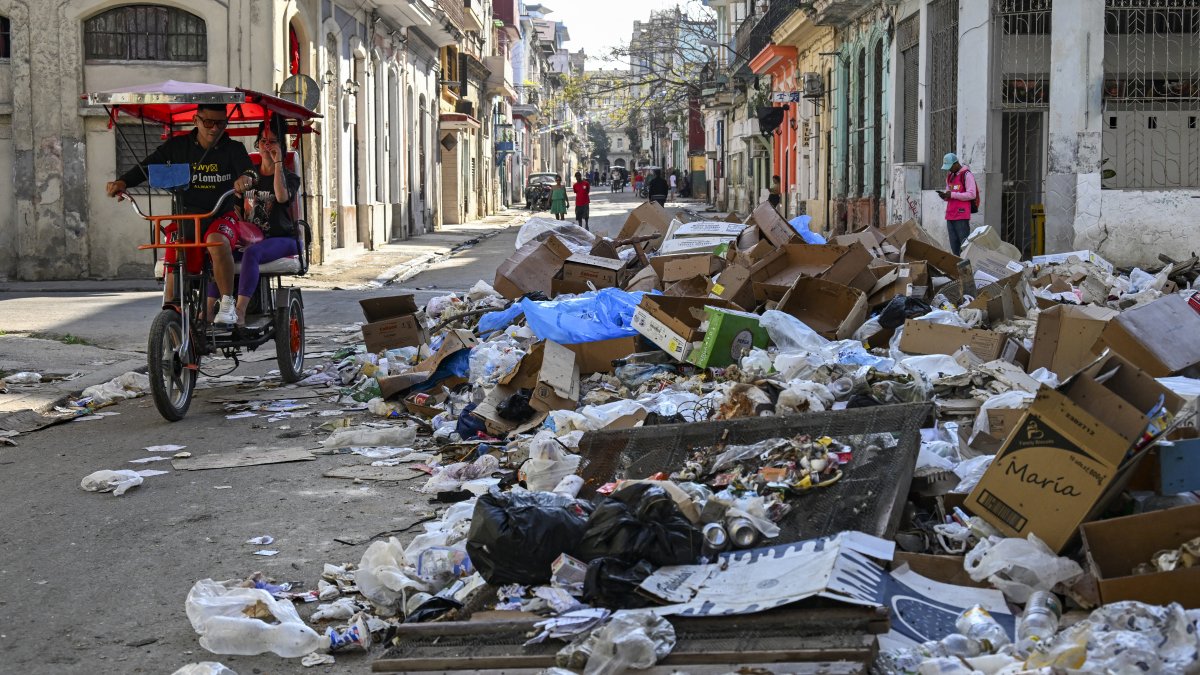
Cuba is going through one of the worst crises in its modern history.

While Donald Trump's administration maintains a policy of maximum pressure to suffocate communism's finances in the region, Democratic representatives Pramila Jayapal (Washington) and Jonathan Jackson (Illinois) unleashed a strong controversy after concluding a five-day visit to Cuba.
Far from calling for civil liberties or the release of political prisoners, the lawmakers echoed the official narrative of Miguel Díaz-Canel's regime, calling the U.S. sanctions a "collective punishment."
During their stay, the congressmen held high-level meetings with the Castro leadership, including Diaz-Canel himself and Foreign Minister Bruno Rodríguez.
Jayapal and Jackson directed their criticism toward Washington, calling the energy siege imposed by the White House after the collapse of the Maduro regime in Venezuela "illegal," according to AFP. The lawmakers asserted that U.S. foreign policy amounts to an "economic bombardment" against the island's infrastructure.

World
FBI arrives in Cuba to investigate Florida speedboat shooting that left five dead
Diane Hernández

World
Trump eases pressure on Cuba, opens door to "case-by-case" oil shipments
Emmanuel Alejandro Rondón
The rhetoric of the Democratic congressmen contrasts drastically with the Trump administration's national security strategy. The oil siege, implemented in January, is aimed at cutting off the flow of resources that sustain the repressive Cuban apparatus.
The reaction from the Republican bench was not long in coming. Congresswoman Maria Elvira Salazar described, in a publication in X, the travel of members of the U.S. Congress to Havana to serve as a loudspeaker for dictatorial propaganda as "shameful."
"Let's be clear: The United States is not responsible for Cuba's collapse. Decades of failed and corrupt communist policies are," he said.
"Instead of posing for pictures, they should work with us to hold the regime accountable and push for real change on the island, based on freedom, democracy and American strength," Salazar added.
Upon their return to Washington, Jayapal and Jackson announced that they would submit a report to try to lift the sanctions.
However, on a Capitol Hill where the stance toward totalitarian axis regimes has hardened under Trump's leadership, their efforts seem destined to hit a wall of geopolitical reality: the White House does not seem willing to financially bail out a dictatorship that remains the main destabilizer in the region.
LATEST