Faith under siege in Nicaragua: US condemns Ortega regime for banning processions and repressing citizens during Holy Week
The Sandinista dictatorship has banned more than 27,000 processions since 2019, when it began persecuting the Catholic Church. During this season, it deployed up to 14,000 agents to monitor churches. Nevertheless, Catholic followers attended Mass regardless.

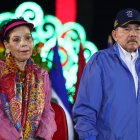
Dictator Daniel Ortega and his wife, Rosario Murillo, in a file image

The United States, through Deputy Secretary of State Christopher Landau, condemned this week the regime of Daniel Ortega and Rosario Murillo for once again preventing public Holy Week processions in Nicaragua.
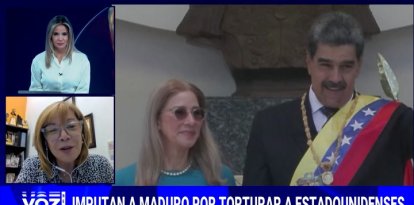
"The Ortega-Murillo dictatorship is denying the people of Nicaragua the right to profess their faith in this manner by banning such public processions," Landau wrote on his X account, recalling that the municipalities of Granada and Leon hosted some of the most emblematic and beautiful processions in the region. The official spat that he looks forward to "the day when our Nicaraguan friends reclaim their religious freedom." The statements come after the United States captured former Venezuelan dictator Nicolás Maduro and then put months of pressure on the communist regime in Cuba.
Semana Santa, or Holy Week, is a sacred time for families all over the world, including my own. Throughout Latin America, people gather on city streets to profess their faith and mark the Passion. But once again this year, the Ortega-Murillo dictatorship is denying the people of… pic.twitter.com/PIwLcz7FVH
— Christopher Landau (@DeputySecState) March 31, 2026
Landau's denunciation, however, is not isolated, since it corresponds to the imposition of a policy of systematic religious repression that has been ongoing for eight years in Nicaragua.
Repression against the Catholic Church
According to lawyer and researcher Martha Patricia Molina, who documents religious persecution in Nicaragua from exile, the Sandinista regime will have banned by the close of this Holy Week a total of 27,034 processions and acts of popular piety between 2019 and 2026, in 409 parishes distributed in the country's nine ecclesiastical jurisdictions. During this year's Lent alone, 5,726 religious acts were canceled, according to a recent editorial in La Prensa, a prestigious Nicaraguan newspaper.
To ensure compliance with the bans, the Nicaraguan National Police deployed between 13,000 and 14,000 agents around the temples. The message is unequivocal: public religious expression is, for the Ortega-Murillo regime, a security threat.
The restrictions are not limited to Holy Week processions. The regime is also banning Passion plays known as "Judeas," the Penitential Stations of the Cross that used to draw crowds in the capital Managua, the procession of San Lazaro in Masaya and the aquatic Stations of the Cross on the islets of Granada, reported Infobae.
Also, according to Molina, many parishes prefer not to denounce abuses and repression for fear of greater reprisals, so the available data does not represent the real dimension of the Sandinista repression against the Catholic Church.

Centuries of faith, few years of siege
According to historical records, Holy Week has been celebrated in Nicaragua since at least 1525, more than 500 years ago.
As early as 1528, on Holy Thursday in Leon, the Church offered asylum to a persecuted man fleeing the first governor of Nicaragua. As the newspaper La Prensa points out, the parallel with the present is quite prophetic: the Nicaraguan Church has been on the side of the politically persecuted for centuries, and has been paying that price, only now the price is higher than ever.
The most dramatic rupture between the Ortega-Murillo regime and the Catholic Church occurred in 2018, during the massive social protests that Ortega violently repressed, leaving 355 dead according to the Inter-American Commission on Human Rights. At that time, Catholic churches served as a humanitarian refuge for protesters, who were being imprisoned and tortured in the regime's dungeons. Since then, the repression against the Church has not stopped. According to data compiled by the AP agency, 971 aggressions against Catholics were documented between 2018 and 2024, with a peak of 275 incidents in 2023. In addition, according to researcher Molina, 309 religious were expelled or forced into exile, including four bishops, 146 priests and 99 nuns.
In Nicaragua, more than 1,650 churches and religious entities have been closed by the Sandinista regime. In Matagalpa, following the imprisonment and subsequent exile of Bishop Rolando Alvarez, 70% of the clergy left the region.
The U.S. Commission on International Religious Freedom in 2026 described conditions in Nicaragua as "abysmal," clearly denouncing persecution against the Catholic Church. The country, in turn, is on the Department of State's list of nations of special concern and ranked 32nd on the Open Doors global index of religious persecution. The UN and the IACHR have also documented systematic abuses in recent years.

World
Latin Patriarch announces Easter in Jerusalem will be held behind closed doors
Williams Perdomo
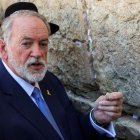
Murillo, Ortega's wife and architect of the persecution
Behind the religious repression against the Catholic Church is a name that appears again and again in all reports and analyses: Rosario Murillo, vice president, first lady and, according to Nicaraguan dissidents, the true face of power within the regime.
According to ABC of Spain, Murillo has publicly accused priests of being "spiritual terrorists" and "sons of the devil," and it was she who, in 2018, uttered the phrase "Let's go all out" that marked the beginning of the deepest crackdown against the Church of the entire cycle.
Amid the public accusations and documented repression, details about Murillo's personal life are hard to ignore. While criminalizing Catholic practice, the Nicaraguan vice president maintains a deep personal connection to esotericism and occult practices.
In an interview with ABC, Cervantes laureate Sergio Ramirez, former Nicaraguan vice president now in exile, revealed that cabinet meetings of the Sandinista regime are held around a five-pointed star, with ministers sitting in a circle. "It's like a coven," he described. The so-called "Trees of Life" that Murillo installed in Managua, according to the writer, are symbols of magical power and further proof of Murillo's interest in mysticism. In turn, journalist Carlos Salinas Maldonado, author of a biography on the Nicaraguan first lady, defines her as a woman who "mixes all these mystical questions in a manipulated way for her interests." According to his book, this woman, who was a revolutionary poet in her youth, became a co-dictator capable of "organizing and participating in a massacre against her fellow countrymen".
The faithful do not give in
Despite the abuses, Nicaraguans attended the holiest masses of the year.
On Palm Sunday, the Procession of the Triumph was held in a closed circuit inside the atrium of the Metropolitan Cathedral of Managua, presided over by Cardinal Leopoldo Brenes, who is one of the few ecclesiastical figures of weight that remain in Nicaragua.
The image of Jesus del Triunfo, advanced atop a donkey, had the palms hand-woven by the parishioners raised to receive the holy water, and the faithful, already blessed, responded with chants and praises. Maybe the procession did not take to the streets, but the temple was filled.
The Sandinista regime, in the midst of strong criticism and international pressure, tried to use photographs of these restricted celebrations to project an image of religious freedom that today is far from reality. The newspaper La Prensa, in fact, documented what happened that day: plainclothes policemen guarded the events, frightening attendees, while the government broadcast the images as proof of normality.
Researcher Molina summed it up as follows: "We are the only country in America where a dictatorship persecutes Christians solely for professing their faith." However, despite everything, faith remains intact in Nicaragua, waiting for the return of the processions.
LATEST