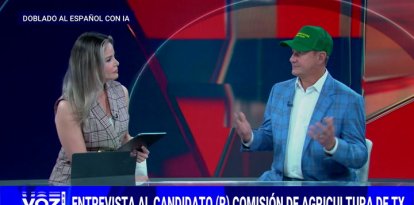
US sanctions high-ranking Nicaraguan officials for facilitating repression under Murillo-Ortega regime
According to the Treasury Department's official statement, those sanctioned head financial, labor, telecommunications and military intelligence entities which, according to Washington, have been key in the persecution of opponents, social control and consolidation of power by Daniel Ortega and Rosario Murillo.
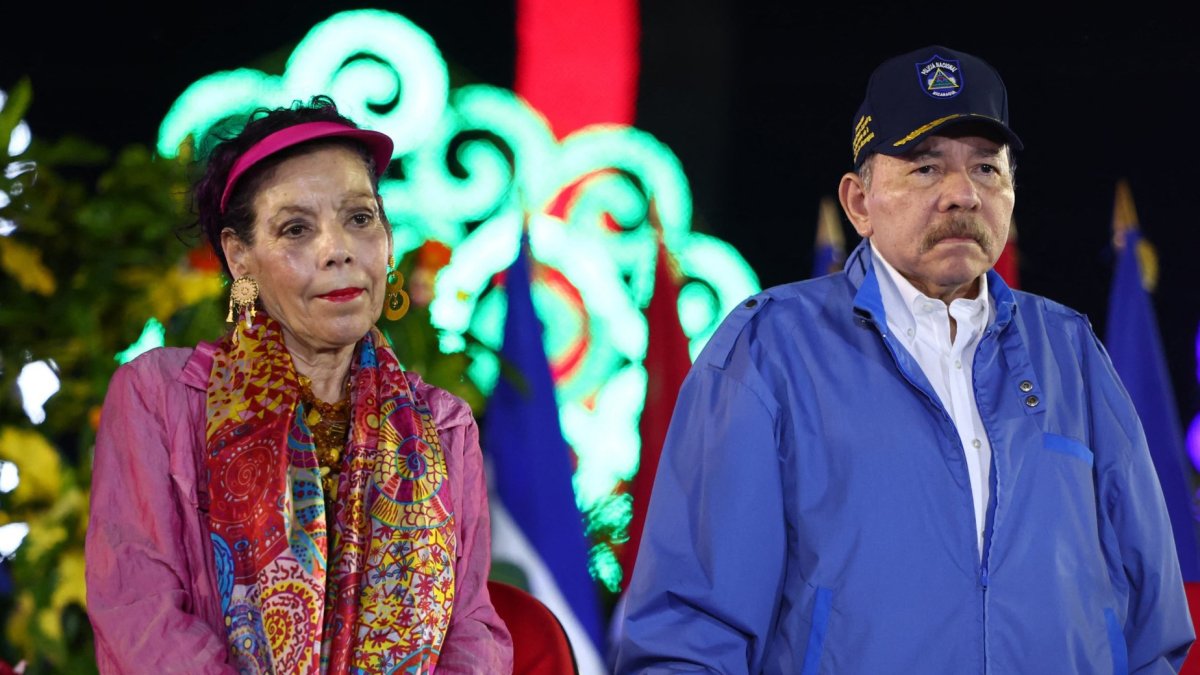
Nicaraguan dictators Daniel Ortega and Rosario Murillo.

Washington announced Feb. 26 new sanctions against five high-ranking Nicaraguan officials, accused of facilitating political repression and solidifying the power of the so-called "Murillo-Ortega dictatorship." The measure was adopted by the Office of Foreign Assets Control (OFAC), under the Treasury Department.
According to the official release from the Treasury Department, those sanctioned head financial, labor, telecommunications and military intelligence that, according to Washington, have been key in the persecution of opponents, social control and consolidation of power by Daniel Ortega and co-leader Rosario Murillo.
The designated officials
OFAC reported that they were designated under Executive Order 13851, as amended by 14088:
- Denis Membreno Rivas, director of the Financial Analysis Unit (UAF).
- Aldo Martín Sáenz Ulloa, deputy director of the UAF.
- Johana Vanessa Flores Jiménez, minister of labor.
- Celia Margarita Reyes Ochoa, deputy general manager of TELCOR.
- Leonel José Gutiérrez López, head of the Directorate of Military Intelligence and Counterintelligence (DICIM).
Treasury Secretary Scott Bessent stated that "the Murillo-Ortega dictatorship has continued its domestic and international campaign of repression and tyranny to intimidate, stifle, and undermine peaceful political opponents and dissenters. We will continue to hold the dictatorship to account and to amplify the Nicaraguan people’s aspirations for freedom and justice."
Just The News
DHS says 8% of Nicaraguan population entered US under Biden, draining billions from American economy
Misty Severi
Accusations against the state apparatus
According to the Treasury Department, the regime has used the Financial Analysis Unit, its agency in charge of preventing money laundering, to monitor and block fuding to opposition and civil society organizations. Washington argues that the lack of autonomy of the UAF has contributed to impunity in corruption cases and the freezing of dissidents' assets without legal basis.
On the labor front, the addition of Minister Johana Flores is based on an Oct. 25, 2025, report by the Office of the United States Trade Representative (USTR), which documents systematic abuses of labor rights, property seizures and conditions of unfair competition reportedly affecting U.S. companies.
With respect to telecommunications control, the Treasury Department noted that the Nicaraguan Telecommunications and Postal Institute (TELCOR) operates as part of a broad surveillance apparatus. The General Law of Convergent Telecommunications, approved in 2024, granted TELCOR powers to intercept communications, collect private data and geolocate people. Its general director, Nahima Díaz, was previously sanctioned in 2022.
As for the Directorate of Military Intelligence and Counterintelligence (DICIM), Washington describes it as one of the Nicaraguan military's most opaque and powerful structures, responsible for surveillance of protesters, journalists and political opponents.
Legal and financial implications
As a result of the sanctions, all assets and interests in assets of the designated persons that are in the United States or under the control of U.S. citizens are blocked and must be reported to OFAC. In addition, any entity that is 50% or more owned by the sanctioned persons is also blocked.
The regulations prohibit American people and entities from engaging in transactions with the designees, unless specifically authorized. In addition, foreign financial institutions could face secondary sanctions if they facilitate significant transactions on their behalf.
The Treasury Department recalled that non-compliance can result in civil or criminal penalties, and that the Financial Crimes Enforcement Network (FinCEN) whistleblower program offers financial incentives for information that leads to successful action.

State Department Reaction
The State Department reiterated its call for the "immediate and unconditional" release of all political prisoners in Nicaragua and accused the Ortega and Murillo government of rewriting the constitution to eliminate the separation of powers, consolidate dynastic control and expand state surveillance.
"Since 2018, the Murillo-Ortega dictatorship has violently repressed peaceful protests, unjustly detained, tortured, and killed political opponents. This illegitimate family dynasty has also persecuted Catholic clergy and has opted to silence and banish independent media and civil society organizations," reads the document.
United States expands its list of sanctioned individuals
Since the mass protests of 2018, international organizations and Western governments have claimed there has been an escalation of repression in Nicaragua, which includes arbitrary arrests, forced exile of opponents and restrictions on independent media outlets and religious organizations.
With these new designations, the United States expands its list of sanctioned individuals under the program linked to Nicaragua, reinforcing the economic and diplomatic pressure on Managua.
LATEST