Report warns Cuba is the 'epicenter' of destabilization in the US and Latin America
The document, entitled The House of Terror: How Cuba has exported death and chaos for sixty years, warns that international attention focused on Venezuela has overshadowed Havana's strategic role as the "operational brain" of networks of political agitation, drug trafficking and support for armed movements in the Western Hemisphere.
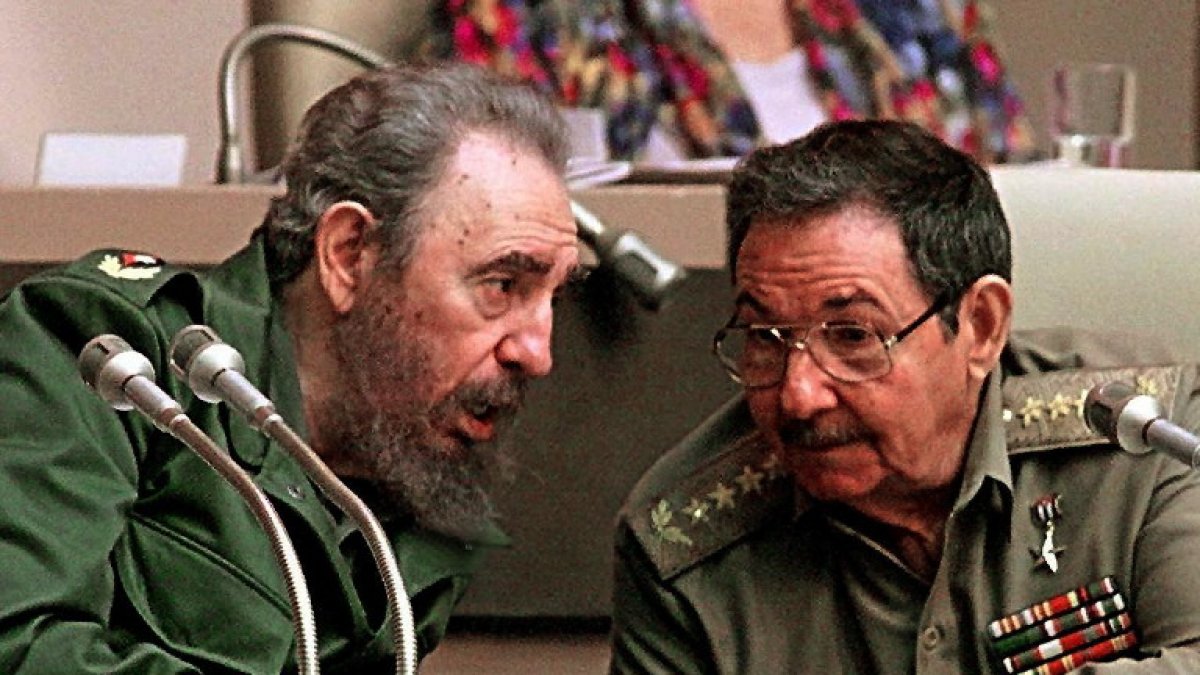
Cuban dictators Fidel Castro and his brother Raul Castro.

A report published by the Institute for American Studies CEU-Cefas, based on an analysis by The Heritage Foundation senior fellow Mike Gonzalez, argues that the Cuban regime has played a central role in political, social and security destabilization in the United States and numerous Latin American countries for more than six decades.
The document, titled The House of Terror: How Cuba has exported death and chaos for sixty years, warns that international attention focused on Venezuela has overshadowed Havana's strategic role as the "operational brain" of networks of political agitation, drug trafficking and support for armed movements in the Western Hemisphere.
According to Gonzalez, since the triumph of the Cuban Revolution in 1959, the communist regime has sought to "inflict a mortal wound" on the United States by exporting violence, terrorism and ideological destabilization. The report argues that Cuba is not a weakened marginal actor, but an active structure that has been able to adapt and operate through regional allies.
">📘 Publicamos en español el informe realizado por Mike González (@Gundisalvus), investigador sénior de @Heritage.
— CEFAS (@CEFAS_CEU) January 16, 2026
🎯 El régimen cubano, cerebro del plan de Caracas para desestabilizar Estados Unidos mediante el narcotráfico y la agitación política.
📲 https://t.co/S45Its5OZr pic.twitter.com/dBpiUJE6Sw
The role of the regime as a support for political processes in the hemisphere
The analysis presents a chronology that includes the training of Marxist guerrillas in the 1960s and 1970s, the 1966 Tricontinental Conference in Havana, and support for organizations such as the Tupamaros in Uruguay, the ELN and the FARC in Colombia, the Ação Libertadora Nacional in Brazil and Sandinismo in Nicaragua. The paper cites CIA reports documenting the training in Cuba of leaders of several of these armed groups.
Gonzalez also links the Cuban regime to recent political processes. He points out that the massive protests in countries such as Chile and Colombia preceded the coming to power of leftist governments, and suggests that Havana has maintained ideological and operational influence in these scenarios. In the case of the United States, the report states that networks associated with Cuba and Venezuela have allegedly contributed to episodes of social unrest, such as the riots following the death of George Floyd in 2020.

World
Report reveals political violence and terrorism that sustain the Cuban dictatorship
Diane Hernández
A key point of the document is the relationship between Cuba and Venezuela. Although both regimes have for years denied deep military cooperation, the report claims that Cuban officials have had a direct security presence for dictator Nicolas Maduro. Gonzalez claims that recent judicial actions in the United States against the Venezuelan would have provided evidence that contradicts Havana's official denials.
The report concludes that, following the arrest of Maduro and the hardening of Washington's policy toward Caracas, the U.S. Administration has begun to focus its attention on Cuba as the "head of the snake" for security problems in the hemisphere. Gonzalez stresses that any strategy to contain regional instability must, in his view, address the historical and current role of the Cuban regime.
The complete document was published in Spanish by CEU-Cefas and relies on testimonies from experts and former officials cooperating with the U.S. justice system, with the aim of offering a broad view of the threats that, according to its authors, the Western Hemisphere faces.
LATEST