Four Republicans break ranks, House votes to limit Trump's Iran war powers
The four Republicans who voted with the Democrats were Representatives Thomas Massie of Kentucky, Brian Fitzpatrick of Pennsylvania, Tom Barrett of Michigan and Warren Davidson of Ohio.
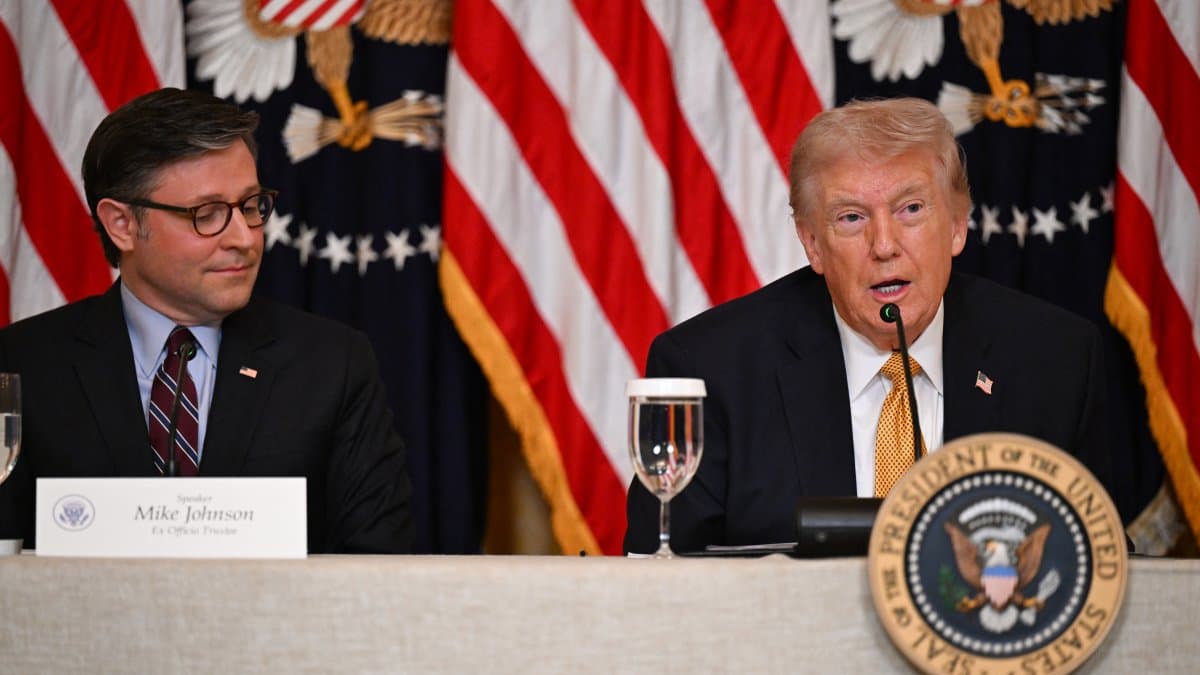

The House on Wednesday passed a resolution to limit President Donald Trump's war powers against Iran, in a significant political setback for the Republican leader after four GOP members broke ranks and joined Democrats to push the measure through by a 215-208 vote.
The resolution, pushed through amid a fragile cease-fire between Washington and Tehran, mandates the president to withdraw U.S. armed forces from hostilities against Iran unless expressly authorized by Congress, except in situations where the United States, an ally or a partner must be defended against imminent attack.
The four Republicans who voted with the Democrats were Representatives Thomas Massie of Kentucky, Brian Fitzpatrick of Pennsylvania, Tom Barrett of Michigan, and Warren Davidson of Ohio. Massie, who lost his primary last month to a Trump-backed candidate, again explained his vote, "People are tired of $5-a-gallon gas and $6-a-gallon diesel and fertilizer we can't afford to put on our fields in Kentucky." So I think it sends a good message that the people's House, which represents the people, is tired of this war."

The conflict, which erupted in late February after President Trump ordered a strike against the regime's top leadership, has shifted from an intense bombing campaign to a shaky cease-fire as the two countries jockey for control of the Strait of Hormuz. Negotiators, for the moment, remain estranged over the future of Iran's nuclear program, and clashes have escalated in recent days amid the U.S. blockade of the Iranian regime's ports.
House Speaker Mike Johnson condemned the House outcome: "Very unfortunate outcome, and it's very dangerous at a very serious time." Johnson was one of the big losers of the day in failing to hold the party together at a key moment in the negotiations.
"It really undermines the president's leverage and ability to negotiate. Because now Iran is going to see this and think that the United States Congress, you know, American people don't support it," said Rep. Michael McCaul of Texas. Several Republicans had the same analysis on the issue.
Democrats, on the other hand, celebrated the outcome as a turning point at a campaigning time just months before the midterms.
"It's the beginning of the end of the war," said Rep. Ro Khanna of California. "The House of Representatives said the American people are tired of it."
Politics
Dismissed after losing his primary, Cassidy joins Democratic offensive to curb Trump's Iran war powers
Emmanuel Alejandro Rondón
Republican dissenter Fitzpatrick defended his vote and dismissed fears of retaliation from Trump.
"Bring it to Congress, debate it on the merits, and have this vote. That's the way the system is supposed to work," the congressman said. Asked about possible political consequences of going against Trump and his party, Fitzpatrick said only that he will continue to do his job.
Passage of the resolution, however, will not end the conflict on its own. Nor does it make the end to the war imminent. For one thing, the measure faces multiple procedural hurdles before it can reach Trump's desk, who also has veto power. Also, the House and Senate are far from having the two-thirds supermajority needed to override it. In his first term, Trump already vetoed similar resolutions related to Yemen and Iran without Congress succeeding in reversing them.
However, just because Trump has veto power does not mean he is not facing political attrition from the war extension. A Fox News poll last month found that 60% of those polled oppose military action in Iran, compared with 40% who support it. Also, Trump's approval ratings fell as fuel prices continued to rise.
🛠 Do you think there is an error in this article?
Recommendations






LATEST