Trump declassifies reports exposing Chavista election fraud, its bid to influence U.S. elections, and a Chinese data breach affecting 220 million voters
Trump stated that the Beijing regime stole voter registration data from 220 million Americans—including names, addresses, party affiliations, and Social Security numbers, among other information—a figure that had not been previously reported.
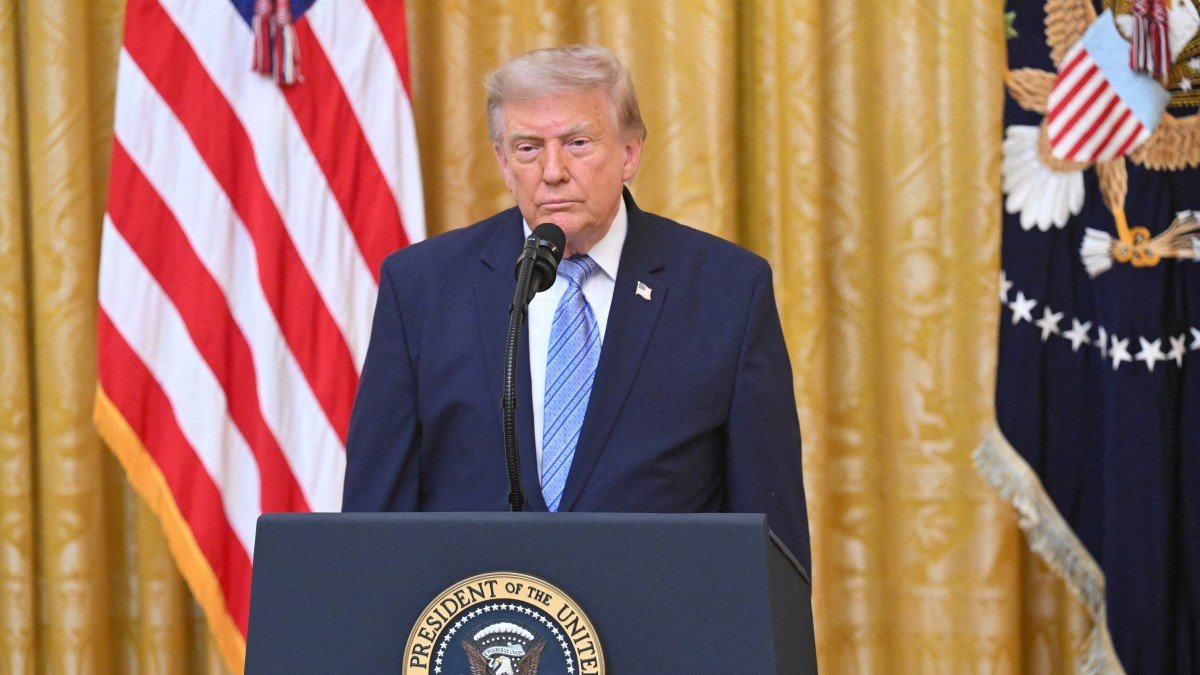
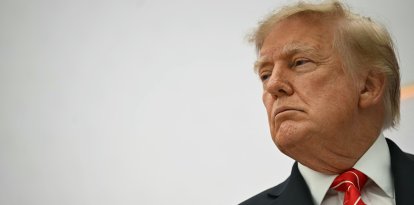
Donald Trump addresses the nation from the East Room of the White House in Washington

On Thursday, in a prime-time address, President Donald Trump announced the declassification of a series of intelligence reports that, he claimed, reveal historic flaws in U.S. election security, a plan by the Chavista regime—currently led by Delcy Rodríguez—to electronically manipulate the elections in Venezuela, and the Chinese regime's access to registration data for 220 million U.S. voters.
Among the declassified material is a CIA document dated June 29, 2026, which summarizes intelligence reports gathered between 2004 and 2020 on the Chavista regime's capabilities to manipulate electronic voting systems, including technology from the company Smartmatic. The document states that, prior to the 2012 presidential election, the intelligence services of dictator Hugo Chávez—the General Directorate of Military Counterintelligence (DGCIM) and the Bolivarian Intelligence Service (SEBIN)—allegedly worked alongside the National Electoral Council (CNE) and Smartmatic to deploy tampered machines at some 300 polling stations in traditionally pro-Chávez areas, with the aim of securing a victory by about 1.5 million votes. Chávez won that election by about 1.6 million votes, and sources cited in the report claim that he congratulated his team on the result.
"This technique would, in theory, allow the Venezuelan government to monitor and adjust results in real-time during and after the election," the report states. It also addressed a scenario for the December 2020 legislative elections, where it detailed a plan reported in September of that year that allegedly involved creating a second set of virtual machines capable of replicating the results from the legitimate machines and then replacing them with manipulated data, thereby circumventing standard audit procedures.
The report also reviews the U.S. side of the case: a 2006 National Security Threat Assessment by the National Intelligence Council, had concluded that Smartmatic's acquisition of the U.S. company Sequoia Voting Systems posed a threat to the national security of the U.S., given the interest of Chávez in influencing U.S. domestic politics and the ties between Smartmatic executives and Venezuelan intelligence services. That assessment led to pressure from the Committee on Foreign Investment in the United States (CFIUS), which prompted Smartmatic to divest itself of Sequoia in 2007. The document adds that the company ceased operations in Venezuela in 2018, after publicly accusing the Chavista regime of inflating voter turnout during the 2017 National Constituent Assembly election.
Politics
'We'll take care of it': Trump toughens his rhetoric following reports of Iranian drones in Cuba
Diane Hernández
In his speech, Trump presented these findings as proof that the electronic manipulation of election results is not merely a theoretical scenario. "This reporting included precise details about methods the regime developed to digitally alter vote totals in ways that could not be detected even with an audit," the president stated.
The second focus of the speech centered on China. Trump claimed that the Beijing regime stole voter registration data from 220 million Americans—including names, addresses, party affiliations, and Social Security numbers, among other information—a figure that had not been previously reported. "This data loss presents an unprecedented election security nightmare," the president said.
Trump added another element, stating that within the U.S. government itself, it had been known since 2020 that China had obtained some of that data, and that this information never reached him before that year's election. Beijing's access to this type of data had already been documented previously: an intelligence report declassified in 2022 had determined that Chinese officials analyzed voter registration data from multiple U.S. states, although the total number of Americans affected had never been disclosed until this Thursday.
Senator Bernie Moreno (R-OH) had revealed hours earlier, in a post on 'X', that Trump's speech would address election security and China, and he described it as possibly "the most important speech from the Oval Office since the Cuban Missile Crisis."
World
Donald Trump denies that he prevented María Corina Machado from returning to Venezuela: 'She's terrific'
Emmanuel Alejandro Rondón
The speech is part of Trump's long-standing claim that widespread fraud cost him the 2020 election, although no evidence has yet been presented that fraud occurred on a scale large enough to explain that outcome. The president's distrust of that process has led him to reopen cases that had already been closed, particularly in Georgia. The most high-profile incident occurred in January, when the FBI—under the supervision of former Director of National Intelligence Tulsi Gabbard, at Trump's behest—raided a Fulton County election center and seized more than 600 boxes containing 2020 ballots. That same county was the scene, in 2023, of the indictment of Trump and 18 other co-defendants for an alleged attempt to overturn the election results in Georgia.
The address—Trump's third to the nation during his second term—also sought to boost the Save America Act, a bill that would require proof of U.S. citizenship to register to vote in federal elections and that remains stalled in the Senate due to Democratic filibustering and reservations from some Republicans. Senate Democratic Minority Leader Chuck Schumer accused Trump of using the platform to reopen the legal challenge to the 2020 election rather than addressing the high costs and corruption that, he said, most concern Americans.
CIA Director John Ratcliffe supported the release of the documents as part of the president's transparency initiatives.
"This is why we produced key intelligence reporting showing that Venezuela's government had developed capabilities to manipulate electronic voting systems, raising serious concerns for U.S. election infrastructure security," said Ratcliffe, who added that he has long and publicly highlighted China's efforts to influence the 2020 election against Trump, in reference to his dissent of the Intelligence Community's evaluation in January of 2021.
LATEST