






Luis Manuel Otero Alcántara, a Cuban artist and dissident, arrives in Miami in exile after five years in prison in Cuba
The founder of the San Isidro Movement left Cuba days after completing his sentence, following a period in State Security custody. His departure reignites allegations that exile is used as a mechanism of repression against dissidents in the communist country.
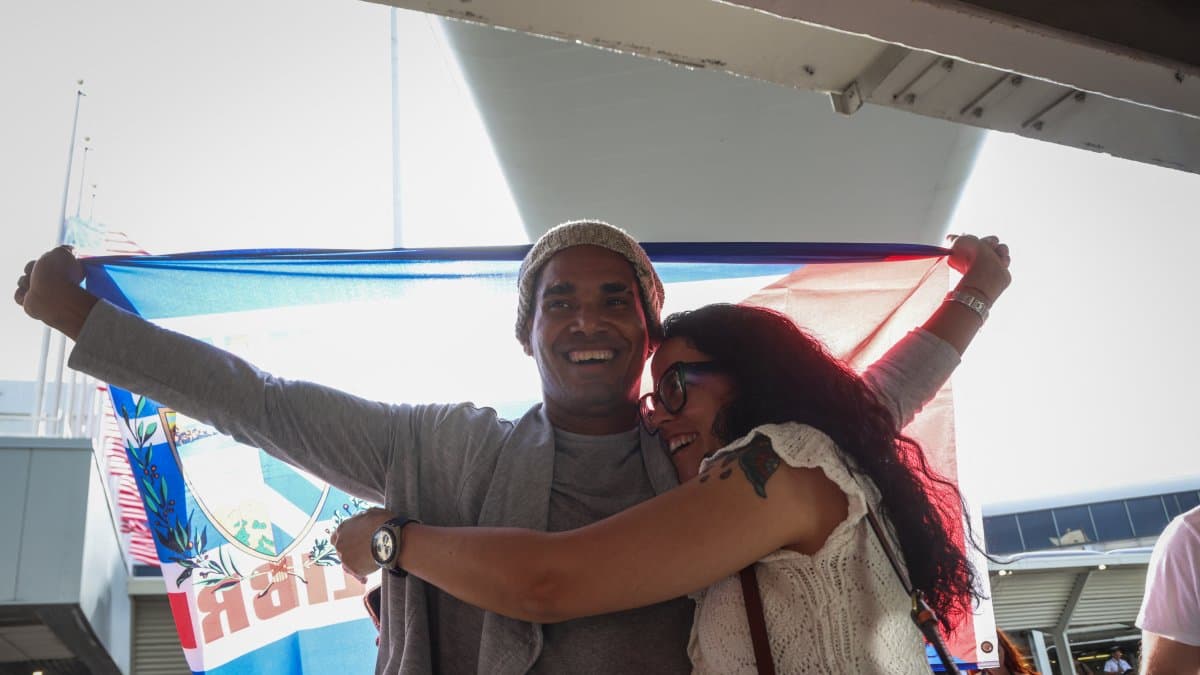

Cuban artist and political prisoner Luis Manuel Otero Alcántara arrived this Saturday in Miami, where he will begin a new chapter in exile after serving a five-year prison sentence imposed by the Cuban regime.
Dressed in a gray jacket, a cap and with a Cuban flag draped over his shoulders, Otero was greeted by family members, activists and members of the Cuban community at Miami International Airport. His first stop was the Ermita de la Caridad del Cobre, a symbol of the Cuban exile community.
From there, he stated that his release is also the result of the sustained efforts of those who have denounced political repression in Cuba.
"What is happening right now is truly the result of all of our efforts," the artist said in remarks reported by AFP.
His departure from the country came after he obtained a visa to travel to the United States, an option that, according to people close to him, ended up being the only way to regain his freedom after fully serving his sentence.
Missing for days after serving his sentence
Otero Alcántara's release was shrouded in uncertainty. On July 7, two days before his sentence officially ended, he was transferred from Guanajay Prison, where he had been held, to a State Security facility.
For more than a week, his family and close friends were unaware of his whereabouts, while human rights organizations denounced a forced disappearance and demanded information about his situation. A habeas corpus petition was even filed to compel the authorities to reveal his whereabouts.
Ultimately, the artist left Cuba for the United States, a move that his close associates described as the only option that allowed him to regain his freedom.
One of the most recognizable faces of the Cuban dissident movement
At 38 years old, Luis Manuel Otero Alcántara became one of the most visible figures in the cultural opposition to the Cuban regime.
He founded the San Isidro Movement, a collective of artists and intellectuals that challenged restrictions on freedom of expression and spearheaded some of the most significant cultural protests on the island in recent years.
He was arrested while attempting to join the mass demonstrations on July 11, 2021, the largest anti-government protests seen in Cuba in decades. A year later, he was sentenced to five years in prison for the crimes of insulting national symbols, contempt and public disorder.
Organizations such as Amnesty International recognized him as a prisoner of conscience, while the Cuban regime accused him of acting on behalf of the United States to destabilize the country.
In 2024, he received the Rafto Human Rights Prize, awarded in Norway.
Politics
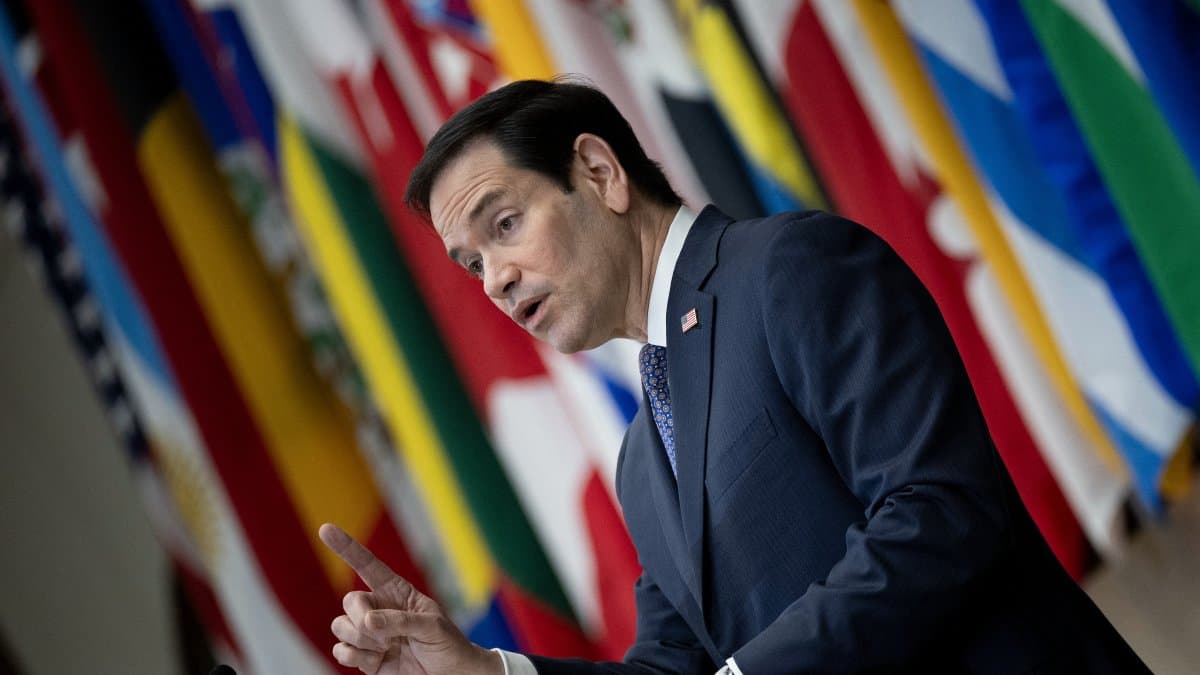
Marco Rubio accuses the Cuban Regime of helping shape the far left in the US and the West
Diane Hernández
Washington calls for the release of political prisoners
The artist's departure comes at a time of maximum tension between Washington and Havana, marked by the tightening of U.S. sanctions and constant international condemnation of the human rights situation in Cuba.
Exile as a tool for pressure
Otero Alcántara's case joins those of other Cuban dissidents who, after years in prison, have ultimately been forced to leave the country as a condition for regaining their freedom.
Various human rights organizations maintain that this practice constitutes a form of forced exile that allows the regime to reduce internal pressure by expelling some of its most visible voices, while hundreds of political prisoners remain incarcerated for reasons related to the exercise of fundamental freedoms.
The departure of Luis Manuel Otero Alcántara marks, at the same time, the release of one of Cuba's most iconic political prisoners and a new loss for an internal opposition weakened by repression, incarceration and the forced exile of many of its leading figures.
🛠 Do you think there is an error in this article?
Recommendations



LATEST