Iran threatens to close the Strait of Hormuz if US blockade persists
According to the U.S. Central Command, at least 21 vessels have been forced to change course in the region since the start of the blockade this week.

A ship sails through the Strait of Hormuz before the start of the war in Iran.

Iran warned Saturday that it could close the Strait of Hormuz again if the United States maintains a blockade on its ports, just hours after reopening this strategic sea lane following the ceasefire reached in Lebanon.
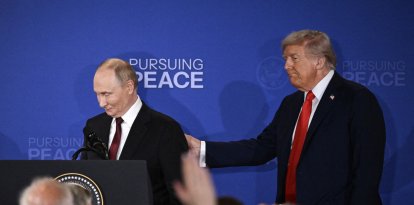
The reopening of the strait had generated optimism in international markets and in Washington. President Donald Trump claimed that a broader peace agreement with Iran is "very close" and even assured that Tehran would have agreed to hand over its enriched uranium. However, Iranian authorities immediately rejected these statements, stressing that their reserves will not be transferred.
Politics
Trump claims Iran agreed to dismantle its nuclear program, though Tehran denies it
Andrés Ignacio Henríquez
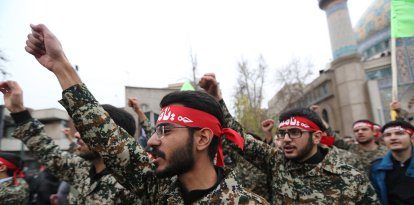
The speaker of the Iranian Parliament, Mohammad Bagher Ghalibaf, was blunt in pointing out that, if the blockade continues, the Strait of Hormuz "will not remain open." He further added that transit through this channel could require Iranian authorization. In the same vein, Foreign Ministry spokesman Esmaeil Baqaei called the U.S. naval blockade a "violation of the ceasefire" and warned that Iran will respond "in an appropriate manner."
The Strait of Hormuz is a key artery of world energy trade, through which approximately one-fifth of the world's oil and liquefied natural gas flows. Its closure would have immediate implications for global markets.
According to the U.S. Central Command, since the beginning of the blockade this week at least 21 vessels have been forced to change course in the region.

Negotiations and lingering tensions
Despite the threats, Trump maintained in an interview that there are no "sticking points" left to close a deal, describing the day as "big and bright" and highlighting the mediating role of Pakistan and Gulf allies.
The current conflict in the Middle East dates back to Feb. 28, when U.S. and Israeli attacks on Iran triggered a missile and drone response, in addition to the initial closure of the Strait of Hormuz.

Impact on oil and markets
The expectation of a diplomatic exit has put downward pressure on oil prices, a trend that intensified on Friday in the face of increased optimism. This was compounded by a new U.S. exemption allowing the sale of Russian crude already in transit, increasing global supply.
The international stock markets reacted positively, boosted by the possible stabilization of the conflict.
Lebanon and Israel: A fragile truce
Israeli Prime Minister Benjamin Netanyahu warned that the offensive against Hezbollah is "not over" and that there are still planned operations against rocket and drone threats.
For his part, Lebanese President Joseph Aoun said the country is in a "transitional phase" toward a permanent agreement with Israel.
LATEST