ANÁLISIS
Life sentence for Vickrum Digwa: the murderer who had his own victim arrested in the UK
A murder, a false accusation and an uncomfortable question for British institutions are back at the center of the debate.
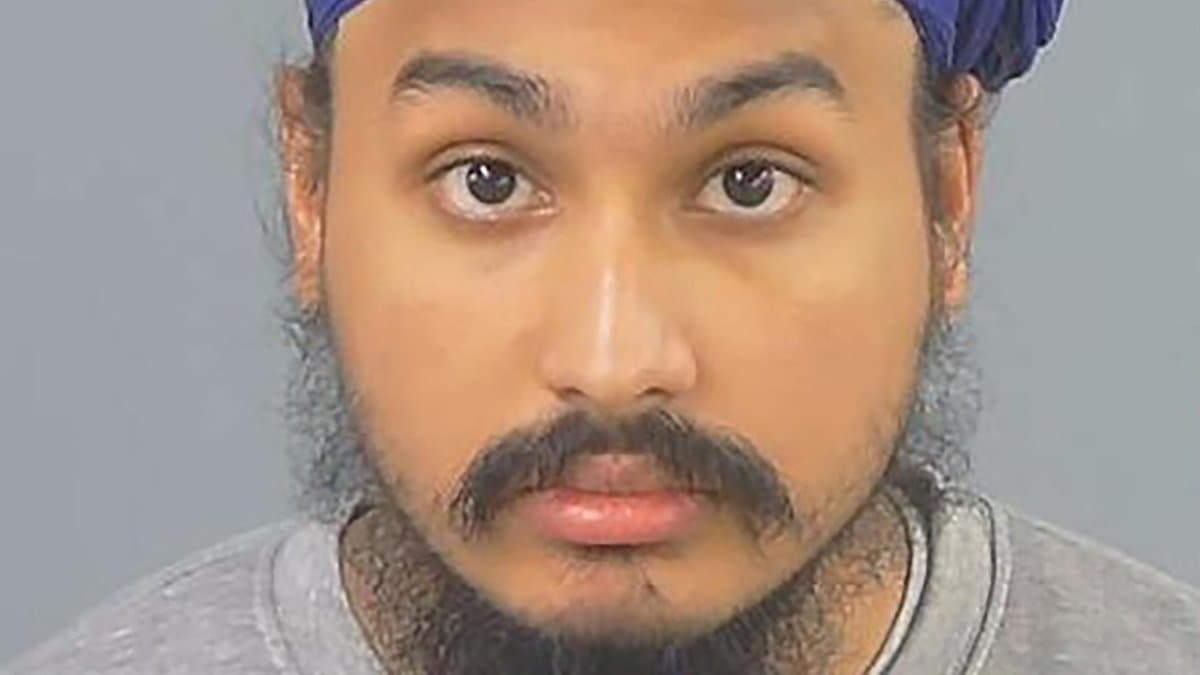

An 18-year-old student was dying on a street in Southampton, United Kingdom. Minutes later, he would be handcuffed by police. Not because he had attacked anyone. Not because he was the aggressor. But because the officers who arrived at the scene initially accepted the version of events told by the person who had just stabbed him.
This week, Vickrum Digwa was sentenced to life in prison for the murder of Henry Nowak, with a minimum term of 21 years before being eligible for parole. However, the court verdict has not closed the public debate. It has intensified it.
Especially because of its similarities to the case of George Floyd, which the left used as an excuse to set fire to the streets of the U.S. by the hands of Black Lives Matter. The young man warned the handcuffing officers that he could not breathe on as many as nine occasions, in addition to noting that he had been stabbed four times. His demands were not met, and Nowak died.
This case is not just about a homicide. It also raises questions about the ability of institutions to distinguish between facts and narratives at the most critical moments.
The night that changed everything
The tragedy occurred in December 2025 in Southampton. Henry Nowak, an 18-year-old university student, was attacked with a knife during an altercation. His injuries proved fatal.
According to the facts presented during the trial, when police arrived on the scene they found a confused scene. Amid the chaos, Digwa assured officers that he had been the victim of a racist assault and that Nowak had ripped off his turban.
That accusation conditioned the initial response.
The officers believed for the first few minutes that Digwa might be the victim of the incident. As a result, Henry Nowak was handcuffed while critically injured.
It was only later that the truth of what had happened would be understood. The victim was not the man who claimed to have suffered a racist attack. The victim was the young man who was dying on the ground.
Politics
Nick Shirley to tens of thousands in London: 'The ideas of freedom of speech are not dangerous'
Carlos Dominguez
Trial and conviction
Months after, a jury found Digwa guilty of murdering Henry Nowak.
Judge William Mousley KC handed down the mandatory sentence of life in prison, setting a minimum of 21 years before any possibility of parole. During the court proceedings, the prosecution argued that the allegations made by Digwa after the crime were false and had served to divert attention from his responsibility.
Hampshire Constabulary eventually acknowledged errors in the initial handling of the incident and issued public apologies to the victim's family.
But for many observers, the apology does not resolve the central question: How could a mistake of such magnitude have occurred?
The question the U.K. can't avoid
The case has provoked a discussion that goes far beyond the limits of a criminal proceeding. The question is no longer solely who committed the crime. That question has been answered by the courts.
The question now is why the institutions reacted the way they did.
Many commentators have pointed out that the episode reflects a growing tendency to accept certain accusations, especially those related to racism or discrimination, before the facts have been fully verified.
No one disputes that allegations of racism should be investigated seriously. But the fundamental principle of any investigation remains the same: check the facts before drawing conclusions.
When that order is reversed, the risk of making serious mistakes increases dramatically.
And in Southampton, critics argue, that risk became a reality.
The silence that also feeds the disaster
These include London Mayor Sadiq Khan, whose 2020 message following the death of George Floyd was widely circulated again.
At the time, Khan stated that "no country, city, police force or institution can be complacent about racism and the impact this has." Six years on, some critics wonder why he has not issued similarly forceful statements about a case that has generated deep commotion within the United Kingdom itself.
Beyond the Digwa case
The murder of Henry Nowak has ended up becoming a symbol of a much broader debate that today crosses many Western democracies.
How should institutions act when faced with sensitive allegations related to identity, religion or discrimination? How can they prevent bias from influencing investigations, regardless of the direction in which they operate? How can they ensure that the legitimate pursuit of justice does not end up replacing rigorous analysis of evidence?
These are all uncomfortable questions. But that is precisely why they are necessary.
A difficult lesson
The sentence against Vickrum Digwa represents the closure of a judicial process. It does not, however, represent the end of the public and dangerous discussion that is increasingly growing in Europe.
The image that remains is of an 18-year-old who needed urgent help and who, for a few crucial moments, was treated as a suspect rather than a victim. For Henry Nowak's family, that reality is impossible to forget.
And for British institutions, the case constitutes a warning as simple as it is momentous: no narrative, no accusation and no social pressure can substitute for the fundamental obligation to check the facts.
Because when the truth comes too late, the consequences can be irreversible.
Sikh Federation condemns Digwa for Nowak's murder and lies
"He made the wrong choice, should have pleaded guilty and must now serve his lengthy prison sentence."
🛠 Do you think there is an error in this article?
Recommendations






LATEST