Elections in Colombia: Petro and his candidate reject the results while the right-wing leader asserts that he will defend democracy 'with reason or with force'
The scenario is thus defined by extreme polarization, where the legitimacy of electoral institutions is being challenged from a position of power.
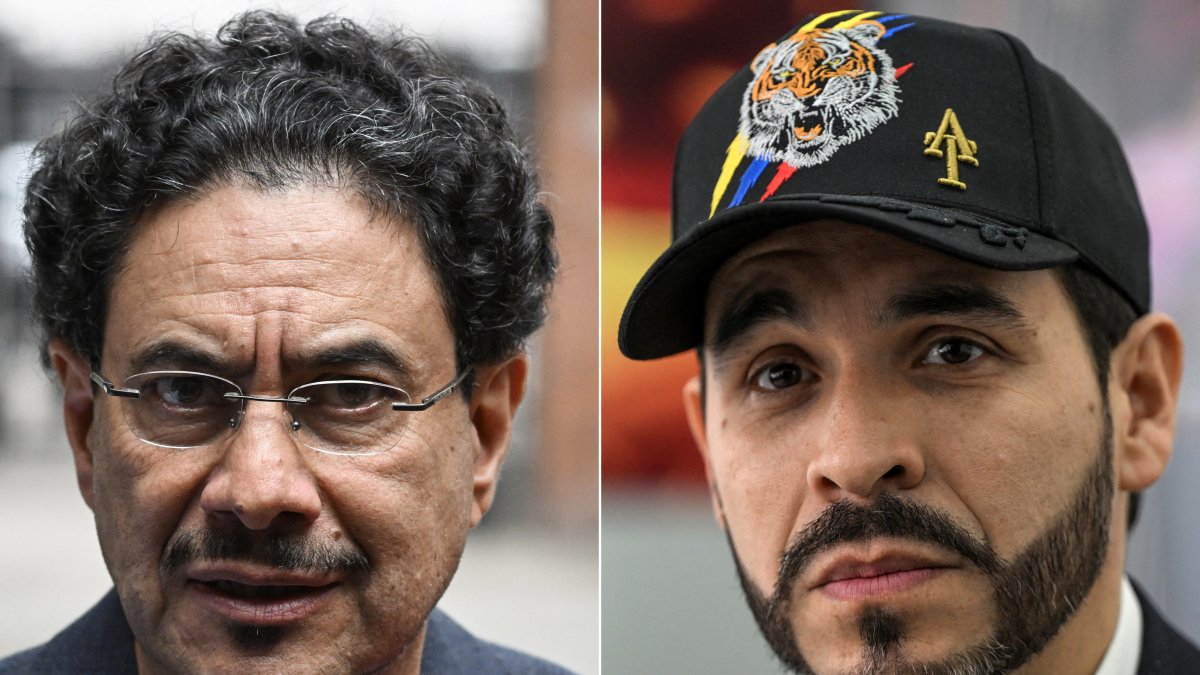
The left-wing candidate, Iván Cepeda (left), and the center-right candidate and first-round leader, Abelardo De la Espriella (right).

Colombia has entered a phase of uncertainty after the refusal of Gustavo Petro and Iván Cepeda to recognize the preliminary results of the first presidential round.
Although the Registrar's Office's preliminary count, with 99.95% of polling stations tallied, places attorney Abelardo de la Espriella as the top vote-getter, both President Petro and the administration-backed candidate, Iván Cepeda, have deemed the figures invalid.
The president was the first to break the institutional silence by stating that "he does not accept" the preliminary results. Without presenting reliable evidence, Petro denounced through X that the counting system includes "800,000 additional people". He stressed that these data lack "binding force," delegating the validity of the process only to the scrutiny commissions led by judges.
The socialist ruling party is entrenched in the "gap" narrative
In line with Petro's stance, Iván Cepeda, who received 40.9% of the vote against his rival's 43.7%, flatly rejected his second-place finish. During a speech to his followers, the Historic Pact candidate upped the ante by declaring that his movement had obtained "10 million miscounted votes" and calling himself the country's leading political force.
Cepeda insisted on an alleged discrepancy of up to 855,000 ballots in the electoral census and cited "atypical voting" at an unspecified number of polling stations, although he provided no evidence to substantiate these irregularities.
"Only when the scrutiny commissions clearly and rigorously clarify this matter, will we make a statement," the leftist aspirant warned, who also branded his opponent as representing the "extreme fascist right wing."
De la Espriella: "We will defend democracy"
The response from the day's victor was swift. From Barranquilla, Abelardo de la Espriella denounced what he considers an attempt by the government to subvert the constitutional order and disregard the will expressed at the polls.
In the face of the ruling party's impeachment narrative, the lawyer and businessman issued a blunt warning about his willingness to protect the electoral result.
"We will defend democracy by reason or by force," De la Espriella said before a crowd of supporters.
The conservative leader formally requested that the United States and other democratic nations closely monitor the process leading up to the second round to prevent "the will of the people being stolen."
Likewise, he reaffirmed his commitment to a "strong hand" policy, distancing himself from the "total peace" of the current government and celebrating the support of center-right sectors that reject "sailing in lukewarm waters" in the face of the advance of neo-communism in the region.
The scenario is thus defined by extreme polarization, in which the validity of the electoral institutions is being questioned by the very head of state, while the opposition prepares for an active defense of its votes on June 21.
World
A right-wing outsider wins Colombia's presidential election and a polarized runoff is confirmed
Andrés Ignacio Henríquez

LATEST