The Venezuelan regime cedes control of its revenues and orders airlines to transfer fuel payments to the US Treasury
International airlines interpret the ruling as a direct and total intervention over the management of the country's strategic resources.
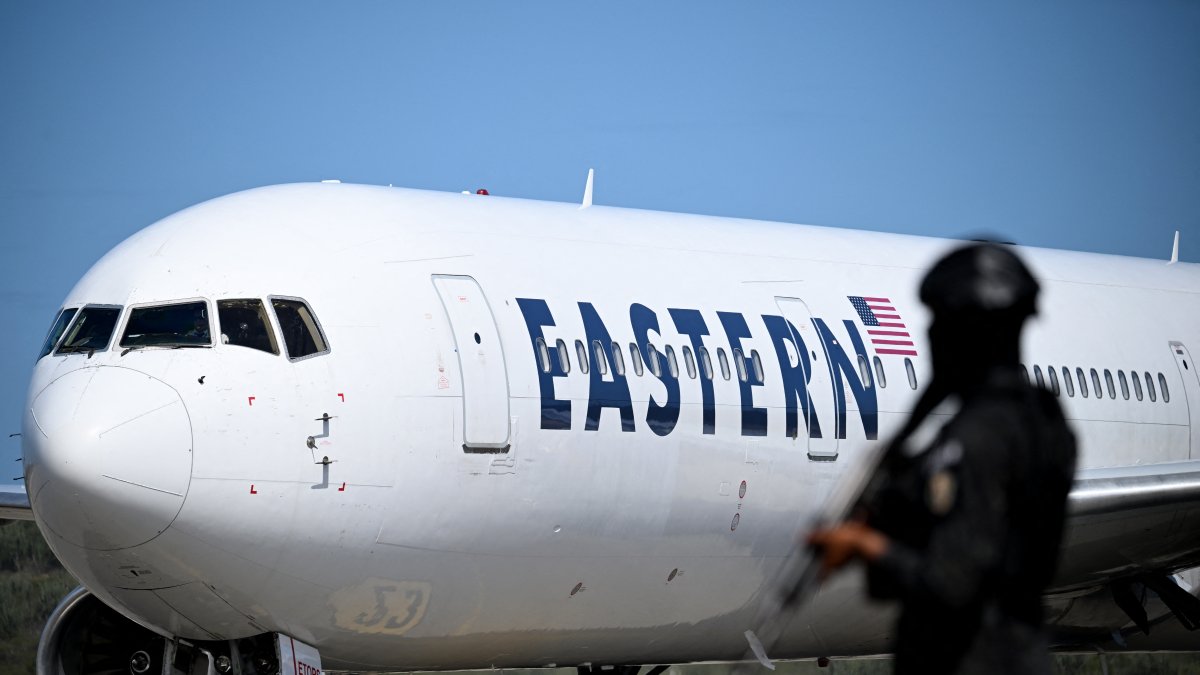
A US plane taxiing at the Simón Bolívar airport in Maiquetía. In the foreground, an officer of the Bolivarian National Police.

Through a formal communication sent to the main airlines and shipping companies operating in its territory, the Venezuelan regime, under the letterhead of the state-owned Petróleos de Venezuela (PDVSA), ruled that credits in foreign currency for the supply of fuels will not be paid into local coffers but directly into accounts controlled by the U.S. Treasury Department.
The document, dated last May 28 and revealed by El Diario, formalizes the financial subordination of the Venezuelan state apparatus to the directives of the Trump administration.
Attached to the missive, the Venezuelan government entity incorporated the technical specifications of the Fedwire system, detailing the mechanisms necessary to channel international funds into a "Venezuelan custody account" centrally tutored by Washington.
The escrow account mechanism and the loss of financial control
The administrative order expressly requires the companies to deliver immediately the transfer supports to validate the dispatches of JET A1 fuel -used by international airlines—as well as MGO and IFO 380 variants, commonly used in maritime transport.
The international airlines consulted by the aforementioned media interpreted the ruling as a direct and total intervention on the management of the South American country's strategic resources.
The origin of this rigid financial procedure responds to the conditions imposed by the White House at the beginning of the year.
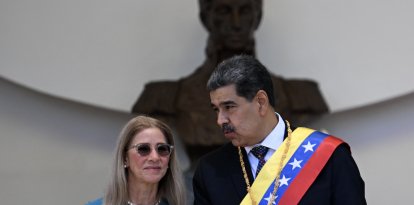
During an appearance before the U.S. Congress in January 2026, the Secretary of State, Marco Rubio, revealed the nature of the commitment agreed with Delcy Rodriguez, agreed a few days after the capture of dictator Nicolas Maduro at the hands of a U.S. military contingent.
Under the stipulations of this pact, the Trump administration consents to the commercialization of the previously sanctioned hydrocarbons at competitive market prices - blocking the severe commercial discounts usually received by the People's Republic of China - but with the mandatory condition of depositing the resulting capital in accounts under strict supervision of Washington.
"In exchange, the funds will be deposited in an account that we will supervise and they will spend that money for the benefit of the Venezuelan people," Rubio pointed out in that legislative session.
Legal shield against creditors and destination control
The legal scaffolding of this capital control measure refers to the executive order promulgated by President Donald Trump last January 9.
The federal decree established the constitution of the so-called "Foreign Government Deposit Funds", explicitly designed to store and control any income derived from the exports of natural resources owned by Venezuelan government entities.
The decree strictly details the deposit conditions:
"Foreign Government Deposit Funds constitute property of the Government of Venezuela and are not the property of any private entity, including judgment creditors of Venezuela or its agencies or entities, or commercial agents that have transacted or are transacting business with Venezuela or its agencies or entities."
The order of the U.S. Executive declares a situation of "national emergency" that legally shields such resources from possible seizures, judicial rulings, or executions promoted by creditors of the sovereign debt of the Venezuelan State.
However, the final power over the use of this money has been completely stripped from the bureaucratic apparatus in Caracas. According to the legal framework, the finances will remain withheld pending that the Secretary of State, Marco Rubio, on behalf of the Government, defines their specific destination for strictly public or diplomatic purposes.
World
South of the Orinoco, criminal gangs still control the gold the Rodríguez regime is selling to US companies
Emmanuel Alejandro Rondón
LATEST