US sends more than 10,000 troops to the Middle East as Trump presses Iran to accept peace deal
About 6,000 troops aboard the aircraft carrier USS George H.W. Bush will arrive in the conflict zone in the coming days. By the end of the month, another 4,200 troops aboard several warships will reinforce the military deployment.
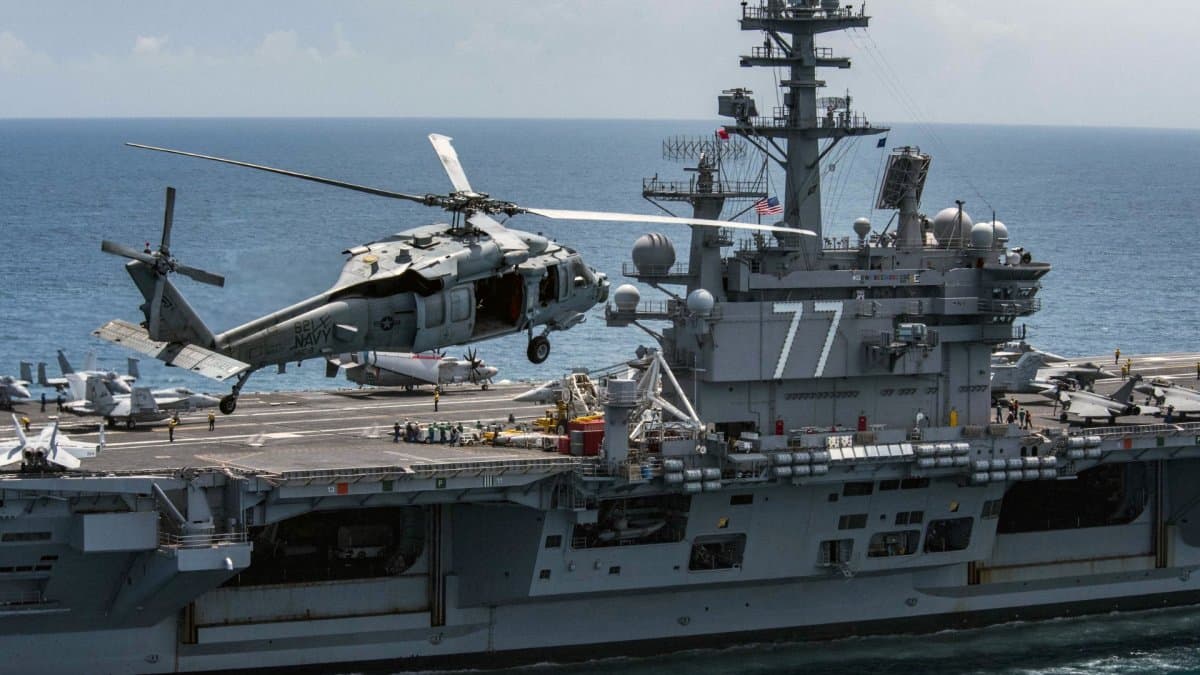

The Pentagon is sending more than 10,000 additional troops to the Middle East in the coming days, in an escalation aimed at increasing pressure on Iran to accept a peace deal as the fragile two-week cease-fire nears its expiration date.
The new troops are in addition to the approximately 50,000 military personnel the Pentagon already has deployed globally in operations related to the war against the Iranian regime.
According to officials quoted by The Washington Post, the first wave of reinforcements, about 6,000 troops aboard the aircraft carrier USS George H.W. Bush and several escort ships, will arrive in the region in the next few days. The carrier was near South Africa's Cape of Good Hope on Tuesday, making an unusual detour around the southern tip of the African continent on its way to the theater of operations.
Also, by the end of the month, another 4,200 troops from the Boxer Amphibious Group and the 11th Marine Expeditionary Unit, which departed last week from Hawaii, the WaPo reported.
With these 10,000 additional troops, the U.S. will have three aircraft carriers positioned in the region, the USS Abraham Lincoln, the USS Gerald R. Ford in the eastern Mediterranean, and the George H.W. Bush underway. All three come equipped with dozens of fighter jets.
World
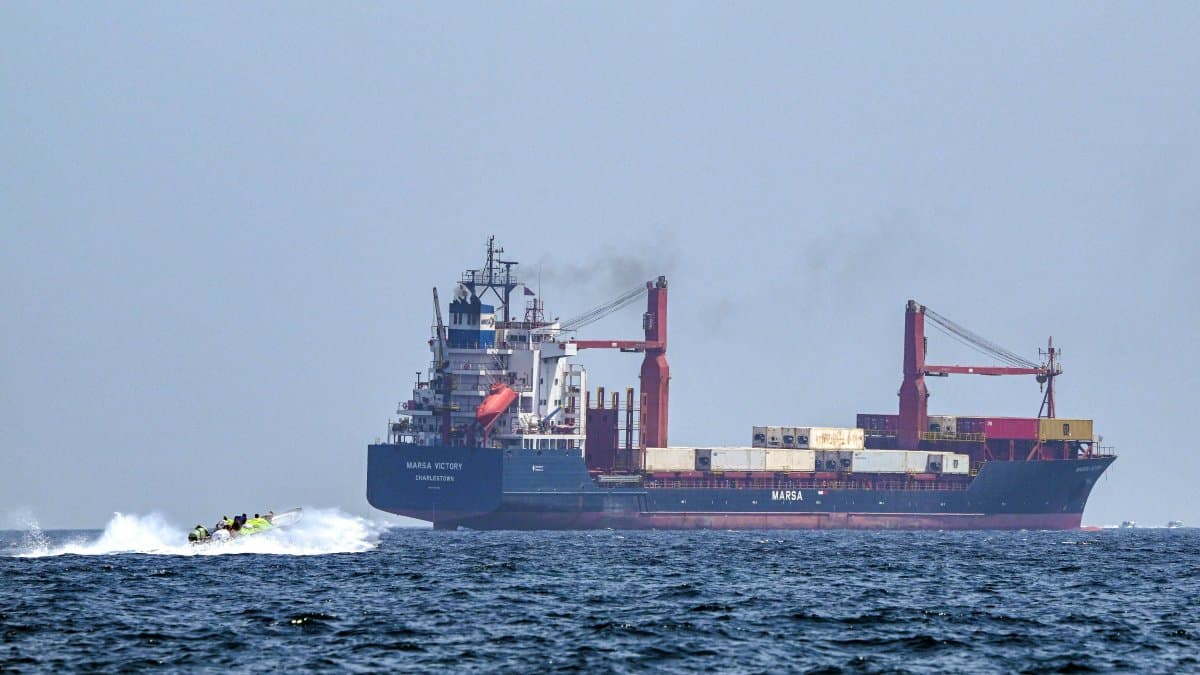
US enforces its naval blockade against Iran: Six ships turned away without a single shot fired
Emmanuel Alejandro Rondón
They add to the maritime blockade
The U.S. military reinforcement comes in parallel to the naval blockade Trump announced Sunday on Iranian ports. In the first days of operation, at least ten vessels have turned away from the presence of U.S. warships in the Gulf of Oman, with no shots fired so far.
An Iranian-flagged vessel attempted to pass through on Tuesday, but was intercepted and redirected by the destroyer USS Spruance. A radio transmission circulated online captures the warning issued to vessels in the area, "Do not attempt to breach the blockade (...) Turn around, or prepared to be boarded."
Vessels are fully authorized to use force if they do not comply with the blockade, U.S. officials said.
As the military deployment grows by leaps and bounds, seeking to bend the Iranian regime's will, the Trump administration has also begun to exert economic pressure. Treasury Secretary Scott Bessent revealed on Wednesday that two Chinese banks received letters warning that they could face secondary sanctions if Iranian funds are found to be flowing through their accounts. China purchases up to 90% of Iranian oil, making Beijing a key player in the economic pressure on Tehran. The warning was also sent to the United Arab Emirates, Oman and Hong Kong.
Venezuela precedent opens the possibility of troops on the ground
In Iran, despite being a very different case, the U.S. has not ruled out a ground escalation. According to The Washington Post, Trump administration officials are already discussing scenarios that include ground operations ranging from special forces missions to extract Iranian nuclear material to landing Marines in coastal areas to protect the Strait of Hormuz, and even seizing Kharg Island, Iran's main oil export facility in the Persian Gulf.
Mick Mulroy, a former CIA officer and retired Marine who served in the Pentagon during Trump's first term, told the Washington Post that any ground operation would be significantly riskier than maintaining the blockade. "It's not going to be without consequences," he said. "There will likely be casualties."
For now, no decision has been made on the matter, and Pakistani mediators are still pushing to extend the cease-fire and give negotiations more time. There is a possibility that officials from Washington and Tehran will meet again in Islamabad in the coming days.
🛠 Do you think there is an error in this article?
Recommendations







LATEST