ANALYSIS
Trump is right: without Venezuelan oil, the possibility opens for Cuba to become free again
For the Cuban regime, that share of oil was crucial for the maintenance of the electrical grid and the economy in general. Now, as reported by President Trump, it is not that there will be few barrels; it is that there will be no barrels.
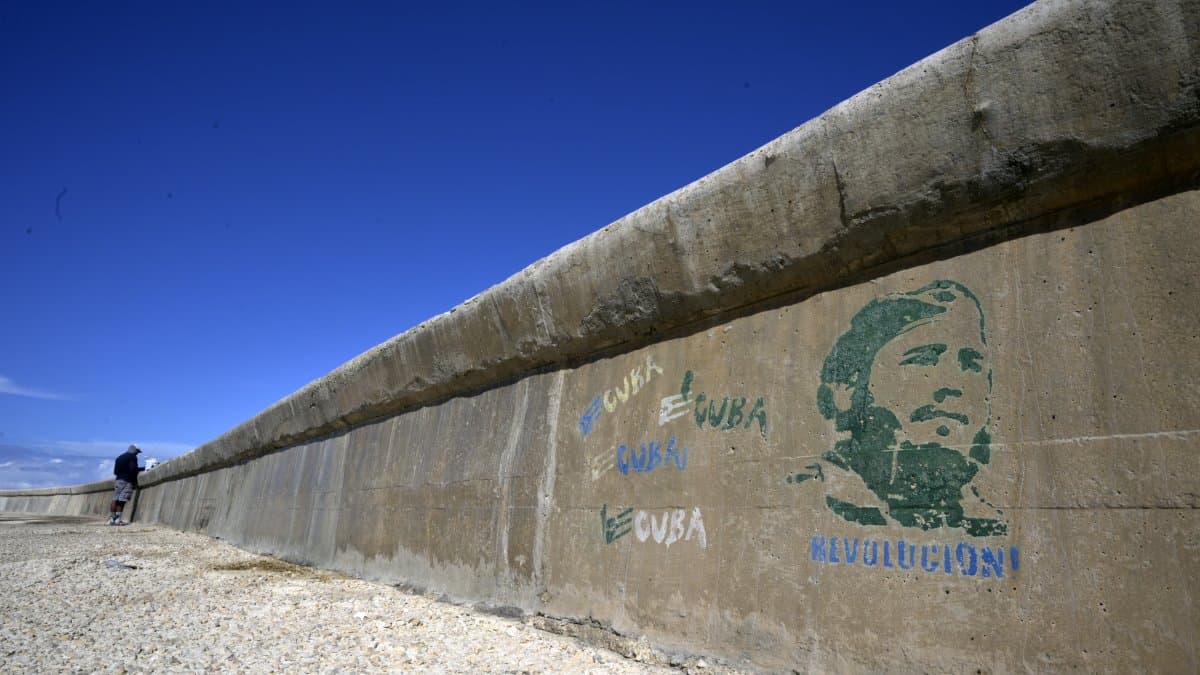

Donald Trump has been saying for several days that, after the capture of Nicolas Maduro, the next country whose dictator may fall is Cuba. He said the island's regime hangs by a thread.
Answering questions from Air Force One on Jan. 5, Trump said that "it looks like Cuba is ready to fall."
"I don't know if they're going to hang on, but now Cuba has no income. They were getting all their income from Venezuela, from Venezuelan oil," Trump told reporters.
This Sunday, January 11, the president published a post on his social network TRUTH in which he assured that Venezuela would no longer send oil to Cuba:
"Cuba depended, for many years, on large amounts of oil and money from Venezuela. In response, Cuba provided 'security services' to the last two Venezuelan dictators, but no more! Most of those Cubans are dead from the US attacks last week, and Venezuela no longer needs protection from thugs and extortionists who held them hostage for years. Venezuela now has the United States, the most powerful military in the world, to protect it, and we will protect them. There will be no more oil or money going to Cuba! Zero!"
Finally, he called on the Diaz-Canel regime, which rules the island: "I strongly recommend that you come to an agreement, before it's too late."
And Trump is right. Since Hugo Chávez took power in 1998, Venezuela, with its immense oil wealth, became the main economic support for a regime that, before the fall of the Berlin Wall, was dependent on the Soviet Union.
In fact, the collapse of the Venezuelan oil industry had a severe impact on the Cuban economy, according to a CIA report to which the Spanish daily ABC had access.
According to the report, when Venezuela was enjoying an oil bonanza unprecedented in its history, between 2006 and 2015, the regime—first Chavez's and then Maduro's—sent to the island between 80,000 and 100,000 barrels of oil daily.
A few years later, due to the corruption that plundered the state oil company PDVSA, the economic crises resulting from a socialist system and the imposition of economic sanctions by the US in 2019, oil production in Venezuela collapsed—and, consequently, shipments to Cuba were cut to a quarter of their previous level, to about 25,000 barrels a day (as of 2021).
The amount fluctuated, but never again exceeded 50,000 barrels per day. In 2024 the average was, according to the report collected by ABC, about 32,000 barrels per day.
For the Cuban regime, that quota was decisive for the maintenance of the electrical grid and the economy in general. Now, as reported by President Trump, it is not that there will be few barrels; it is that there will be no barrels.
For Cuba, the impact is dramatic. There is no nation on the horizon that can supplant what Venezuela meant-despite the fact that Mexico, governed under the Morena regime, presents itself as the main economic ally. It is not enough.
However,Trump's projection that this economic impact could produce the fall of Castro's tyranny is unrealistic. Cuba has already gone through dramatic episodes of hunger and misery, without that necessarily presenting an opportunity for Cubans to achieve democracy.
It is worth remembering, between 1990 and 1994, the so-called Special Period, when the island, after the Soviet collapse, entered a deep crisis in which Cubans lost, on average, more than a thousand calories a day. Even so, at that time Fidel Castro's call to his starving people was the cruel "we must resist!" And they did—at an enormous human cost—until Hugo Chávez came along.
So it may be that, given Cuba's determination to resist against all pressure, it will take more than just cutting off Venezuelan oil supplies for the regime to fall. And it is likely, given the tone of the White House and the historic ambition of Secretary of State Marco Rubio, that this is on the table.
What is certain, as the CIA report published by ABC also suggests, is that the days of economic assistance to Cuba are over. This presents enormous challenges, not only for the island's regime, but also for Cubans, whose severe economic and social crisis is likely to deepen even more.
🛠 Do you think there is an error in this article?
Recommendations

LATEST