ANALYSIS.
And after Khamenei, who?
The eldest son of the late supreme leader, Khamenei's grandson, or the head of Iranian security are emerging as favorites within the regime, while abroad, opposition leader Maryam Rajavi and the son of the late Shah are presenting their candidacies for a post-ayatollah Iran.
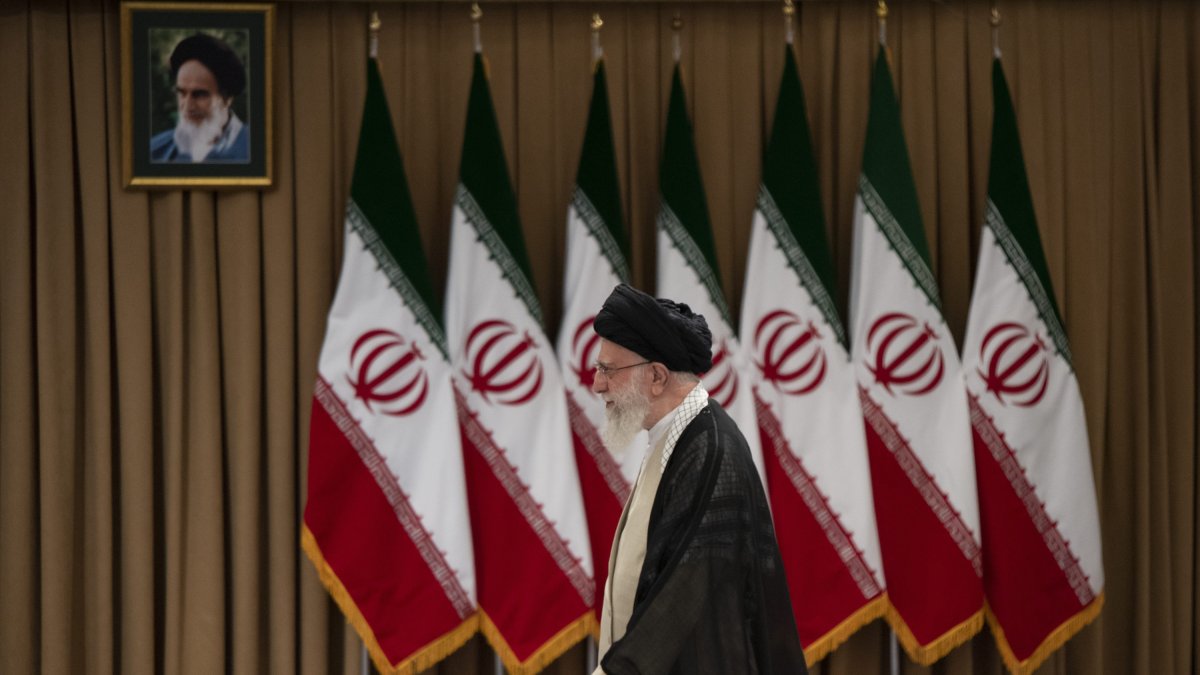
Ali Khamenei

The process to replace the late Ali Khamenei as Iran's supreme leader "will begin this very Sunday," Ali Larijani, head of Iran's top security body, the Supreme National Security Council, announced.
"An interim leadership council will be formed soon. The president, the head of the judiciary and a jurist from the Guardian Council will assume responsibility until the election of the next leader," Larijani said in an interview on state television.
The favorites to take Khamenei's place are:
Mojtaba Khamenei
The son of the fallen Ali Khamenei, Mojtaba, is, a priori, the most likely candidate to become the next supreme leader. In fact, as reported by Reuters pointing to "top Iranian sources," he is considered the logical successor of the terrorist-financing regime.
According to experts, the 56-year-old Mojtaba follows the line of his father's heavy-handed policies.
Last month, the U.S. Treasury Department noted that Khamenei's son was among those responsible for transferring $1.5 billion out of Iran last month. Secretary Scott Bessent pointed out that it was an attempt by the leadership to "jump ship."
Hassan Khomeini
Another illustrious surname opting for the post is that of Hassan Khomeini. A 53-year-old grandson of the father of the Islamic Revolution, Ruhollah Khomeini.
Over the past month, and coinciding with the increased pressure on Iran and negotiations with Washington, the figure of Khomeini, seen as a more conciliatory option both internationally and domestically has gained a lot of weight.
Ali Larijani
The top Iranian security chief was central to Khamenei's plans to lead the country during, at least, the transition until the council of 88 clerics chose the next supreme leader. The deceased saw him as the key figure capable of guaranteeing institutional order and curbing internal fractures in the regime.
Larijani, secretary of the Supreme National Security Council since 2025 and from a Shiite family with great influence, has a doctorate in philosophy and studies in computer science and mathematics. His connections with different echelons of power and his time in Parliament and the Security Council give him the ability to articulate consensus in turbulent times.
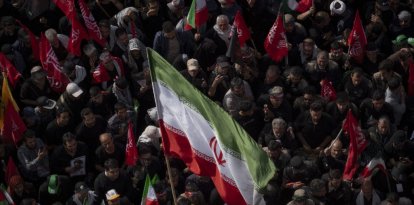
However, his involvement in the repression of the January mobilizations, with tens of thousands of demonstrators killed and one of the ultimate causes of Donald Trump's intervention, weighs against him to become the new supreme leader if the regime intends to present a friendlier face to its citizens.
Maryam Rajavi
The president-elect of the Paris-based National Council of Resistance of Iran, Maryam Rajavi, again called for an end to Iran's ruling regime and the creation of a democratic republic.
In a statement, Rajavi lamented that "our homeland continues to suffer further pain and destruction under the rule of religious fascism" and urged Iranians, especially the "brave youth," to defend civilians. Rajavi also called on the armed forces to side with the people and demanded the Islamic Revolutionary Guard Corps and the institutions dedicated to preserving the regime to put down their arms and surrender.
Rajabi presented herself as the leader of an interim government that would take the reins of the country in the immediate future and presented 10 points to achieve "a non-nuclear Iran that also lacks weapons of mass destruction," and that can coexist in peace and with international and regional cooperation.
Reza Pahlavi
The son of the last shah of Persia, Reza Pehlavi, also maintains his aspirations to be the next Iranian leader. On his X account, Pahlavi welcomed Trump's intervention from the U.S. which he called a "humanitarian intervention."
"The final victory will be achieved by us. It is we, the people of Iran, who will finish this task in this final battle. The time is coming to return to the streets," he said.
Pahlavi warned the security forces that should they keep up the fight and not immediately lay down their arms "they would go down with Khamenei's ship." Instead, he invited them to stop defending the regime and "protect Iran and the Iranian nation."
LATEST