Iranian retaliation: 8 Arab countries hit by missiles in response to US-Israeli bombings
Iran's Islamic Revolutionary Guard Corps (IRGC) claimed that Israeli and US positions across the region were hit "by powerful Iranian missile strikes."
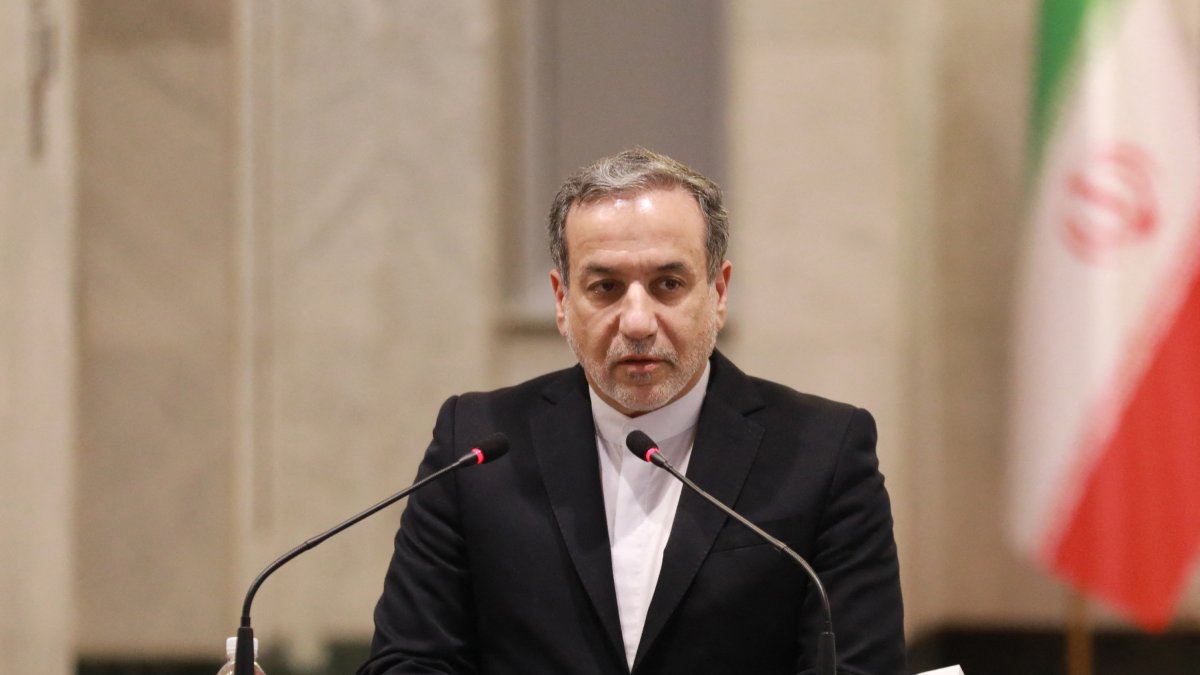
Abbas Araghchi, held talks with his counterparts from Saudi Arabia, the United Arab Emirates, Qatar, Kuwait, Bahrain and Iraq.
The Iranian regime conducted a wide-ranging missile response targeting Israel and multiple US military installations across the Middle East throughout Saturday in response to US and Israeli airstrikes that killed Ayatollah Ali Khamenei. Before the Persian country's state media confirmed the death of the supreme leader, officials from the Islamic theocracy called the attacks violations of the UN Charter and described them as overt aggression aimed at thwarting any remaining diplomatic avenues.
Iran's Islamic Revolutionary Guard Corps (IRGC) claimed that Israeli and U.S. positions throughout the region were hit "by the powerful strikes of Iranian missiles." The force stated that "This operation will continue relentlessly until the enemy is decisively defeated," adding that all U.S. assets in the region should now be considered legitimate targets.
Iranian military officials confirmed the deployment of drones and the firing of short-range missiles against several facilities, including al-Udeid air base in Qatar, Ali al-Salem base in Kuwait, al-Dhafra air base in the United Arab Emirates, Prince Sultan air base in Riyadh, the U.S. facility in Erbil in northern Iraq, Muwaffaq Salti air base in Jordan and the U.S. Fifth Fleet headquarters in Bahrain.
Response from affected countries
Although early reports pointed to limited large-scale destruction, drones and deflected missiles allegedly struck a residential building in Bahrain and damaged part of an airport terminal in Kuwait. In response, the governments of Saudi Arabia and the United Arab Emirates issued statements condemning what they described as Iranian violations of their sovereignty and warned that they reserve the right to respond.
For its part, Bahrain called the attack "treacherous" and "a flagrant violation of the kingdom's sovereignty and security." In Abu Dhabi, at least one fatality was reported after several missiles launched from Iran were intercepted, according to the UAE state news agency, which offered no further details. In Kuwait, Abdullah al-Rajhi, spokesman for the General Authority for Civil Aviation, said a drone struck Kuwait International Airport, leaving several employees with minor injuries and causing material damage to the passenger building.
Qatar's Ministry of Defense announced that it "thwarted" the incoming attacks in accordance with a "previously approved security plan," stating that "all missiles" were intercepted before entering Qatari airspace. Likewise, Qatar's Foreign Ministry stated that being attacked by a neighboring country "cannot be accepted under any justification or pretext," stressing that Doha has consistently sought to stay out of regional conflicts.
Meanwhile, Iranian Foreign Minister Abbas Araghchi held talks with his counterparts from Saudi Arabia, the United Arab Emirates, Qatar, Kuwait, Bahrain and Iraq. During those contacts, he defended Tehran's actions and argued that the Gulf governments had a responsibility to prevent the U.S. from using bases on their territory to launch what he described as an illegal aggression against Iran.
Oman, the latest target of Iran's retaliation
Oman, one of the key mediators between Washington and Tehran, reported two attacks on Sunday. The country, which had not been attacked on Saturday, reported that two drones had attacked a commercial port and that an oil tanker had been attacked off its coast in the early hours of Sunday.
LATEST