ANALYSIS
‘50% of Iranian missile launchers destroyed’
"Operation Roaring Lion" decapitates Iranian leadership, systematically dismantles missile infrastructure, setting it back by years, says military official.
Irán

The joint Israeli-American military campaign against Iran, now in its third day, has systematically decapitated the Iranian regime’s leadership from Supreme Leader Ali Khamenei down, while causing extensive damage to its ballistic missile program.
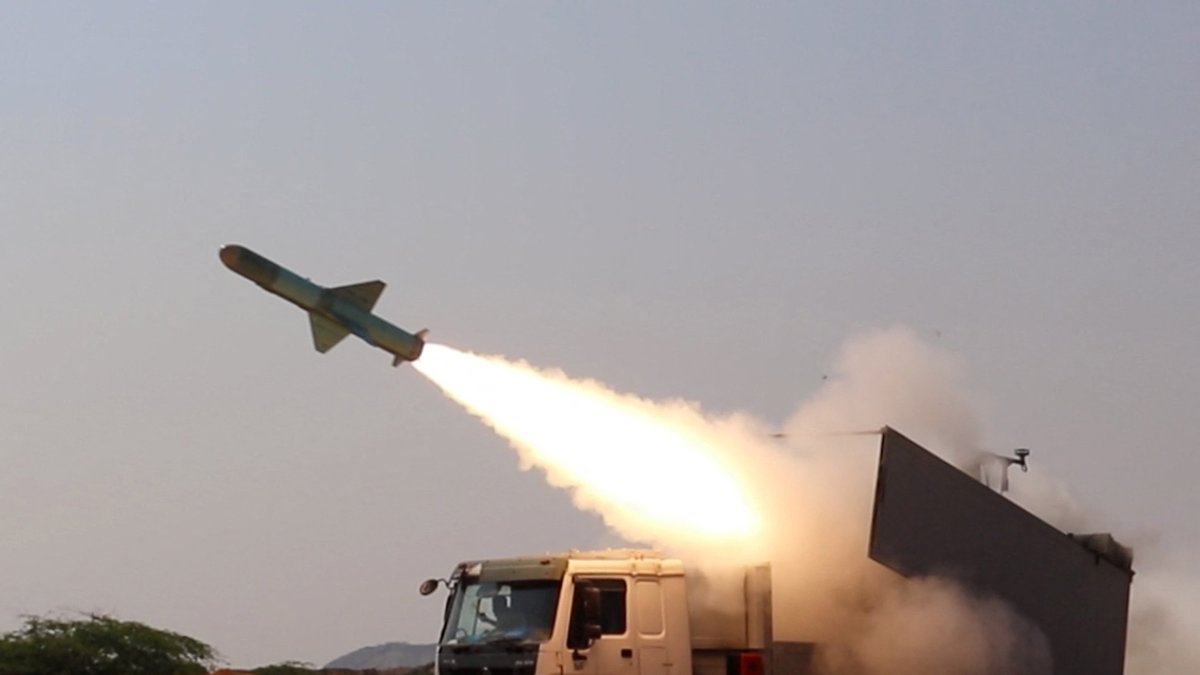
A military official speaking on Sunday provided a detailed assessment of the severe damage inflicted upon the Iranian weapons industry and missile program during the ongoing operation. According to the official, hundreds of Iranian terror regime missiles were successfully destroyed, and the production of at least 1,500 additional ballistic missiles was entirely prevented in the past two days.
The strikes dismantled approximately 200 ballistic missile launchers and rendered dozens more completely inoperable. The official noted that this meant that 50 percent of the regime’s ballistic missile launchers active at the time were destroyed.
The IDF confirmed that it had seen, before the current conflict, a sharp acceleration in Iranian efforts to rebuild missiles following the June 2025 war, and that the Islamic Republic was aiming to build around 8,000 missiles by 2027.
“These missiles constitute a real, direct, and existential threat to the State of Israel and to the Middle East,” said the military.
On the eve of “Operation Rising Lion” in June 2025, Iran had an estimated 3,000 missiles, a stockpile that was degraded down to 1,500 missiles by the end of the June conflict. Yet on the eve of the current operation, “Roaring Lion,” Iran’s arsenal shot back up to 2,500 missiles, and was moving up by dozens of missiles per month, according to Israeli assessments.

“The possession of missiles by a regime that openly declares its intent to destroy the State of Israel constitutes an existential threat. The IDF will not allow the Iranian terrorist regime to restore its military capabilities and will continue to act to neutralize any emerging threat against the citizens of the State of Israel, anywhere and at any time,” the military stated.
The Israeli military official detailed the destruction caused in just two days to Iran’s central explosives production site. This targeted facility, which was not named, produced the explosive material required for ballistic missile warheads, as well as for other types of weapons, including rockets, unmanned aerial vehicles, cruise missiles and ballistic missiles.
In addition to this central site, four key mixing facilities utilized specifically for producing ballistic missile engines were struck.
“Alongside the damage to ballistic missiles production capabilities, the IDF struck additional core aspects of Iran’s weapons industries,” the official said, adding that this achieved “significant results that reduced threats posed to Israel and to the broader region by the Iranian axis.”
He added, “This included factories that produced advanced anti-tank systems intended for Hezbollah and other terrorist organizations. Unique research infrastructures were also struck. This is expected to delay weapons research and development processes by years.”
The official explained that in recent months, the Iranian terror regime invested significant efforts to restore its missile production capabilities, with the main effort focused on rebuilding the mechanisms and knowledge centers that were previously dismantled. The Iranian missile production stood at dozens per month and intelligence identified that the production rate was actively accelerating.
Likewise, Iran was working to procure numerous systems and components from various countries in order to rehabilitate and strengthen its surface-to-surface missile array before the preemptive strikes commenced, according to the source.
IDF International Spokesperson Lt. Col. Nadav Shoshani provided operational updates on Sunday, confirming that the operation began with the biggest opening salvo in Israeli history, utilizing 200 fighter jets to carry out the most extensive aerial operation ever conducted by the Israeli Air Force.
Guided by high-quality, real-time intelligence, the aircraft struck over 500 targets in a range of locations across Iran, operating a thousand miles from home in a narrow, time-sensitive window.
During this initial phase, 500 munitions were deployed in a coordinated wave designed to dismantle key components of the regime’s missile and air defense capabilities, and target senior military officials, said Shoshani.
One central strike targeted a missile launch site in Tabriz, from which the Iranian regime had planned to fire dozens of missiles toward Israeli civilians. That launch capability has now been severely degraded. Additionally, aircraft struck a strategic SA-65 aerial defense system in the Kermanshah area, degrading systems to expand operational freedom and aerial superiority in Iranian airspace.
Shoshani explained the methodical chronological order of the operation, noting that the element of surprise was essential. The first step was an opening strike that eliminated 40 senior commanders in one minute across two different locations over a thousand miles away in broad daylight, he stated.
The second step involved a wave of strikes dismantling key elements of Iran’s aerial defense systems to ensure operational freedom. The third step targeted and dismantled missile launchers and Iranian firepower arrays that were loaded and ready to be fired towards Israeli civilians and other countries in the region.
He confirmed that this opening wave fractured the regime’s chain of command at its highest tier. The strikes also successfully eliminated Ali Shamkhani, adviser to Khamenei on defense issues and secretary of the Iranian Security Council; Mohammad Pakpour, commander of the Islamic Revolutionary Guard Corps (IRGC); Mohammad Shirazi, head of the military bureau of the Iranian Supreme Leader for nearly four decades; Saleh Asadi, senior intelligence officer of the Supreme Command; and Aziz Nasirzadeh, Iran’s defense minister.
The culmination of this decapitation strategy was the successful targeting of the Supreme Leader himself in the heart of Tehran.
“Khamenei was the mastermind of the axis of evil as we know it today,” Shoshani explained. “He was responsible not only for the repression of his own people, but also for a global network that spread across the world.”
Shoshani noted that Khamenei made it his life’s mission to annihilate the State of Israel, generating weapons and supporting his proxies in Syria, Iraq, Lebanon and Yemen.
“Today we can confirm he is done,” Shoshani declared. “The State of Israel stands stronger, and the world is a safer place.”
Alongside Khamenei, the military eliminated Abdolrahim Mousavi, who served as the chief of staff of the Iranian Armed Forces. Shoshani reminded reporters on a conference call on Sunday that in June 2025, during “Operation Rising Lion,” the military eliminated the head of the IRGC and his replacement, and has now eliminated the “replacement of the replacement, and the same is true regarding the chief of staff for the armed forces of Iran.”
Following the opening salvos, overnight strikes in coordination with United States partners targeted central and western Iran, striking over 30 targets aimed at degrading the regime’s ballistic missile capabilities.
In response to the allied strikes, Iran fired multiple missile attacks toward Israel, launching hundreds of missiles and unmanned aerial vehicles throughout the Middle East, including dozens directed toward Israeli civilians.
Shoshani reported that the regime focused on the center of the civilian population, resulting in single-digit impact sites, noting the attack in Tel Aviv. He spoke before the deadly attack on Bet Shemesh on Sunday.
“This operation, a joint coordinated operation with the U.S. armed forces, [to a degree] that we haven’t seen before. This level of intimacy and coordination. Fighting shoulder to shoulder in an unmatched historic manner. This is an unshakable security partnership,” said Shoshani.
Regarding the elimination of the regime’s leadership, the IDF confirmed that 40 senior commanders were killed in the opening strike, made possible due to precise intelligence. The Israeli Air Force struck and eliminated seven members of the top Iranian security leadership who had gathered at several locations in Tehran, including the chief of staff of the Iranian armed forces, Abdolrahim Mousavi.
The IDF also confirmed it has dismantled the majority of the aerial defense systems in western and central Iran, effectively paving the way towards establishing full aerial superiority over the skies of Tehran.
“Aerial supremacy is a process,” said Shoshani, adding, “We’re moving forward in a very positive way … We have a lot of freedom of operation. We can say we have aerial supremacy in specific parts.”
LATEST