The US sanctions for the first time Cuban dictator Díaz-Canel for human rights violations
The State Department also sanctioned the Minister of Defense, Álvaro López Miera, and the Minister of the Interior, Lázaro Alberto Álvarez Casas.

Miguel Díaz-Canel

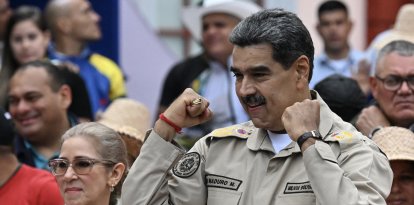
The United States announced Friday sanctions against Cuban dictator Miguel Díaz-Canel for his direct responsibility in serious human rights abuses. It is the first time Washington formally punishes the head of the communist regime, a figure who until now had avoided personal measures despite his central role in repression.
The State Department also sanctioned Defense Minister Alvaro Lopez Miera and Interior Minister Lazaro Alberto Alvarez Casas. The action prohibits the three, as well as their immediate family members, from entering U.S. territory. The sanctions are based on a clause in the State Department's budget law that denies visas to foreign officials involved in corruption or human rights violations.
New immigration and economic restrictions
In addition to the immigration sanctions, the State Department included 11 hotels in its List of Prohibited Accommodations in Cuba. Among them is the "Torre K" hotel, a luxury property recently built in Havana and linked to the military conglomerate GAESA. This measure restricts access by U.S. citizens to properties associated with the Cuban government and its military entities.
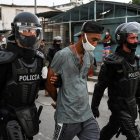
Visa restrictions were also imposed on Cuban judicial and prison officials identified as responsible for or complicit in the unjust detention and torture of protesters on July 11, 2021. Due to visa confidentiality laws, their names were not disclosed.
Senator Marco Rubio, who has been one of the strongest voices against the Havana regime, stated that "four years since the Cuban regime’s brutal crackdown on protestors, the State Department is restricting visas for Cuban regime figureheads—Diaz-Canel, Lopez Miera, Alvarez Casas, and their cronies—for their role in the Cuban regime’s brutality toward the Cuban people." Rubio also criticized that, while the population suffers shortages of food, water, medicine, and electricity, the regime "lavishes money on its insiders," including the financing of hotels such as the Torre K, now included in the list of restricted places to prevent the use of U.S. dollars for the benefit of the repressive apparatus.
Repression after 11J
Complaints about prison conditions
A report by Human Rights Watch published on Friday includes the testimonies of 17 people detained for their participation in the protests. They reported beatings, prolonged confinement, denial of medical care, and physical torture such as the "bicycle" technique of making the handcuffed prisoner run with his arms raised. They also reported outbreaks of scabies, tuberculosis, dengue fever, and covid-19 without adequate treatment.
The most recent case is that of Yan Carlos Gonzalez, a man convicted on sabotage charges. He died this week after a 40-day hunger strike in protest of his conviction. According to Cubalex, Gonzalez was accused of setting fire to a sugarcane field without evidence being presented. He died in a Santa Clara hospital.
U.S. reiterates support for political prisoners
On Tuesday, Under Secretary of State Christopher Landau held a virtual meeting with relatives of political prisoners, activists, and journalists at the US embassy in Havana. In that meeting, he demanded the release of all political detainees. For his part, Senator Marco Rubio posted on the X network that "the Cuban regime continues to torture pro-democracy activist José Daniel Ferrer" and demanded proof of life.
Meanwhile, in a recent speech before the United Nations, a Cuban diplomat affirmed that in the country's prisons "the rights of persons deprived of liberty are guaranteed" and that "there is no overcrowding, violence against women, unhealthy conditions or discrimination".
LATEST