ANALYSIS
Four years after July 11 in Cuba: More repression, censorship and crisis
In 2024, the island saw more than 8,400 protests and public demonstrations, a 31% increase over the previous year, and in the midst of a total crisis that has kept the country on the brink of collapse.

Man is arrested by regime forces during protests in July 2021.

This Friday, July 11, marks four years since the nationwide eruption of the largest anti-government demonstrations since the "Maleconazo" of 1994, during the so-called Special Period, when hundreds of Cubans came out to protest the precarious economic situation on the eve of the outbreak of the rafter crisis.
In 2021, the people took to the streets again, demanding political and economic change for the country. The result: more repression, clashes with law enforcement, days of blackouts, censorship of the press and more than 1,000 people arrested, most of them subsequently charged and punished for the alleged crimes of sedition, public disorder or counterrevolution.
Four years later, the protests continue. In 2022 alone, there were 692 protests recorded. In 2023, according to the records of the Cuban Observatory of Conflicts (OCC), there were 5,749, and last year, Cuba recorded more than 8,400 protests, an increase of 31% in 12 months in the midst of a total crisis that is sweeping the island and keeping it on the brink of collapse.
Despite promises of change and unity, the state continues to subdue the revolts by force. The ambiguous language in which many of the regulations contained in the 2019 Constitution have been conceived facilitates the criminalization of dissent.
A new penal code introduced in 2023 establishes certain social media posts as a criminal offense and increases prison sentences for offenses such as "public disorder," "resistance," and "insulting national symbols."
World
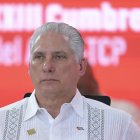
The Cuban regime reactivates the death penalty for those who "attempt against the State"
Diane Hernández
The second largest demonstration after July 11, 2021, took place on March 18, 2024, when hundreds of people protested in Santiago de Cuba and Bayamo, in the east of the island, over food and electricity shortages. That time, although Cuban dictator Miguel Díaz-Canel acknowledged that the discontent was real, he added, once again, that "the enemies of the revolution" were taking advantage of the situation to promote chaos.
Since July 11, 2021 (known as "11J"), the economic crisis has worsened, triggering a dramatic increase in emigration. Food prices have skyrocketed and power cuts have been on the rise, leaving the country completely in the dark on several occasions following the collapse of its national power grid. Medicine is scarce, education is at rock bottom and tourism, one of the few lifelines of the regime and which was already minimal, was cut in half in the first six months of 2025.
Harassment and repression against dissenting voices
On the anniversary of the historic July 2021 protests in Cuba, and with fears of another popular revolt, the regime continues the "harassment" and "repression" against dissident voices, according to activists and opponents who remain on the island. Harassment has also reached their families.
Among the most common methods are denying the release of political prisoners who are in minimum severity confinement (camps or farms) or giving citations to family members, to "warn them" not to leave their homes this week, nor to meet with other activists or organizations.
In addition to the intimidation operations, there are police cordons around the homes of opponents, verbal threats, unjustified arrests of 48 to 72 hours, and other techniques of "terror and psychological violence" used by the dictatorship since 1959.
These coercive actions are related, in some cases, to meetings held by opponents with the head of the U.S. diplomatic mission in Havana, Mike Hammer, who also has visited Cuba in recent months to observe the miserable situation the country is barely surviving through.
U.S. reiterates its support for Cubans on the anniversary of July 11
During the meeting, a message from Secretary of State Marco Rubio was screened, who highlighted the significance of July 11, 2021, as a turning point for Cuba.
Rubio, who shared his statement on X, praised the perseverance of citizens who continue to demand change, and reaffirmed the U.S. government's commitment to those who "continue to face difficulties" inside the country.
"Honored to address a group of brave Cuban dissidents and independent journalists to reaffirm our support for a free, sovereign, and independent Cuba. #PatriaYVida #11J," the head of American diplomacy wrote on social media. Rubio is of Cuban origin.
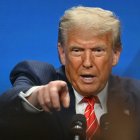
Days ago, Donald Trump himself expanded sanctions against the island's regime, and said the U.S. and his administration are firmly in favor of freedom and democracy in Cuba.
More than 1,100 political prisoners in Cuba.
Protesters, activists and religious figures count among the political prisoners who have entered as of May on the list of detainees that Prisoners Defenders updates daily in Cuba. The human rights organization counts 1,158 detainees at present.
According to official data from Havana, which accuses Washington of orchestrating the demonstrations during all this time, some 500 participants were sentenced to prison terms of up to 25 years. More than 120 protesters were tried by military tribunals, a blatant violation of international law, even though they were civilians.
At least four of these protesters held in the regime's prisons for political reasons and expressing their disagreement with the system, have died in the last year. The causes have not been clearly published.
The lack of due process, no right to effective defense (there are no independent defense lawyers in Cuba), absence of the presumption of innocence (without judicial protection, prosecutors decree provisional detention and precautionary measures for all political defendants) and/or the use of military courts are the norm without exception that have been verified in the thousands of cases of political prisoners in Cuba, legally analyzed by Prisoners Defenders.
This data was confirmed by the United Nations publicly in June 2024.
Another recent report by Prisoners Defenders uncovers one of the networks of state security collaborators abroad designed to attack the reputations of activists and community leaders in Cuba.
"New forms of protest" on the island four years after July 11
Four years after July 11, popular demonstrations "have not diminished" in Cuba, but rather the "population is trying to adapt to a totally repressive system, looking for new ways to protest," stated Laritza Diversent, executive director of Cubalex, on the program "Los Puntos a Las Íes."
"To me, there's an unprecedented change. They are struggling with a system that is 65 years old. And there is a challenge there," the activist added.
While the country survives as best it can, amid shortages of food, medicine and basic services, this July 11, four years after the social outbreak, the sun rose over Cuban streets that were patrolled by the regime's forces.
LATEST