ANALYSIS
Hispanic DNA: The indelible mark of the FIFA World Cup 2026
The next edition of the world’s most important soccer tournament will be held in the United States, Mexico, and Canada from June 11 to July 19.
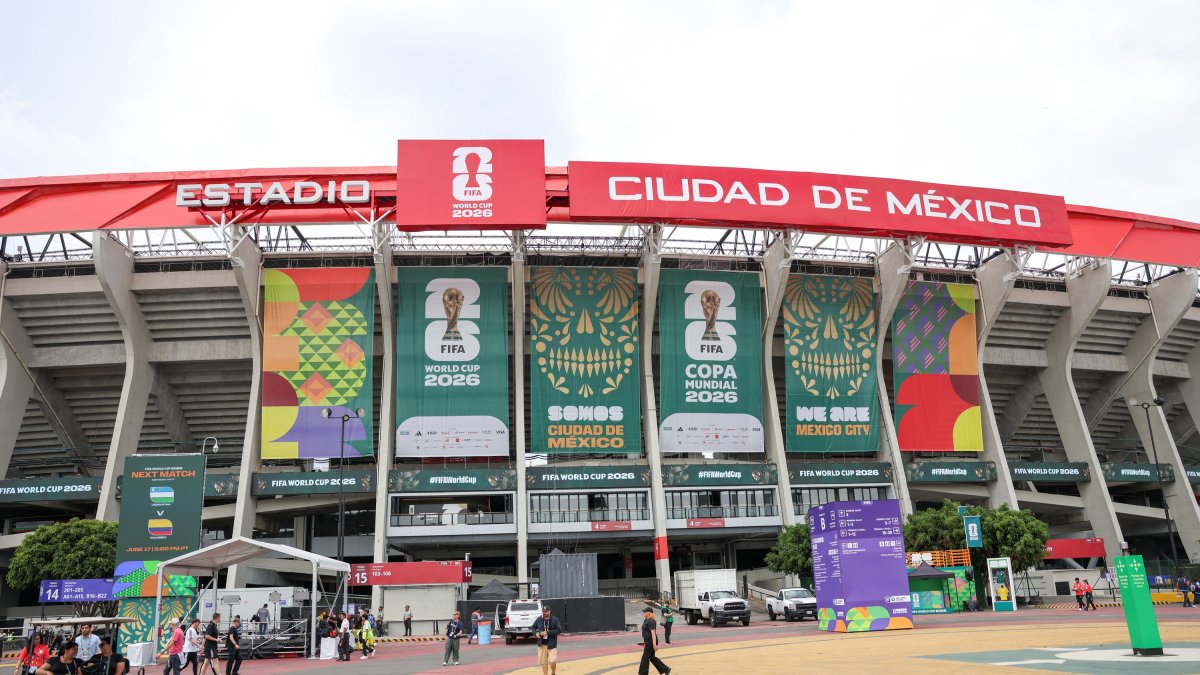
Azteca Stadium (Mexico), the venue where the FIFA World Cup 2026 will kick off

The moment of truth has arrived. The FIFA World Cup 2026 kicks off this Thursday and will be unique and different from all previous editions for several reasons.
First, because it will be the first time that three countries will serve as hosts: the United States, Mexico, and Canada. To date, only once—in 2002, with South Korea and Japan—have two nations shared the honor of hosting a World Cup.
This edition will also have a unique twist due to the number of participants. Since the first edition was held—in 1930—the number of national teams participating in the tournament has evolved, almost always with an increase: from 13 to 15, then to 16, later to 24, and finally to 32. In this edition, there will be 48.
In relation to the previous point, the FIFA World Cup 2026 will feature a greater number of matches than in previous editions—104. There will be an additional round—the Round of 32—and the path to the title will be longer, since the champion will have to play eight matches instead of the seven of the past.

Sports
A mix of tradition and innovation: These are the stadiums for the 2026 FIFA World Cup
Alejandro Baños
There are other factors that confirm this event will be different from its predecessors, such as the use of new technological tools on the field or the participation of national teams that have never before qualified for the World Cup. And there is one reason that stands out above all the others: it will be the most Hispanic World Cup in history.
Latin Americans and Spanish, hosts of the FIFA World Cup 2026
The fact that this tournament will be the most Hispanic FIFA World Cup in history is supported by several factors. To begin with, we must look at the Hispanic population residing in the three host countries.
Mexico is the country with the largest number of Hispanic residents in the world—more than 130 million—and the United States is second—more than 65 million. Canada, on the other hand, does not come close to those figures; however, an increasing number of Hispanics are living there—according to detailed by the 2016 census, there were 447,325; in 2021, 580,235.
Language is closely tied to the resident population. Excluding, of course, Mexico, in U.S. cities where FIFA World Cup 2026 matches will be held Spanish is the everyday language of a significant portion of their residents. Examples of this include Miami, Los Angeles, Dallas, and Houston.
In Canada, it is estimated that nearly 1.2 million people speak Spanish, either fluently or as a native language.
Same number of Hispanic national teams as in the Qatar FIFA World Cup 2022
Another factor confirming that the FIFA World Cup 2026 will be the most Hispanic in history is the number of Hispanic national teams that will be present, matching the record set at the 2022 FIFA World Cup in Qatar.

Seven national teams secured their spots in the tournament during the qualifying round: Spain, Argentina, Uruguay, Colombia, Paraguay, Ecuador, and Panama. Joining them is Mexico, which qualified directly as one of the three hosts.
Hispanic Tactical calls from the bench
It’s not just the Hispanic national teams competing in the tournament that are coached by Hispanic managers. Two other national teams attending the event also receive tactical instructions from the bench from Hispanic coaches. In total, there are ten: six Argentines, three Spaniards, and one Mexican.
The six Argentines are: Lionel Scaloni (Argentina), Mauricio Pochettino (United States), Marcelo Bielsa (Uruguay), Néstor Lorenzo (Colombia), Gustavo Alfaro (Paraguay), and Sebastián Beccacece (Ecuador).
On the other hand, the three Spaniards are: Luis de la Fuente (Spain), Julen Lopetegui (Qatar), and Thomas Christiansen (Panama). Meanwhile, the Mexican Javier Aguirre will lead Mexico at the 2026 FIFA World Cup.
Prime time, vital for Hispanic fans
This is a technical but vital point. For the first time in decades, the World Cup’s prime-time schedule will be perfectly aligned with the time zone of all of Latin America. The exception is Spain.
Unlike the 2022 World Cup in Qatar or the 2018 World Cup in Russia, where fans in Madrid, Mexico City, or Bogotá had to get up early or watch matches during work hours, in 2026 the matches will take place during prime time in Hispanic countries. This is vital because it ensures that the flow of money, advertising, and media attention will be predominantly in Spanish.
It all begins at one of the great symbols of Hispanic and world soccer...
The opening match of the 2026 World Cup—which will pit Mexico against South Africa—will be held on June 11 at one of the most historic and iconic venues in the world of soccer, the Estadio Azteca, located in Spanish-speaking territory, in the Mexican capital.

With a capacity for 87,000 spectators, it is one of the largest soccer stadiums on the planet. Furthermore, it is the venue where the most FIFA World Cup matches in history have been played (19).
...and everything takes place surrounded by Hispanic culture
While the opening match will be held at the Azteca Stadium, the final will take place on July 19 at the MetLife Stadium, located a few miles from New York in an area with one of the largest concentrations of Hispanics —primarily Dominicans, Puerto Ricans, Ecuadorians, and Colombians—in the world.
To the beat of Hispanic music
Colombian singer Shakira—who previously sang the theme song for the 2010 World Cup in South Africa—has been chosen to perform Dai Dai, the official song of the FIFA World Cup 2026.
LATEST