Belgian prime minister sparks controversy: Suggests Trump was ‘hard hit’ by Belgium's rout of US
Prime Minister Bart De Wever’s remarks come after the White House intervened diplomatically to lift the suspension of center forward Folarin Balogun.
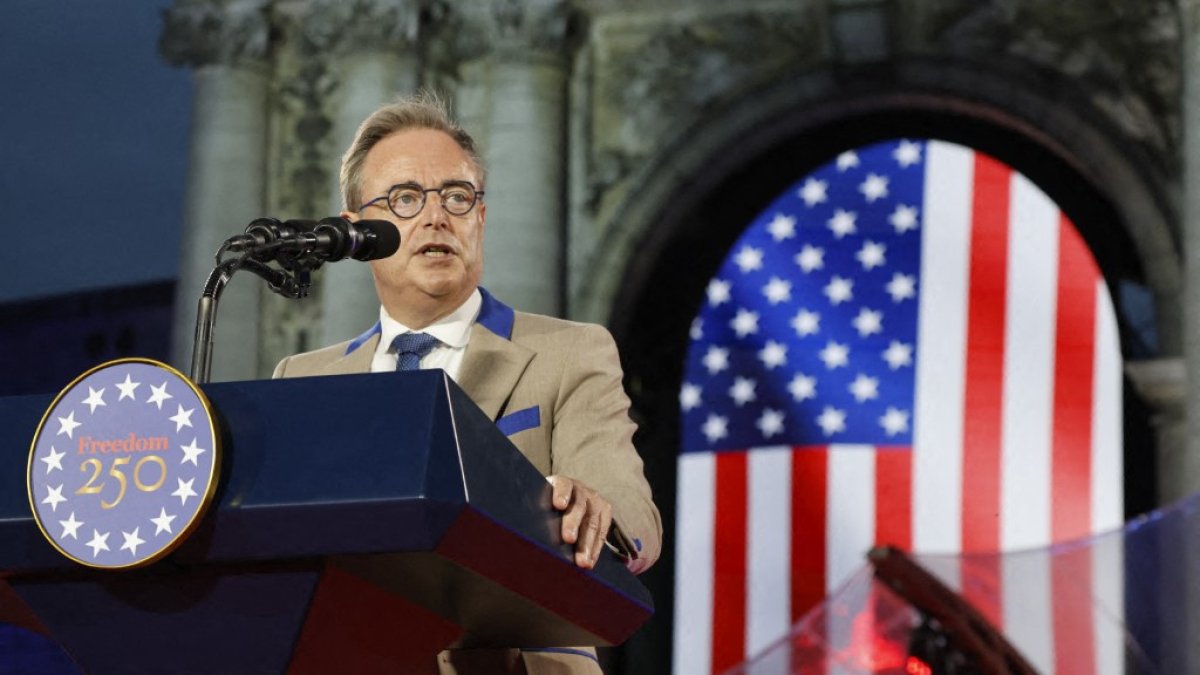
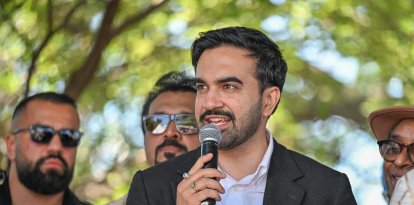
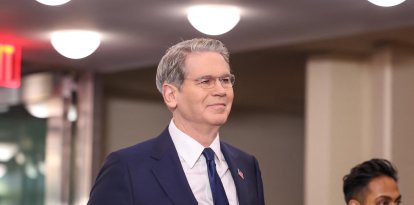
Bart De Wever delivers a speech during the celebration of the 250th anniversary of the United States

Belgian Prime Minister Bart De Wever made no secret of his enthusiasm over the resounding 4-1 victory by the Belgian national soccer team over Tesm USA on Monday, following the global controversy over the lifting of center forward Folarin Balogun’s suspension.
In an interview with the Flemish public broadcaster VRT News, De Wever praised the “Red Devils” (the nickname of Belgium’s national team) and suggested that Trump was “hard hit” by the victory, as he was indirectly implicated in the sporting outcome.
“Everyone’s talking about one thing, and that is congratulations for the well-deserved victory of the Red Devils,” said the Belgian prime minister. “Of course, the losing party is also present. That also happens to be the biggest partner in NATO.”
When asked if he was concerned about a possible reaction from Trump to the result, De Wever quipped that the president “has the reputation of sometimes reacting a bit irritably to things that he doesn’t like, and I think this defeat will hit hard.”
Sports
Balogun Scandal: 'Donald Trump seems to be his own worst enemy when he makes these kinds of decisions'
Luis Francisco Orozco
However, De Wever clarified that he has no plans to bring up the issue with Trump. “I’m not going to start about it myself,” he said. “But if he were to say something about it, then I’ll see what that is and how I can react to it.”
The Belgian prime minister’s remarks come after the White House intervened diplomatically to try to correct what, they claim, was an injustice against the United States: before the match, played on Monday, Trump acknowledged to the press that he had called FIFA President Gianni Infantino to persuade him to overturn a suspension against Balogun, who had received a red card in the Round of 32 for unintentionally stepping on the foot of a Bosnia and Herzegovina defender. According to the rules, Balogun was not supposed to play against Belgium, but, following intervention by the White House, FIFA explained that an independent committee ultimately decided to temporarily lift the suspension, allowing U.S. coach Mauricio Pochettino to start him.
FIFA’s decision sparked global outrage. The official soccer federation said it would consider legal action and strongly condemned the lifting of the suspension. UEFA, the governing body of European soccer, also questioned the measure, as did the international press and various global soccer figures.
In any case, despite the controversy, Belgium, which had been performing inconsistently in the World Cup, came out firing on all cylinders and handed the United States—which had been considered the favorite going into the match—a crushing defeat.
Many analysts believe that Belgium’s change in attitude on the field was due to the White House giving them a greater sense of purpose before the match, since prior to the match against the U.S., the Belgians had been unable to put together strong performances, even against teams that were, on paper, inferior to them.

Sports
'Balogun-gate': Trump requested a review of the suspension, FIFA defends its independence
Alejandro Baños
One of Belgium’s stars, Youri Tielemans, acknowledged that they had felt wronged by FIFA’s decision and that they were eager to “speak on the field.”
“We’re not going to hide it—we had a meeting when we heard the news. We said we had to make a statement on the field. That’s what we did today. I’m very proud of the team,” the midfielder told RTBF. “We were really fired up, eager to get off to a good start—something we’d been lacking since the start of the tournament. We knew that if we put them under pressure, they’d make mistakes.”
The loss meant elimination for the U.S., which, prior to the match, had posted three wins and one loss in the tournament, earning praise from analysts and commentators for the dynamic, energetic and attacking style of play displayed by the American squad.
Politics and FIFA: Closely linked throughout history
In 1934, during the FIFA World Cup held in Italy, dictator Benito Mussolini used the tournament as fascist propaganda, and the “Azzurri” national team won the title amid scandals, irregularities and refereeing bias.
In 1962, during the FIFA World Cup held in Chile, the Brazilian government applied diplomatic pressure to have the suspension lifted for its star player and legend, Garrincha, who had been sent off in the tournament’s semifinals. Brazil succeeded in having the suspension lifted, and ultimately, the team defeated Czechoslovakia in the final to claim the championship, with Garrincha in the starting lineup (contemporary reports note that he did not play particularly well, but that matters little, as he was the best player of the tournament).
In 1978, the FIFA World Cup was held in Argentina, in the midst of the Videla dictatorship. At that time, the tournament was used as a propaganda machine to conceal systematic human rights violations. There were also allegations of irregularities during Argentina’s 6–0 rout of Peru, which was crucial for Argentina’s qualification for the final. The “Albiceleste” defeated the Netherlands 3–1 in the decisive match and claimed the title.
Sports
Paraguay vs. France Sparks social media war: Why are the French—and almost all of Europe—so upset by the Paraguayans' 'foul play'?
Emmanuel Alejandro Rondón
LATEST