The US launches massive airstrikes on Iranian territory following a violation of the ceasefire in the Strait of Hormuz
The resumption of Iranian hostilities represents a flagrant violation of the ceasefire recently agreed upon by both countries.
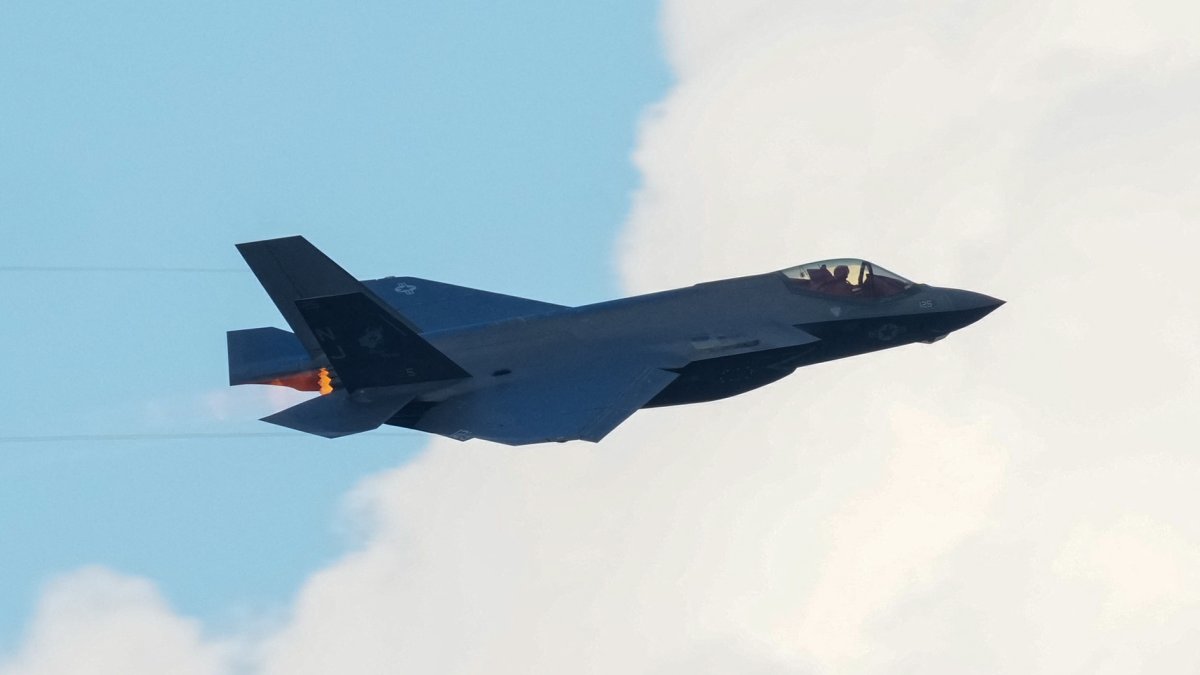
A U.S. Air Force F-35.

Forces from U.S. Central Command (CENTCOM) launched a series of powerful airstrikes inside Iran.
The military intervention is a direct response to the recent attacks carried out by the Islamic Revolutionary Guard Corps against three commercial vessels transiting the Strait of Hormuz.
According to defense officials, the resumption of Iranian hostilities constitutes a flagrant violation of the ceasefire recently agreed upon by both countries.
Official sources confirmed to networks such as Fox News and CBS News that the ongoing U.S. attacks are significantly larger in scale than last month’s punitive operations.
The strategic targets struck include air defense systems, coastal surveillance radars, anti-ship cruise missile sites, drone launch bases, and military port infrastructure.
A U.S. administration official described Tehran’s previous actions as “acts of international terrorism” directed against innocent civilian crews.
Revocation of licenses and strangling the regime’s financing
On the economic front, the White House’s response was immediate. The U.S. government revoked the special exemption known as “General License X,” a provisional mechanism that allowed Iran to sell crude oil on global markets and was part of the memorandum of understanding signed on June 18.
In its place, the Treasury Department implemented “General License X1,” which categorically prohibits authorizing new sales of Iranian oil starting this week and freezes funds from ongoing transactions in restricted accounts.
The 60-day truce established last month was intended to stabilize fuel prices, which had reached critical peaks due to the de facto closure of the Strait of Hormuz following previous drone attacks on infrastructure in Gulf countries.
In response to the new aggression, an official spokesperson emphasized that the benefits granted to Tehran were strictly contingent on its performance and behavior.
For his part, Iran’s Deputy Foreign Minister, Kazem Gharibabadi, accused Washington on X of violating the memorandum and issued warnings about alleged retaliation to safeguard its security.
Market instability and international condemnation
Key energy indicators reacted immediately to the escalation of hostilities. The price of a barrel of Brent crude, the international benchmark, rose to $75, while West Texas Intermediate (WTI) climbed to $71 in New York.
At the same time, diplomatic delegations in the region took a stand. A spokesperson for the Saudi Arabian Embassy in Washington strongly condemned Iran’s attacks on international shipping, confirming that Saudi and Qatari-flagged vessels were among the targets attacked in the strait.
Financial sanctions experts from firms such as Oliver Wyman noted that the operational environment in the Strait of Hormuz has undergone a permanent transformation in recent months.
The use of shipping lanes as tools of geopolitical blackmail by the Shiite theocracy makes it difficult to return to the conditions of free transit that prevailed at the beginning of the year, requiring a comprehensive military deterrence effort to restore order.

World
'There will be blood': Trump receives death threats at Khamenei's funeral in Iran
Alejandro Baños
LATEST