With America’s big party over, five battles Trump must win ahead of midterm
President Donald Trump and Republicans have at least five battles they must wage and win before the midterms, which in turn, will determine a possible change in majority in the U.S. House and, less likely, the Senate.
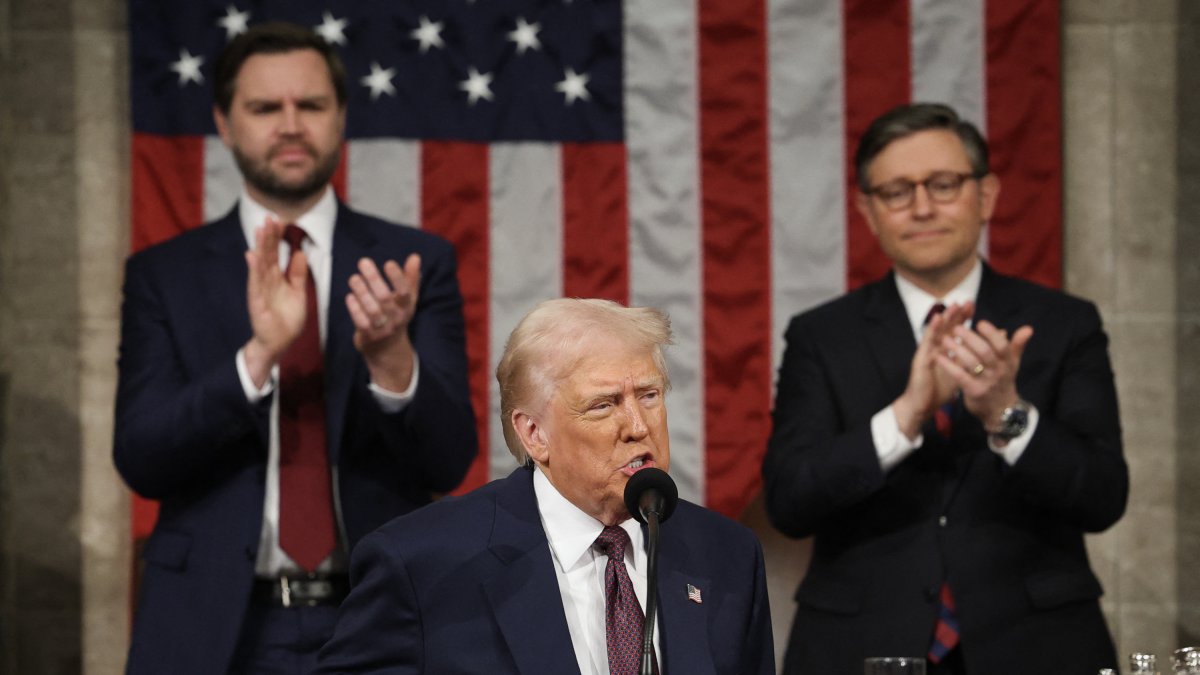
Trump en el Congres

The nation thoroughly partied and commemorated the 250th anniversary of the Declaration of Independence on Saturday. Once the final firework fizzles and the big bash is over, President Donald Trump and Republicans have multiple battles they must wage and win before the midterms and a possible change in majority in the U.S. House and, less likely, Senate.

Resolving the Iranian conflict
The US and Israel launched strikes on Iran in late February 2026, triggering a regional war, a blockade of the Strait of Hormuz, and economic ripple effects, including energy price pressures. A memorandum of understanding was signed in mid-June, outlining a ceasefire extension, reopening of the Strait, sanctions relief framework, and a 60-day timeline for final negotiations on Iran’s nuclear program, but technical talks have seen mixed signals.
At the same time, the ceasefire seems to be an on-again/off-again affair. Politico and others have reported that US Central Command criticized Iran for an “egregious ceasefire violation,” calling it "the latest test for a shaky truce as peace talks between Washington and Tehran progress slowly."
To satisfy voters, Trump likely will have to finalize and implement a comprehensive deal within the 60-day window (by mid-August), fully stabilize the Strait and region, secure verifiable limits on Iran’s nuclear activities, and deliver visible economic relief.
Beyond falling gas prices, a successful resolution could lower energy costs (helping inflation), demonstrate strength, and provide a tangible win, and position Republicans as effective on national security, an issue that has been in the top headlines for most of the year.
Securing America's elections
The SAVE America Act has passed the House multiple times but remains stalled in the Senate despite Trump’s strong push to attach it to must-pass legislation such as FISA (Foreign Intelligence Surveillance Act) reauthorization. The bill requires proof of US citizenship for federal voter registration, along with photo ID and other election security measures.
It is also one of the most universally popular issues, an easily winnable conquest by Senate Republicans, with more than eight in ten voters supporting ID requirements, pollster Scott Rasmussen said on social media.
Advancing it would energize supporters ahead of early voting, though some Senate Republicans have noted implementation challenges before November. Solving it means securing Senate passage — potentially via reconciliation — and beginning rollout steps to claim a clear legislative victory on voter security.
A March Marist poll indicated that 34% of Americans express little or no confidence in their state or local government to conduct fair and accurate elections in November, up from 24% previously.
Inflation/cost of living
"Dinner table" issues have always taken a high priority in determining about what issues citizens are most concerned. 2026 is no different. Inflation and household costs (groceries, housing, energy, etc.) consistently rank as the top voter concern in 2026 polling, often cited by 26–40% as the most important issue. Trump’s approval on the economy and inflation remains underwater in multiple surveys.
This is voters’ dominant pocketbook issue. Tariffs, the Iran-related energy disruptions, and other factors have contributed to pressure. Demonstrable progress, like stabilizing or lowering prices, is essential to improve economic perceptions and generic ballot numbers.
The solution, at least in the minds of voters, comes in the form of tangible easing of cost pressures—such as a successful Iran deal lowering energy prices, targeted deregulation, or other measures—before voters head to the polls. Even incremental improvements in sentiment could help Republicans' cause.
Last year, a report from the Pew Research Center found that "The affordability of health care (67%), inflation (63%), the federal budget deficit (57%) and the number of Americans living in poverty (53%) are also among the public’s top concerns."
Immigration/deportation
Immigration and border security typically rank among the top 3–4 issues for voters and have historically been strengths for Republicans. However, some enforcement actions have drawn criticism and contributed to dips in approval.
It remains a high-salience issue that motivates the base while independents watch for results. Sustained control and visible reductions in illegal crossings or related problems have already reinforced a key advantage.
With a new sheriff in town as ICE (Immigration and Customs Enforcement), former Oklahoma state trooper and Marine Lance Schroyer being nominated as director could help rehabilitate the image or popularity of Trump's deportation operations.
For this to help Republicans, border security metrics must be maintained, along with enforcement priorities, and possibly advance related legislative or executive actions that demonstrate effective management without major backlash.
Healthcare costs
Healthcare premiums and out-of-pocket costs are, according to non-profit research charity KFF, a recurring top-tier voter concern (often ranking high in economic worries alongside inflation). KFF's website defines themselves as meeting "the need for a trusted, independent source of information on national health issues—one with the scope and reach to be a counterweight to health care’s vested interests and a voice for people." Recent policy changes to Medicaid and Obamacare, including elements of major legislation, have drawn scrutiny from all corners.
Actions that stabilize or lower premiums/costs for families, address implementation fallout from recent bills, or offer targeted relief ahead of the election can flip the script on this historically favorable-to-Democrats issue.
LATEST