The window is closing: The CIA creates a secret unit to step up pressure on the Castro leadership
The operational deployment coincides with a thorough review of the White House's security priorities.
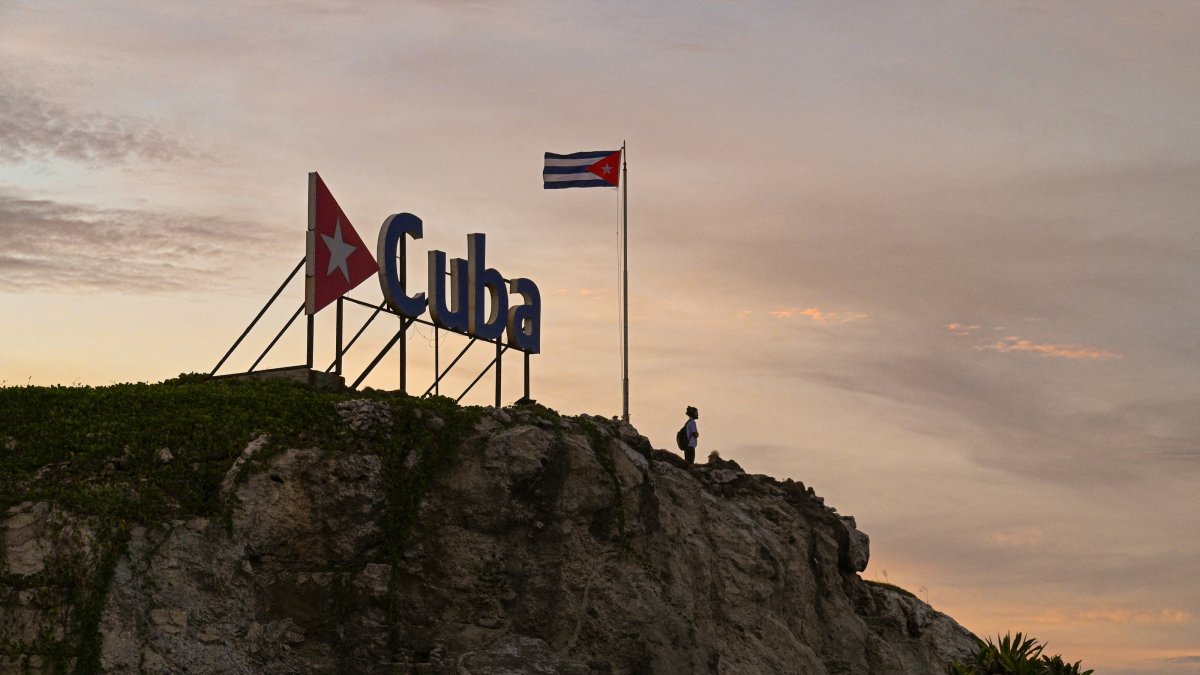
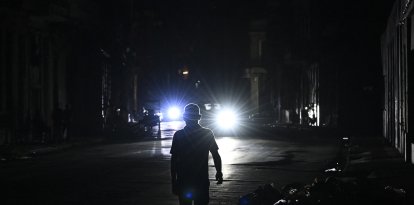
A person watching the sunset in Havana during the power outages on August 4, 2026.

The Central Intelligence Agency (CIA) secretly established a task force specializing in Cuba to carry out a coordinated pressure campaign against the island's power structure.
According to a report published by the New York Times, the creation of this unit aims to rapidly channel financial resources, analysts, cyber operations specialists, and field officers to recruit informants and conduct covert influence operations.
The initiative responds to demands made by President Donald Trump to force structural changes in the Caribbean nation's economic and political spheres.
Unlike the unit formed in 1960, which was responsible for the Bay of Pigs operation, the current mandate focuses on creating divisions within the Cuban political elite to displace hardline factions aligned with anti-American doctrine and facilitate the rise of figures willing to negotiate.
Redirection of intelligence and satellite surveillance
The operational deployment coincides with a thorough review of the White House's security priorities. The Trump administration recently amended the National Intelligence Priorities Framework (NIPF) to grant Cuba the status of "Priority 1," a category shared with strategic powers and adversaries such as China, Russia, and Iran.
As a result of this adjustment, intelligence agencies such as the National Security Agency (NSA) and the National Geospatial-Intelligence Agency have redirected technical and satellite resources toward Cuban territory.
The information gathered not only allows monitoring of the island's military assets and defensive capabilities in the face of potential military action, but also empowers the CIA to track opaque financial flows and the business dealings of the current elite.
From Havana, the official response was unequivocal. "These intentions come as no surprise, as Cuba has long been the target of the CIA's espionage, subversion, and destabilization efforts, including terrorism," Cuba's Deputy Minister of Foreign Affairs, Carlos Fernández de Cossío, said in a statement addressed to The New York Times.
"And yet, the State Department has the audacity to call Cuba a threat for exercising its right to self-defense."
A history of tension and the warning to the military leadership
Washington's operational relationship with the island has fluctuated significantly. During the final stretch of Barack Obama's term in 2015, then-CIA Director John Brennan traveled to Havana to explore agreements on drug trafficking and counterterrorism with Alejandro Castro, son of Raúl Castro. However, the talks quickly stalled.
Following the closure of the station in Havana during Trump's first term, in the wake of the health incidents known as "Havana Syndrome," and its subsequent reopening under constant surveillance in 2024, the current administration adopted a stance of direct confrontation.
Last May, CIA Director John Ratcliffe traveled to the island to meet with Raúl Guillermo Rodríguez Castro, Raúl Castro's grandson.
During the meeting, U.S. intelligence warned the ruling leadership that the time to implement fundamental changes was running out, emphasizing that inaction could lead to an outcome similar to that seen following Nicolás Maduro's departure in Venezuela.
The effectiveness of the new strategy will depend on the agency's ability to penetrate a historically impenetrable counterintelligence apparatus, at a time when the U.S. government is seeking to consolidate a definitive political shift in the hemisphere.
World
Cuba suffers another nationwide blackout, the sixth since the start of the year
Alejandro Baños
LATEST