'A burrito can't cost $20': Conservatives debate the cost of living
What the discussion ultimately revealed, beyond the anecdotal, was the real divide within the conservative movement over how to address the economic anxiety of its own base.
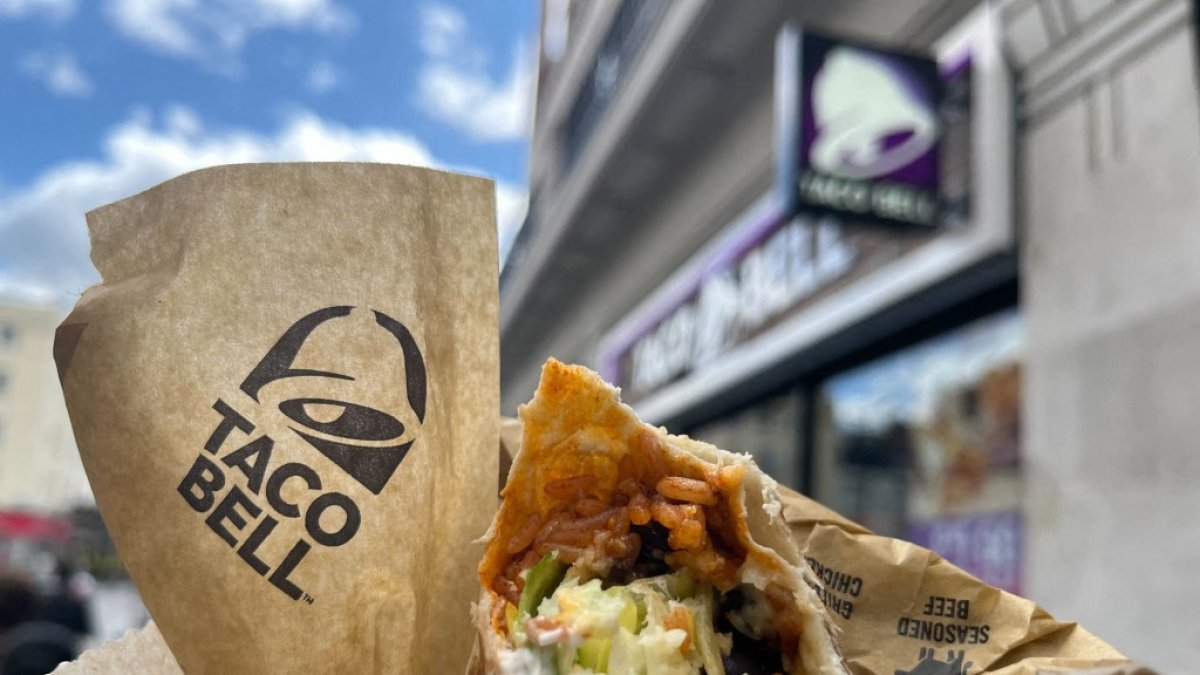
At a Taco Bell location, you can see the chain's logo and a burrito

Last July, multiple polls painted a clear picture of Americans' perceptions regarding the cost of living and food prices. According to a Pew Research Center survey, 66% of Americans are "very concerned" about the price of food and consumer goods; another survey by CNN found that only 23% of Americans rate the economy as good, compared to 77% who rate it negatively; likewise, a poll by Fox News found that three-quarters of registered voters said inflation is causing financial hardship for them and their families. Of those three-quarters, about one-third (34%) described these economic problems as serious, an increase of 8 points from 2025.
These three polls are not isolated; in fact, they are part of a broader landscape of surveys that accurately reflect Americans' top concern today, just months before the midterms: the economy and the high cost of living, primarily reflected in the prices of gas, food, and goods and services.
The perception that the cost of living is high and that food prices are through the roof today has also sparked a shift on social media, reaching directly to dozens of journalists, influencers, politicians, and conservative opinion leaders who, instead of discussing their usual topics, became engrossed in a slightly more specific issue: the price of burritos.
All day long, the discussion on X was dominated by MAGA and Republicans about how inflation is driving up the price of burritos, presenting different worldviews on how to combat the cost of living and how to leverage the political climate to send messages to their electoral bases, who are concerned and demotivated, according to the latest polls showing Democrats to be far more motivated to vote.
The spark that ignited the debate came from a tweet by conservative commentator Matt Walsh, who warned about the sustained rise in food prices: "Grocery prices are insane. They're still rising. Addressing this problem should be the number one priority of every elected leader. End the stupid foreign wars and focus on this issue. It's one of the main reasons socialists are gaining power."
Andrew Kolvet, executive producer of "The Charlie Kirk Show" and host of Turning Point USA, quoted that tweet and added a comment that would ultimately set the tone for the entire conversation: "One of our TPUSA college students gave me his take on affordability: 'A burrito shouldn't cost $20.' Yeah, a lot of this is a hangover from Covid and Biden-era inflation, but the lived experience is the same: it just feels like basic things cost too much." From that post onward, the phrase "$20 burrito" became the symbol that the rest of the right, with conflicting viewpoints, would use to discuss inflation.
The most visible rift within the conservative wing occurred when commentator Marc Thiessen, a columnist for The Washington Post, downplayed the student's complaint: "Cry me a river. The burritos in the college cafeteria are included in your meal plan," he wrote, directly quoting Kolvet's tweet. Many responded to Thiessen, who spent the entire day on X in heated debates trying to make his point. Even Vice President JD Vance responded with a playful jab: "I'm surprised to hear Mark say this. If you've ever met him in person, it's quite obvious the man has never missed a burrito."
Commentator Ben Shapiro, founder of the Daily Wire, seemed to side with Thiessen—or at least expressed a similar view: "I hear that young people are upset about $20 burritos. Okay, young people: a burrito does not cost $20. If you're paying $20 for a burrito and you're not independently wealthy, you're doing life wrong."
Rep. Dan Crenshaw took a similar line: "Stop whining, get a job, eat Ramen like the rest of us did in college, on a budget with 4 roommates."
On the other side of the conservative spectrum, however, voices emerged questioning that approach. William Wolfe, a former Trump administration aide, argued that the discussion revealed a strategic asymmetry between the left and the establishment right: while the left responds to complaints about the price of burritos by offering concrete solutions—even if they are statist and economically dangerous— "free-market Republicans and their media spokespeople" respond, according to his critique, with disdain: "Suck it up, how you feel is stupid," Wolfe summarized regarding the stance he questions. For the former official, that difference partly explains the rise of the Democratic Socialists of America (DSA).
Others, such as author James Lindsay, offered a more entrepreneurial take on the matter: "The American Spirit isn't complaining about a $20 burrito; it's making a $14 burrito in the same neighborhood and making one million dollars."
Likewise, the organization Advancing American Freedom, founded by former Vice President Mike Pence, contributed its own analysis with the so-called "Burrito Index," a comparison of Chipotle burrito prices across cities nationwide that sought to illustrate the real impact of inflation on Americans' wallets. The organization's finding is that, to the surprise of few conservatives, burritos cost slightly more in blue states than in red states.
Not everyone, however, took the debate as seriously. Commentator Michael Knowles said, "I don't care for burritos."
For his part, Reason journalist Robby Soave shifted part of the blame to delivery services: "People, this burrito discourse is really about DoorDash and Uber Eats. Simple meals are expensive if you have them prepared AND delivered to you. If you go get it yourself, it's cheaper. If you buy the ingredients and make it yourself, it's cheaper still."
Commentator Buck Sexton, for his part, chose to ignore the price dispute to directly question the burrito as a dish: "Burrito at any price is inferior to taco, quesadilla, gordita and enchilada. Facts are stubborn things."
What the discussion ultimately laid bare, beyond the anecdotal, was the real divide within the conservative movement over how to address the economic anxiety of its own base: between those—like Shapiro, Thiessen, and Crenshaw—who insist on a response based on individual responsibility in the face of complaints about the cost of living, and those—such as Kolvet, Wolfe, and Walsh—who warn that downplaying the economic distress of young and working-class voters, even when the complaint is expressed in a trivial way like the price of a burrito, may end up giving the left fertile ground ahead of the midterm elections, where the Democrats, at least for now, are clear favorites to regain control of both Chambers.
LATEST