Washington airspace scare: Trump's helicopter flies within a mile of Passenger Jet
Tuesday's scare was no small matter, especially given a recent incident that sent shockwaves across the country. In January 2025, an Army Black Hawk helicopter collided with an American Airlines flight in that same airspace, killing all 67 people on board both aircraft.
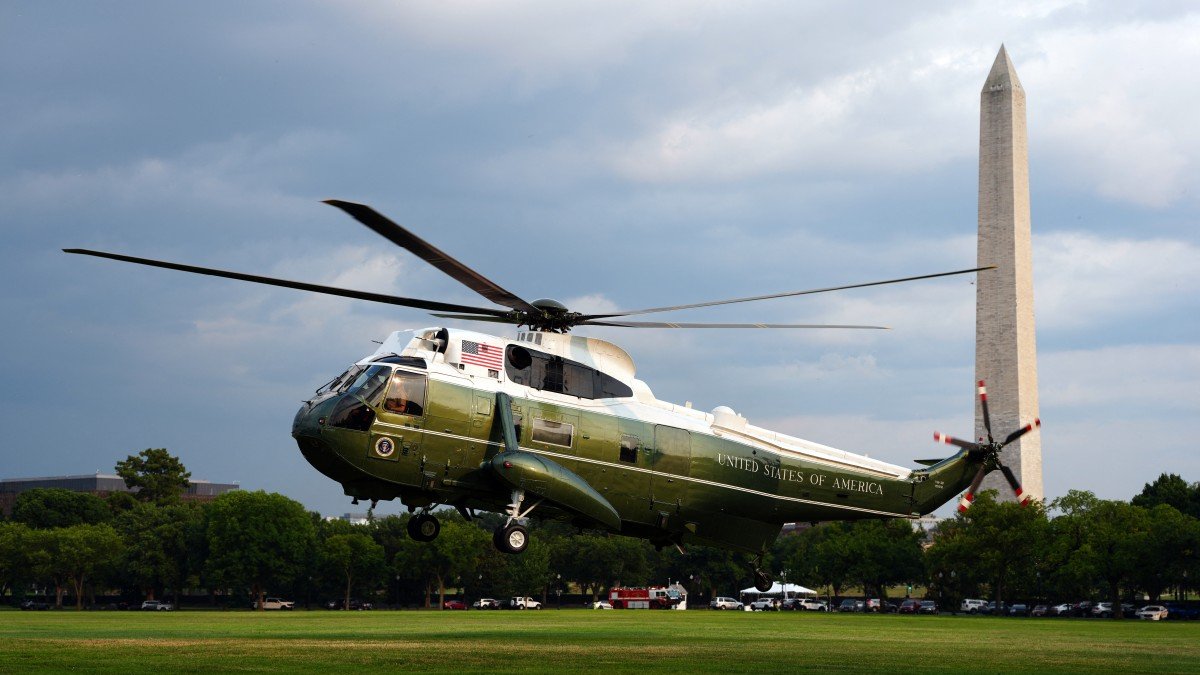
A U.S. Marine Corps helicopter

"Tower, do you copy?" was the question posed twice by the Marine One crew on Tuesday afternoon. Both calls went unanswered as the presidential helicopter prepared to take off for Joint Base Andrews in Camp Springs, Maryland. When a controller finally responded, he admitted that the previous transmission had come in "broken" and "unreadable." Minutes later, that same communication failure would put the helicopter carrying President Donald Trump less than a mile from a passenger plane over the capital's airspace, raising genuine concerns about air traffic control and air traffic in the Washington, D.C area.
The incident, initially reported by The Wall Street Journal, occurred shortly after 2:30 p.m. on Tuesday, during the first leg of a presidential trip to Los Angeles. Since July, Trump has been taking off and landing at the Ellipse, a public park south of the White House, as the traditional South Lawn remains closed due to construction of a new heliport. This change in routine disrupted a flight plan that was already among the most complex in the country, as it involved the simultaneous coordination of military aircraft, civilian helicopters, and commercial flights from three different airports within the same airspace.
According to two people familiar with the federal authorities' preliminary assessment, the communication failure between the Marine One crew and the control tower at Ronald Reagan National Airport delayed clearance for nearby traffic, placing the presidential helicopter in the path of a flight operated by Envoy Air, a subsidiary of American Airlines, that had just taken off bound for Pensacola, Florida. At the point of closest approach, the two aircraft were separated by just 0.8 miles laterally and 700 feet vertically, according to the same sources, citing preliminary findings from the Federal Aviation Administration (FAA). The agency defines a loss of safe separation in cases such as this as a violation of at least 1.5 miles laterally or 500 feet vertically, although the threshold may vary depending on the type of aircraft and the airspace.
Society
Flying: A game of chance | Aviation sees five consecutive years of delay rates exceeding 20%
Alejandro Baños
A Marine Corps spokesperson, Captain Jacob M. Sugg, described the flight as "routine" and declined to answer further questions about the incident. The FAA, on the other hand, confirmed the incident in greater detail, clarifying that there was a "momentary loss of separation."
"Although the president was at no point in harm's way during yesterday's momentary loss of separation, the White House continues to work with relevant military, F.A.A. and other security personnel to ensure the president's continued safety," presidential spokesperson Kush Desai said in a statement, in which he also defended the Marine One crew, describing them as "the best aviators in the world."
Tuesday's scare, however, was no minor incident, especially given a recent incident that sent shockwaves across the country. In January 2025, an Army Black Hawk helicopter collided with an American Airlines flight in that same airspace, killing all 67 people on board both aircraft. The subsequent investigation by the National Transportation Safety Board (NTSB) attributed the tragedy to poor radio reception that deprived the military crew of key information about the aircraft it ultimately collided with, compounded by the overload of a controller who was handling two roles simultaneously during a high-demand shift. Since then, the FAA has modified and closed some helicopter routes over the city, but many of the NTSB's safety recommendations remain unimplemented—a gap that Tuesday's incident brings back into focus.
LATEST