The state arrived late: Looting and military abuses expose Delcy Rodríguez's earthquake failure in La Guaira
The underlying complaint, however, is the government’s neglect. Accounts gathered by Voz agree that, during the first few days, the official response was virtually nonexistent. There were only a few firefighters and ambulances, almost no police, and no one in charge coordinating the efforts.
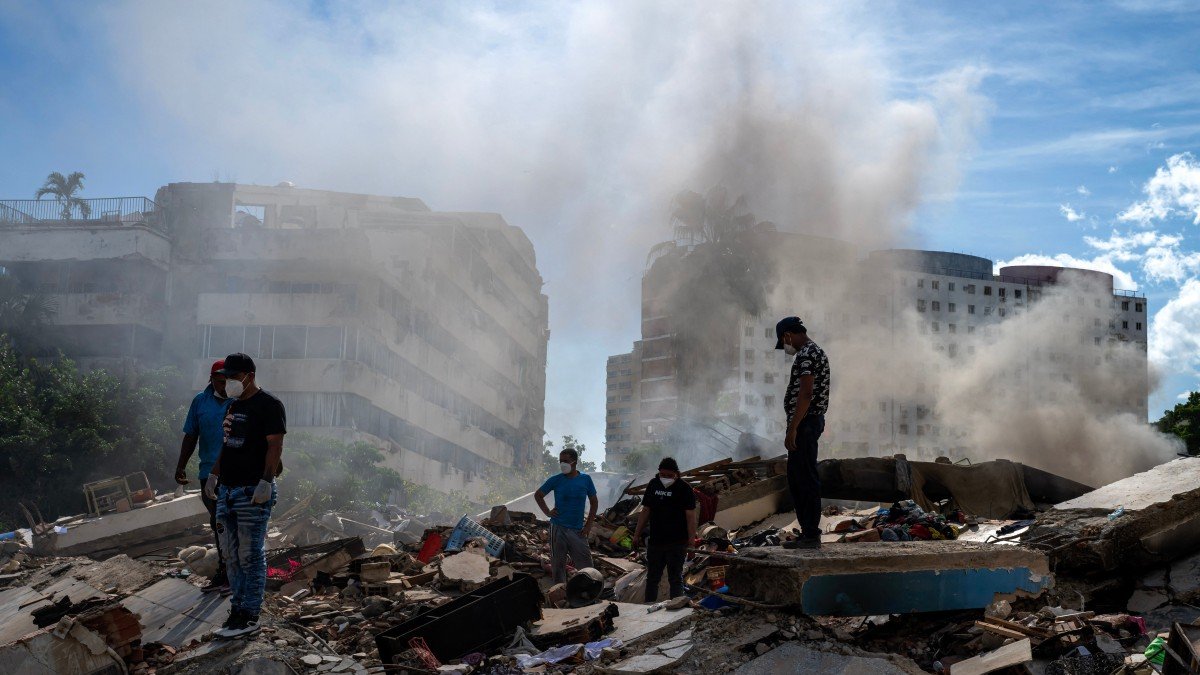
Rescue workers and volunteers search for survivors in La Guaira, La Guaira State, Venezuela
Nothing remained of a small shop in La Guaira—not even the wiring. The tremors had not yet ceased when looting and pillaging began in the area most devastated by the double earthquake that shook Venezuela, a second tragedy piled on top of the first: that of a government that failed to respond in time. While residents dug through the rubble with their bare hands to rescue their relatives, whether alive or dead, stores, pharmacies, and homes were tragically ransacked, and reports mounted against police and military personnel accused of joining the looters.
The chaos was documented in dozens of videos on social media and was verified on the ground by a journalist from the AFP news agency starting on Thursday, the day after the earthquake. The footage shows groups passing boxes of appliances from collapsed stores onto the roofs of cars or motorcycles. A branch of the Farmatodo pharmacy chain was looted, as were supermarkets and grocery stores. Some attribute it to “disaster tourism,” others to the hunger and desperation of those who lost everything in a country mired in a chronic crisis.
“Is it fair for our people to prey on their own people?” asks María Esther Bernal, 71, who rented storefronts to Chinese merchants, all of which were looted. “They didn’t even leave the wallpaper on the walls; they took everything, even the wires,” she summarizes, before recounting a particularly harrowing scene: “Right next door, a man died—he was a Chinese man—and they stepped over his dead body to loot.” Homes weren’t spared either. “They stole everything from us: clothes, shoes, pots, pans, cups, and glasses,” says 72-year-old Zulay de Carvajal. Her son Gregory, 37, continues the story: “We were pulling out people who were dead, and at that moment, people were looting, taking everything.”
Much of the Venezuelans’ fury, however, is directed at the uniformed personnel. Several videos show soldiers standing by, indifferent, while the population cries out for help; in one of them, a citizen rebukes a group of soldiers and challenges them to show La Guaira, with a pickaxe and a shovel, the same “bravery” with which they crack down on the Francisco Fajardo Highway in Caracas. Other videos show officials caught looting a hotel in Catia La Mar, beaten by civilians who demanded they take off their uniforms.
Politics
María Corina Machado intenta viajar a Venezuela tras los devastadores terremotos, pero ha generado frustración en funcionarios de Trump
Emmanuel Alejandro Rondón
These are just a few stories, but allegations against security forces are actually multiplying: officers stealing from homes and even robbing the dead, people posing as firefighters and officials found rummaging through houses. A widely shared video shows a man expelling a soldier and another official from his home after finding them going through his belongings: “Get out, get out—you’ve ransacked everything,” he shouts at them. Marino Alvarado, former coordinator of the human rights NGO Provea, warns that the patterns of the 1999 Vargas tragedy are repeating themselves: “Crime; second, police abuse, which is already beginning to be reported; and third, police or military officials also participating in the looting.”
Sources consulted by Voz News in La Guaira confirmed that the wave of looting forced police and military personnel to intervene to contain it, amid a climate of escalating violence. According to one of those sources, a member of the Army summarized the approach as follows: “We’re already making those vermin disappear.” Although this statement has not been independently verified, it aligns with warnings from human rights organizations about the risk of abuses committed under the cover of chaos.
The underlying complaint, however, is the state’s neglect. Testimonies gathered by Voz agree that, during the first few days, the official response was virtually nonexistent. There were only a few firefighters and ambulances, almost no police, and no one in charge coordinating the efforts. A government official, who lost a family member under the rubble, described how survivors entered buildings that had already collapsed or were about to collapse to dig with whatever they had on hand; many were trapped and died there. The only ones who went down to help in those first few hours were the motorcyclists, who arrived after word spread that the government was not on the ground. According to these accounts, the Army did not deploy until Friday, by which time the situation had already spiraled out of control.
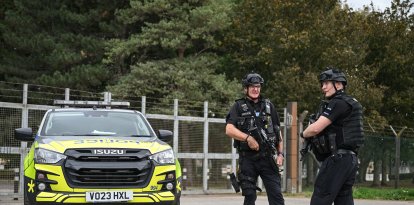
That is why the interim administration's handling of the situation under Delcy Rodríguez is being harshly criticized. After days of chaos, the regime militarized La Guaira and restricted access via a safe-conduct pass that must be processed through the military in Caracas, a measure that volunteers denounced as a new obstacle to helping the victims. The infrastructure also did nothing to speed up the response. Simón Bolívar International Airport, the main gateway for aid, was severely damaged and left without equipment to the point that the United States sent an Air Force contingent to repair it and restore it to operation. According to sources on the ground, the level of neglect surprised even the deployed U.S. personnel.
Against this delicate backdrop came statements from the U.S. chargé d’affaires in Venezuela, John Barrett, the highest-ranking diplomatic representative from Washington in the country. In an interview with Univision previewed by journalist Luis Carlos Vélez, Barrett described the situation as devastating and the U.S. response as massive and unprecedented, and maintained that the interim government’s commitment “is total” and that “the Venezuelan Armed Forces are working shoulder to shoulder with the U.S.” He also asserted that Delcy Rodríguez’s administration has been “completely transparent” in reporting figures, just as the number of missing persons is the subject of dispute: independent records cite more than 68,000, and United Nations puts the figure at more than 50,000.
Meanwhile, the official toll rose this Sunday to at least 1,450 dead and 3,150 injured, with 189 collapsed buildings and more than 12,000 displaced, according to the president of the pro-government National Assembly, Jorge Rodríguez, Delcy Rodríguez’s brother. At the same time, opposition leader María Corina Machado, whose attempt to return to the country this week caused friction with Washington, insisted on Sunday that it is time for her to return. “The time has come to return; it is my duty to stand with my people,” she declared on Fox News. “I will be back in Venezuela very soon.”
Amid the disaster, gestures of community-led reconstruction also emerged. After the Farmatodo branch in La Guaira was looted, the community itself helped clean up the premises, which now houses a primary care clinic. Furthermore, the vast majority of Venezuelans have been helping with rescue efforts, organization, and aid to the victims, with many even giving what they don’t have just to do their small part.
This report contains information from AFP by journalist Margioni Bermúdez.
LATEST